By Paper City Heating
Last updated: October 31, 2026
A space heater warms the air right around it, and that feels good on a cold night. A furnace warms the whole house, protects pipes, and keeps every room above freezing. That difference matters most in a Wisconsin cold snap, when outdoor air stays bitter for days and a house loses heat hour after hour. A portable heater can bridge a gap for a short time, but it cannot carry a house through a cold snap, and using it that way brings risks of its own. See electric furnace services.
This post compares the two honestly, without pretending a portable heater is useless or that a furnace never fails. Space heaters have a place: a chilly office, a drafty bedroom for an evening, or a few hours while a repair is on its way. The trouble starts when one heater becomes the heat plan for a whole house, or when several heaters run at once on circuits that were never meant to carry them.
What a furnace does that a heater cannot
A furnace is a whole house system. It burns fuel or uses electric elements in one place, moves warm air through ducts to every room, and keeps pipes, walls, and floors from dropping toward freezing. The thermostat watches the whole house, or at least the zone it serves, and the furnace cycles to hold a steady temperature. That steady, distributed heat is what protects a house in a multi day cold snap, when a single warm room is not enough. See thermostat and zone heating.
A space heater has no ducts, no thermostat for the house, and no way to warm a far bedroom or a basement pipe run. It warms the room it sits in, and heat leaks from that room into colder rooms as fast as the heater makes it. In a cold snap, that means the heater runs constantly, the room near it may feel warm, and the rest of the house keeps cooling. Pipes on outside walls, in a crawl space, or in an unheated garage can still freeze while the living room feels fine.
Safety gaps that grow in a cold snap
Portable heaters cause trouble in predictable ways: too close to bedding, curtains, or furniture; left running while people sleep or leave the house; plugged into a power strip or an extension cord that overheats; or tipped over in a busy room. A cold snap makes each risk worse, because heaters run longer, rooms get cluttered with blankets, and people add a second or third heater when the first one cannot keep up. The U.S. Fire Administration and local fire guidance stress the same basics: keep heaters clear, never leave them running unattended, and plug them directly into a wall outlet. See cold-night furnace failures.
Fuel burning portable heaters add a second risk. Unvented fuel heaters can raise carbon monoxide and moisture indoors, and they should never replace a vented furnace. Even electric heaters can overload a circuit when several run at once, tripping breakers and cutting power to the very rooms they were warming. If a breaker trips repeatedly, that is a warning, not an annoyance. Stop adding heaters, unplug the extras, and call an electrician or a heating technician to sort the house heat properly.
| Heating choice | Best use in a cold snap | Main limit |
|---|---|---|
| Central furnace | Whole house heat and pipe protection | Needs repair when it fails |
| One electric space heater | One room for a few hours | Cannot warm far rooms or pipes |
| Several space heaters | Short bridge while help is on the way | Circuit overload and fire risk rise fast |
| Unvented fuel heater | Not a safe house heat plan | Carbon monoxide and moisture risk indoors |
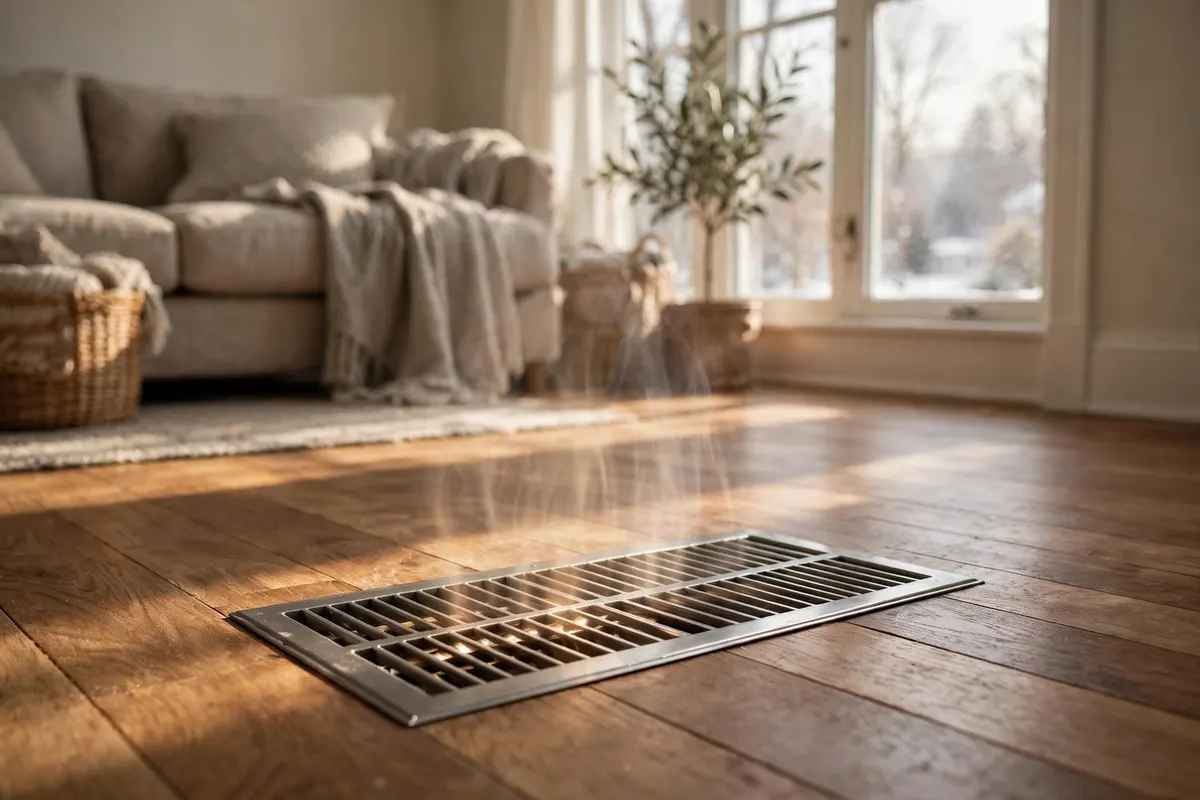
A floor register fed by the furnace warms a whole room from the duct system, and the same system reaches bedrooms, bathrooms, and pipe runs that a portable heater never touches.
Comfort: even heat versus one warm spot
Comfort in winter is about even temperatures, not one hot spot. A furnace with working ducts keeps bedrooms, bathrooms, and hallways within a few degrees of each other, so no room feels like a cold shock when you walk into it. A space heater creates the opposite pattern: a warm bubble near the heater, a cool floor farther away, and cold air spilling in from the hallway every time a door opens. People then sit close to the heater, dry skin and eyes follow, and sleep suffers in a room that swings warm and cool all night.
Two stage and variable airflow furnaces improve evenness further by running longer at lower output, but even a single stage furnace with clean ducts beats a portable heater for whole house comfort. If one room always runs cold while the furnace works, the fix is usually ductwork, airflow, or insulation for that room, not a permanent heater in the corner. A heater can mask that room problem for a winter, while the duct fault quietly wastes heat every day.
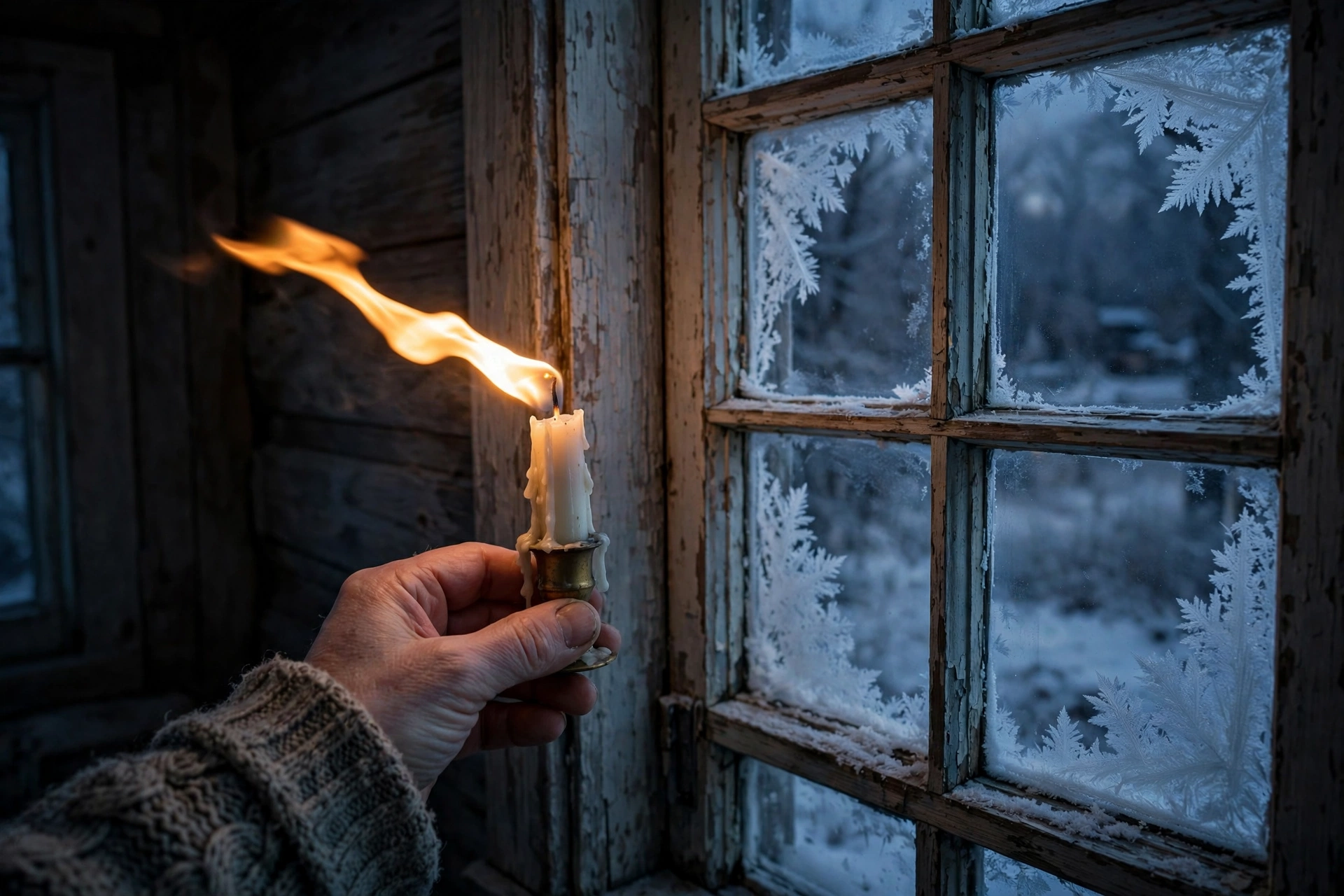
A candle flame leaning at an old window frame finds the draught a heater is masking. Seal the leak and the whole room warms, instead of one corner staying warm while the furnace idles.
When a space heater makes sense, done safely
Use a space heater as a short bridge, with clear rules. Place it on a flat, hard floor, at least a few feet from bedding, curtains, and furniture, and plug it directly into a wall outlet. Run it only while you are awake and in the room, and turn it off when you sleep or leave. Keep one heater per circuit, and watch for warm outlets or tripping breakers as a sign to stop. These rules sound strict, but they are the difference between a helpful bridge and a fire risk on a night when help is already stretched thin.
A heater also makes sense while you wait for a furnace repair, if you use it to keep one lived in room comfortable and protect people, not to heat the whole house. Close that room off, keep interior doors to pipe areas open where you can, let faucets on outside walls drip, and check the house temperature often. Call for repair help early, even if the heater feels adequate, because a cold snap can outlast a bridge plan. The heater buys hours, and the furnace repair buys the rest of the winter.
What to do instead of living on heaters
If your house leans on space heaters every winter, treat that as a symptom, not a solution. Note which rooms need heaters, when they need them, and what the furnace does at the same time. That list helps a technician find the real cause, whether it is a duct run, a thermostat location, a blower problem, or a furnace that no longer matches the house. Fixing the cause restores even heat and removes the daily heater routine, which is safer and more comfortable for everyone in the house.
Start with the checks you can make: clean filter, open registers, clear returns, and a thermostat test. If the furnace runs but rooms still lag, call us and describe the pattern room by room. We will check airflow, ducts, and furnace condition, and explain what we find in plain words. A house that heats evenly does not need a heater in every corner, and winter nights feel very different once that is true.
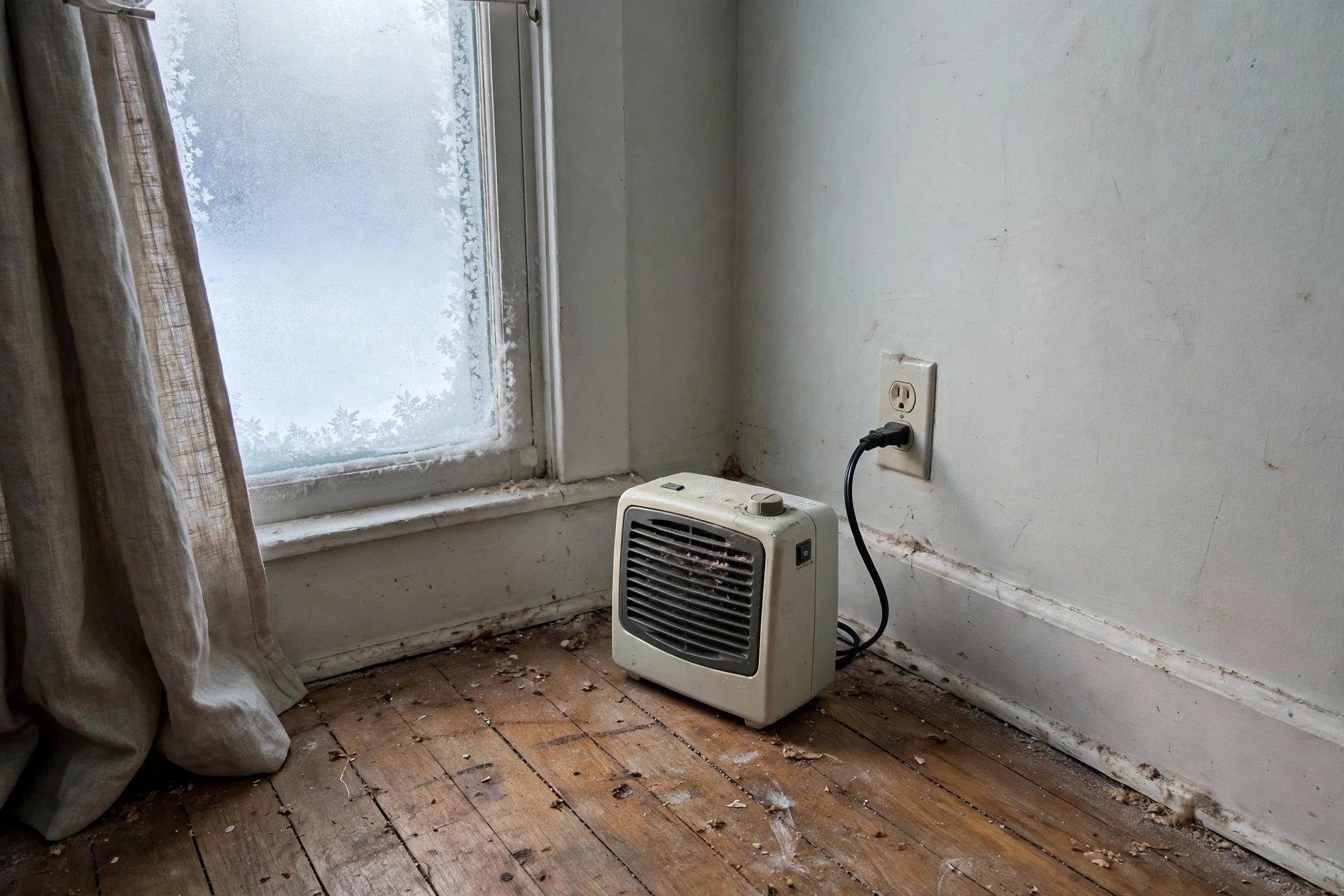
A portable heater plugged into a tired outlet is the risk the cold snap hides. Warm the room, but keep the cord short, the heater clear of bedding, and the circuit unshared.
Cold snap heater questions, answered plainly
Can one space heater heat a whole house in a cold snap?
No, one space heater cannot heat a whole house in a cold snap. It warms only the room it sits in, while far rooms, hallways, and pipe runs keep cooling. Pipes on outside walls can freeze even when the living room feels warm. A furnace with ducts is the only way without portable heaters to protect the whole house.
Is it safe to sleep with a space heater running?
No, sleeping with a space heater running is not safe. Heaters should run only while you are awake and in the room, clear of bedding and curtains, and plugged directly into a wall outlet. A heater left running overnight can tip, overheat nearby fabric, or trip a circuit while no one is awake to notice.
Why does my breaker trip when I run space heaters?
Breakers trip because several heaters draw more current than the circuit can carry, especially when lights and appliances share the same circuit. Repeated trips are a warning to stop adding heaters. Unplug the extras, run at most one heater per circuit, and get the house heat fixed rather than adding more heaters.
Heater parts, cords, and the furnace underneath
Portable heaters fail in familiar ways: a ceramic element that cycles too hot, a plastic housing that warps, and a cord that overheats on an overloaded circuit. Heater housings are usually steel or heat-resistant plastic, the element is a ceramic or metal coil, and the cord is copper wire in a rubber jacket, so the materials themselves tell you how much heat the unit can safely shed. The tool that settles an argument about a cold room is an infrared thermometer, which shows whether the wall, the window, or the register is the cold spot. If the register air is weak, the problem is ductwork or blower, not the heater, and ductwork and airflow service is the fix that lasts past the cold snap.
Electrical rules matter here too: the maker's instructions and local electrical code limit what a circuit should carry, and a heater on an extension cord breaks both. A furnace, by contrast, protects pipes, keeps every room above freezing, and runs on a dedicated circuit with its own safety controls. When a room stays cold despite a working furnace, our guide to older Fox Cities homes explains why old rooms and old ducts fight even heat.
Measure first
Readings before parts: pressure, airflow, and thermostat call.
Fix the airway
Filters, registers, and ducts before burners and boards.
Record it
Write the finding down, so the next visit starts from facts.
Space heater and furnace questions
How many space heaters can I run safely at once?
Run at most one heater per circuit, plugged directly into a wall outlet, and never through a power strip or extension cord. Even then, several heaters across a house can strain the electrical system. If breakers trip or outlets feel warm, stop and reduce the load right away.
Can a space heater protect my pipes in a cold snap?
Only in the room it sits in, and only while it runs. Pipes in far rooms, basements, crawl spaces, and garages get no help from a living room heater. Protect pipes by keeping the furnace running, opening cabinet doors under sinks, and letting faucets on outside walls drip during a heat outage.
Are unvented fuel heaters safe indoors?
No, unvented fuel heaters are not a safe replacement for a vented furnace. They can raise carbon monoxide and moisture indoors, and they do not protect the whole house. Never use a grill, a gas oven, or a generator indoors for heat, and rely on a vented heating system for house heat.
Why does my room feel dry when I use a space heater?
A heater warms a small volume of air quickly, and warm air near the heater feels dry while the rest of the room stays cool. The effect is worse when a heater runs constantly in a cold snap. Whole house heat with even airflow feels less harsh, and a whole home humidifier, covered in a separate post, addresses dry winter air at the house level.
What should I do if my furnace fails and I only have heaters?
Use heaters only in lived in rooms, while awake, with clear space around each one. Protect pipes, check the house temperature often, and call for repair help early. Heaters buy hours, not days, and a cold snap can outlast them. If the house keeps cooling, tell us the indoor temperature when you call.
Is a space heater cheaper than running my furnace?
A single heater may cost less for one room for a few hours, but heating a house with several heaters through a cold snap is rarely cheaper or safer. Heaters run constantly, strain circuits, and leave most of the house cold. Fixing the furnace and the duct cause usually wins on comfort and on total energy use.
Living on space heaters this winter?
Tell us which rooms need heaters, and we will trace why those rooms lag while the furnace runs.
Call (920) 523-4330 Contact usCold rooms pushing you toward heaters?
Describe the rooms and the furnace pattern, and we will help you find the cause instead of another heater.
Call (920) 523-4330 Contact usRelated pages
A heater warms a room. A furnace protects a house.
Use heaters as a short bridge, and call us to fix the heat that should carry the whole winter.
Call (920) 523-4330