Fox River Mall
The town's main shopping center and the landmark most people name first when describing where they live.
Furnace Repair · Appleton, Wisconsin
Call (920) 523-4330Grand Chute sits just west of Appleton, and its homes tell two different heating stories. Along the W College Avenue corridor, shops and offices run long hours and lean hard on rooftop and commercial heating equipment. A few streets away, subdivisions and apartment buildings ask a home furnace to keep every bedroom warm through a Fox Valley January night.
Call (920) 523-4330 See our services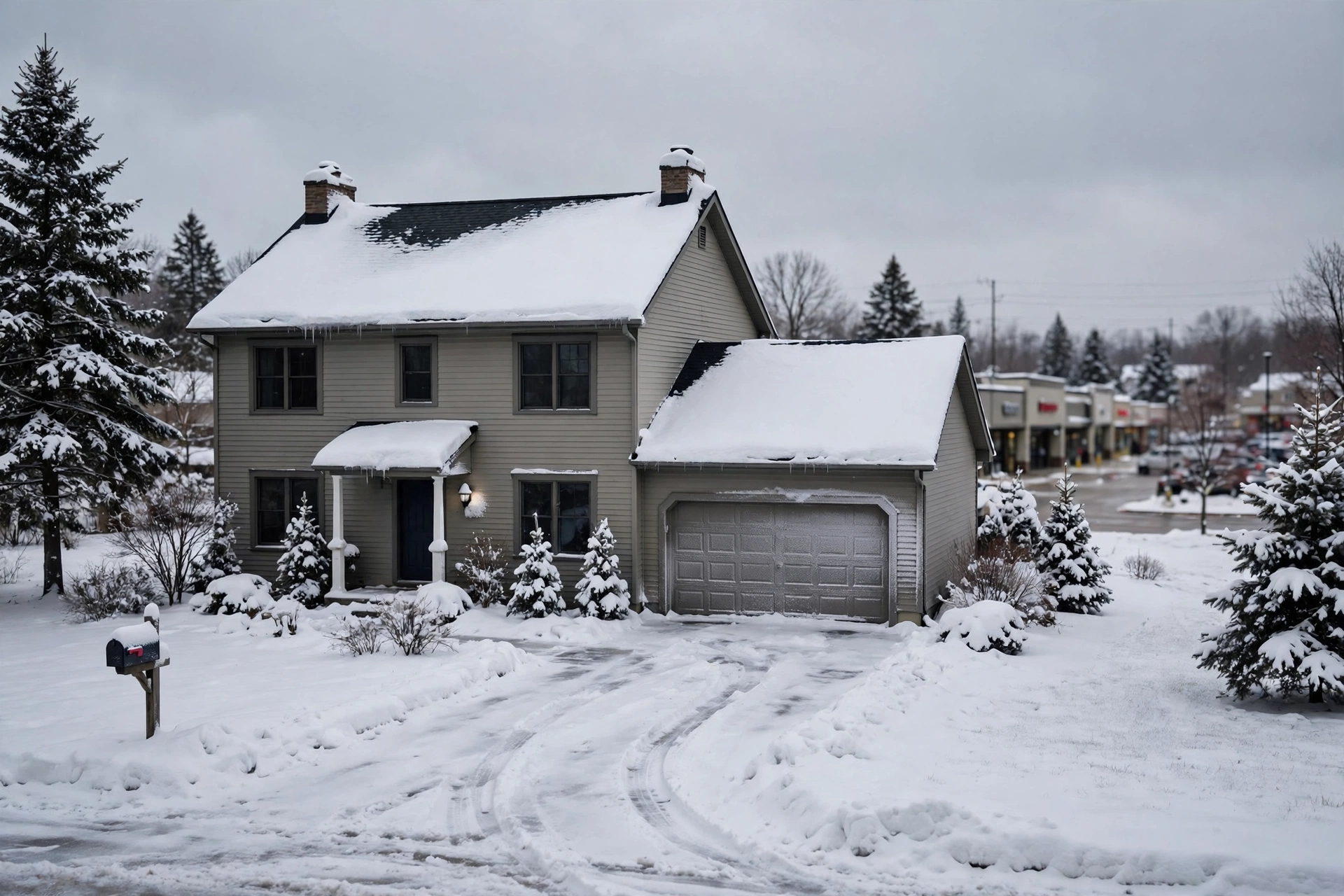
We repair furnaces across Grand Chute, from single-stage gas units in older ranch homes to two-stage systems in newer subdivisions. When your furnace blows cold air, short cycles, or quits outright, call us and tell us what you hear, smell, and see. Those details help us find the fault faster once we are in front of the unit.
The Fox River Mall anchors the town, and the corridor around it is the landmark most Grand Chute residents use when giving directions. Appleton International Airport sits just west in Greenville, close enough that travelers and airport workers live all through Grand Chute. For hospital directions, ThedaCare Regional Medical Center in Appleton and St. Elizabeth Hospital serve the area, and both are a short drive east along College Avenue.
That geography shapes furnace work in a practical way. Homes near the corridor often share a similar build era, with slab-on-grade construction in some subdivisions and basements in others. Slab homes run ductwork differently than basement homes, and a slab duct problem shows up as one cold room that never quite warms. We check duct runs and register airflow in those homes before recommending any equipment change.
The town's main shopping center and the landmark most people name first when describing where they live.
The main commercial route through Grand Chute, lined with shops, offices, and restaurants.
Just west of town in Greenville, a useful orientation point for visitors and new residents.
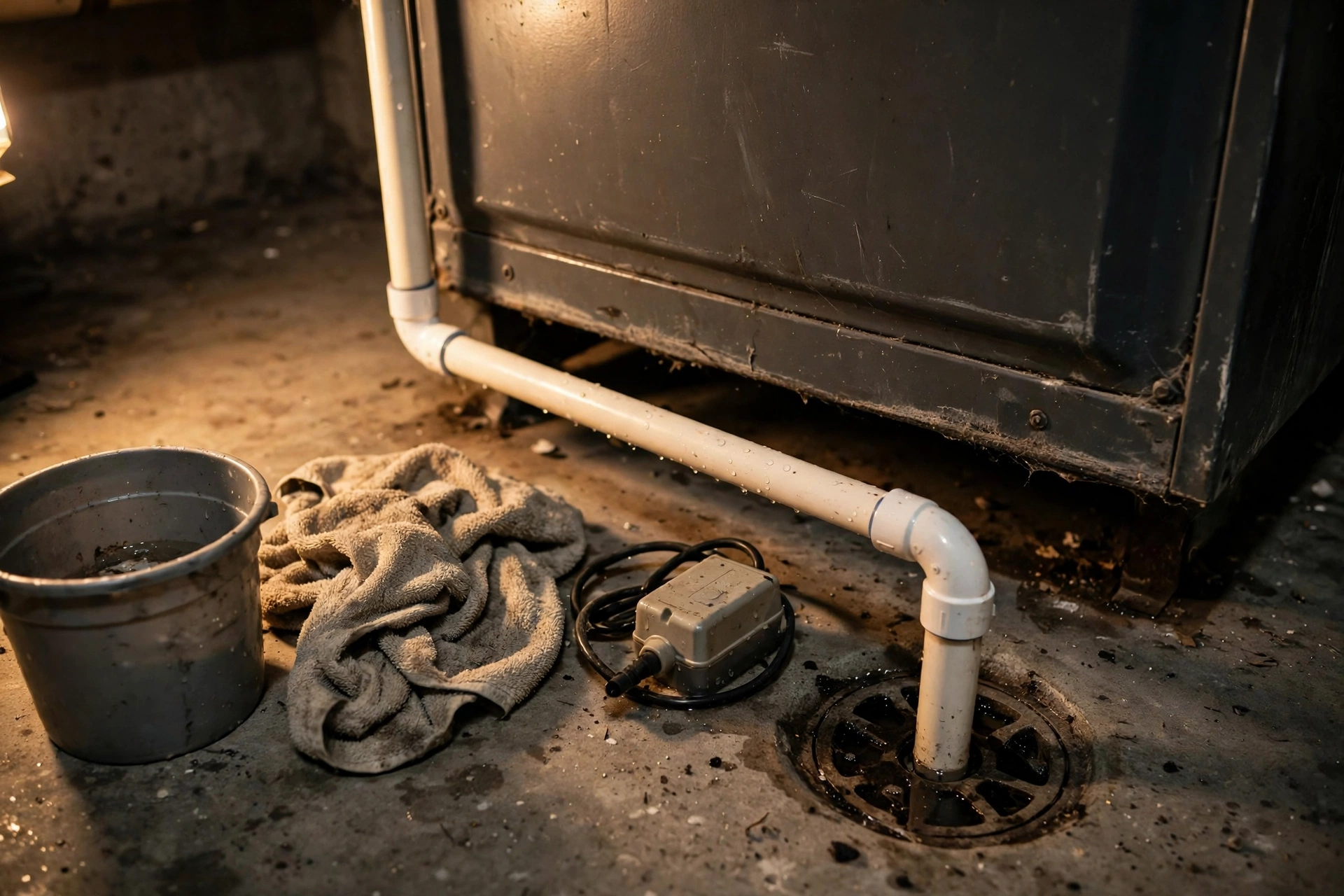
High-efficiency furnaces make water as they run, and a frozen or blocked condensate line shuts the unit down as surely as a failed part. Clearing the PVC drain, checking the condensate pump, and insulating exposed runs is routine in our gas furnace service during cold snaps.
Grand Chute's corridor holds more than single-family homes. Apartment buildings near the mall and offices along College Avenue run heating equipment for longer hours and more occupants than a house furnace, and their complaints sound different: a whole floor that stays cool, a rooftop unit that cycles oddly, or a shop that warms slowly after opening. Those jobs start with the building's layout and its thermostat zones, not with a house checklist.
Apartment living also changes who calls and who approves work. A tenant may notice the problem first while a building owner or manager approves the repair, so we explain the finding in terms both can use: the failed part or the airflow problem, in plain words, with no jargon. That clarity matters when a repair affects several households at once.
Shops add one more wrinkle: doors that open all day in winter. Every opening pulls cold air in and makes the heating system work harder to recover, which wears igniters and motors faster than in a closed home. Keeping entry doors adjusted and checking thermostat placement away from the entrance helps those spaces hold temperature through a shopping day.
Shop and apartment heating mixes galvanized steel ductwork, flexible duct runs, and sheet-metal plenums, and we measure airflow with an anemometer and gas pressure with a manometer before recommending anything. All gas and venting work follows the furnace manufacturer's instructions and local building code, and carbon monoxide alarms are checked wherever a gas unit serves sleeping rooms.
Most Grand Chute calls fall into three groups: a furnace that will not start, a furnace that runs but heats unevenly, and a furnace that makes a new noise. Each group gets a different first check, and the cards below link to the service pages that explain each job in full.
Gas furnaces dominate Grand Chute homes, so ignition, flame sensing, and venting get the closest look on a no-heat visit.
Weak airflow in a two-story subdivision home often traces back to the blower, its capacitor, or a dust-loaded wheel.
A fall tune-up catches a coated flame sensor, a cracked igniter, or a blocked vent before the first hard freeze.
When a corridor furnace vents outdoors, frost on the intake is a January regular. Our intake and exhaust freeze-up guide shows what to clear safely, and heat exchanger checks matter for the older units still serving corridor apartments. Homes on the Appleton side of the corridor start at our Appleton furnace repair homepage.
Cold house in Grand Chute? Call Paper City Heating and describe what your furnace is doing.
Call (920) 523-4330Grand Chute grew fast, and that growth shows up in its heating equipment. Newer subdivisions near the mall corridor often have high efficiency condensing furnaces with PVC intake and exhaust pipes that run outside through a side wall. Older pockets of town still run mid efficiency units with metal venting into a chimney. The two setups fail in different ways, so a visit here starts with identifying which kind of furnace you own, not with a generic checklist.
Winter wind off the open commercial lots and parking areas around the corridor makes exposed intake pipes and exterior vents more likely to collect frost. A condensing furnace that cannot breathe will lock out for safety, and the house cools fast while the thermostat still calls for heat. We check vent terminations, condensate drains, and pressure switches first on those calls, because a blocked vent is a common and fixable cause of a no-heat night.
Inside, the mix of housing matters too. Larger two-story homes with a single furnace often show one cold upstairs bedroom while the main floor feels fine. That pattern usually points to duct balance, a weak blower motor, or a closed damper rather than a dying furnace. We test airflow room by room, check the blower wheel for dust buildup, and look at filter size, since an undersized or clogged filter starves the whole system.
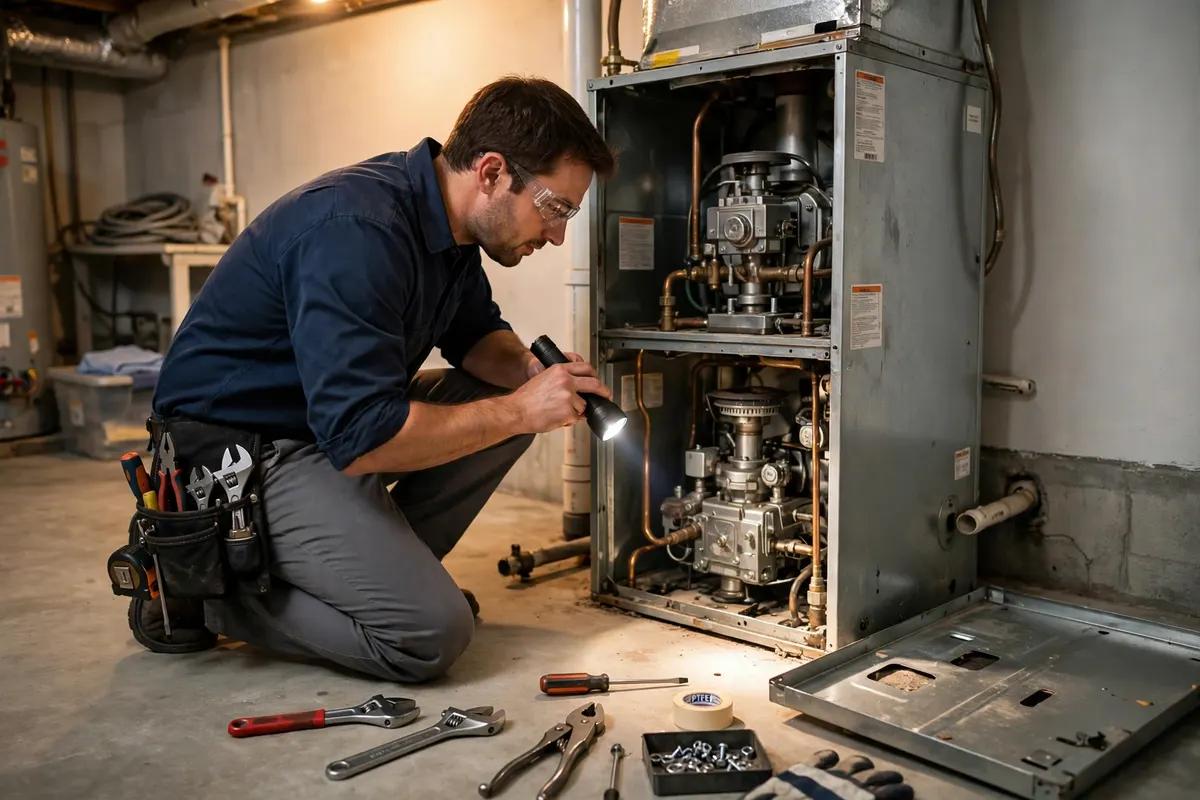
A Grand Chute furnace visit covers the ignition system, flame sensor, inducer motor, and control board in that order when the complaint is no heat. Each part leaves its own clue. A flame sensor coated in oxide, for example, lets the burner light and then drops it within seconds. An inducer that groans on startup points to bearings on their way out. Naming the failed part matters, because it keeps the repair focused instead of turning into a string of guesses.
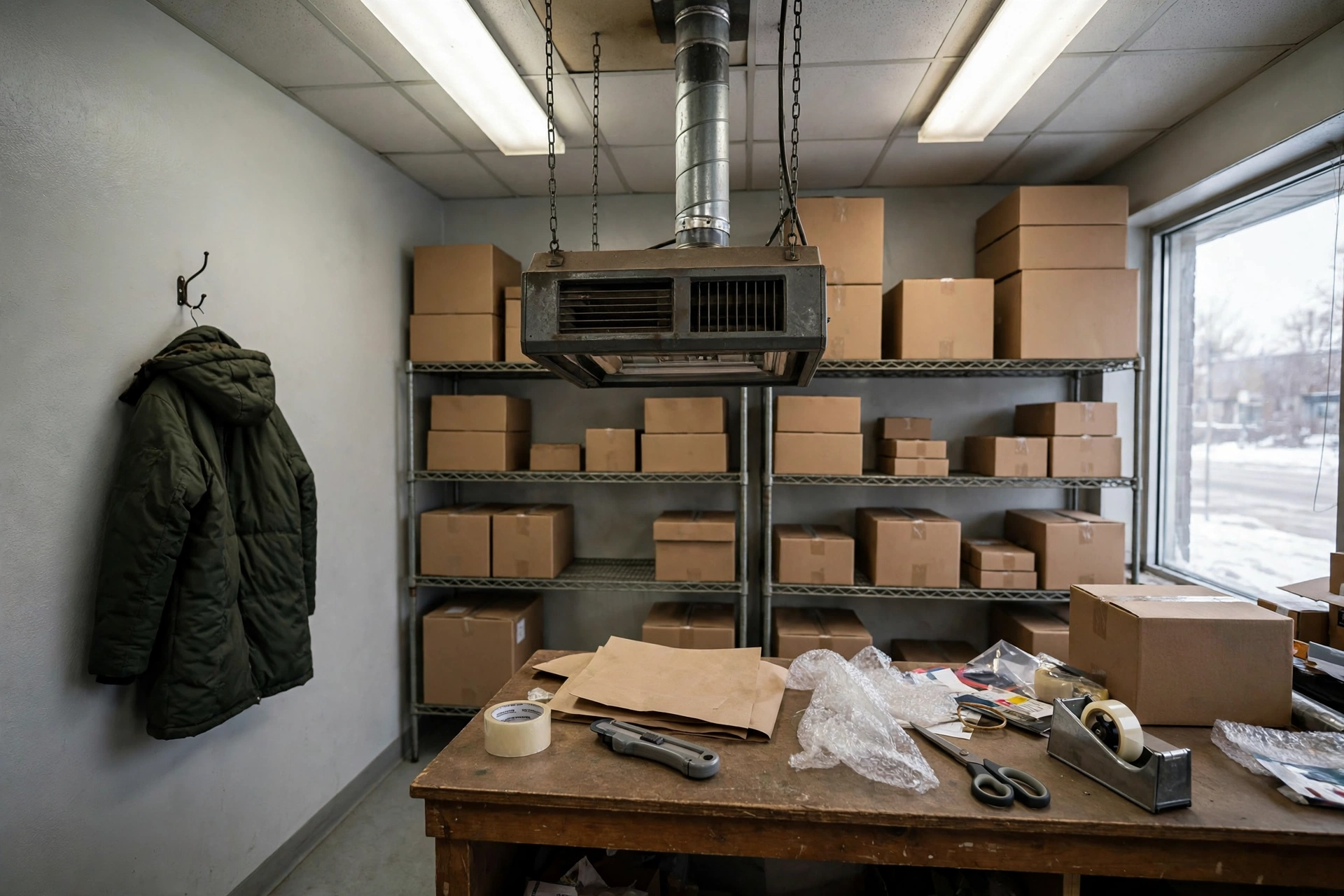
Corridor shops heat differently from homes: a ceiling-hung unit heater, a rooftop unit, or a furnace serving a showroom and a back room. Our commercial furnace service treats shop heat as working heat, with airflow and thermostat placement checked against how the space is actually used.
Fox Valley winters bring long stretches where daytime highs stay below freezing, and Grand Chute feels that cold with wind moving across open lots. January nights here commonly drop into the teens, and a furnace that short cycles in mild weather will often fail outright on the first hard cold snap. The strain lands on igniters, which cycle more often, and on condensate lines in high efficiency units, which can freeze where they run through a cold garage or along an outside wall.
The fix for a frozen condensate line is simple once found, but the line must be rerouted or insulated so the same freeze does not return with the next cold front. We also see thermostat placement problems in larger Grand Chute homes, where a thermostat on a warm interior wall or near a sunny window shuts the furnace off while far rooms stay cold. Moving the control or adding a zone damper can even out those rooms without replacing the furnace.
| Winter trouble | What you notice | What we check first |
|---|---|---|
| Blocked intake or exhaust vent | Furnace locks out, house cools | Vent terminations, pressure switch |
| Frozen condensate drain | Unit shuts down, water near the furnace | Drain line route, trap, pump |
| Weak blower motor | Some rooms cold, weak airflow | Blower wheel, capacitor, motor |
| Dirty flame sensor | Burner lights then drops out | Sensor cleaning, ignition control |
Our Grand Chute work centers on the Fox River Mall area and the W College Avenue corridor, where retail, offices, and nearby housing sit close together. West side residential streets, apartment clusters near the corridor, and the subdivisions that fan out from it all fall inside our regular service area for this town.
Shops, offices, and nearby homes around the mall corridor, where heating runs long hours in winter.
Commercial buildings and housing along the main east-west route through town.
Subdivisions and apartment buildings west of Appleton, with a mix of newer and older furnaces.
ZIP codes for Grand Chute run 54911 through 54915, shared in part with Appleton addresses on the town line. If your mailing address says Appleton but your home sits in Grand Chute, tell us the town when you call so we route the visit correctly.
Grand Chute joins Appleton along West College Avenue, and the map below shows the town we serve.
Cold nights expose vent and drain problems that mild weather hides. A condensing furnace with a frosted intake pipe or a frozen condensate line shuts down for safety. We clear the blockage, check the pressure switch and drain route, and insulate or reroute the line so the same freeze does not return.
Not usually. In two-story Grand Chute homes, the cause is more often duct balance, a weak blower, or a closed damper. We measure airflow at each register and check the blower before talking about equipment size, since a balance fix costs far less than a new furnace.
Yes, we work in apartment buildings and rental homes around the corridor, with the same checks as a single-family home. Tell us whether you are the owner or the tenant when you call, so we know who can approve the repair.
Check that the thermostat is set to heat and above room temperature, that the furnace switch is on, and that the filter is not clogged solid. If the unit still will not start, note any blinking light on the control board and any sound it makes, then call us with those details.
Look for white plastic vent pipes running to an outside wall, plus a condensate drain line and a small pump or floor drain nearby. Mid efficiency furnaces use a metal vent into a chimney instead. The vent type changes how we diagnose a lockout, so it helps to mention it when you call.
Yes. A filter clogged with dust restricts airflow, overheats the heat exchanger, and trips a high-limit safety switch. The furnace then shuts off or short cycles. Replacing the filter and checking the blower usually restores normal heat, unless the overheating has already damaged another part.
Tell us what your furnace is doing and we will talk through the next step.
Call (920) 523-4330A furnace that heats every room evenly makes a Fox Valley winter far easier to live through. Call Paper City Heating and we will get your Grand Chute home back to steady heat.
Call (920) 523-4330 Contact usLast updated: October 31, 2026