Call us and we will look at your current setup, talk through fuel and size options in plain words, and lay out what the install day will look like before any work starts.
Signs your old unit is done
Listen for changes that stick around. A burner that roars, a blower that squeals, or a cabinet that rattles every time the heat comes on tells you something has worn loose or out of balance. One odd noise on one cold night is not a verdict. The same noise every night, getting louder, is worth a look.
Watch the rooms, not just the thermostat. When the living room feels fine and the back bedrooms stay cold, or when the temperature swings several degrees between cycles, the furnace may be oversized, undersized, or starved for air. Thermostat readings can look normal while the house feels uneven, because the thermostat only measures one spot. We walk the house and check supply air at several registers before we judge a unit.
Rust, soot marks, and a yellow or lazy burner flame are signs to take seriously on a gas or propane unit. Rust around the vent or inside the cabinet often means moisture is condensing where it should not. Soot means combustion is not clean. Either one is a reason to stop using guesswork and get the unit inspected, and both can tip a borderline furnace toward replacement rather than another patch.
A note from install day
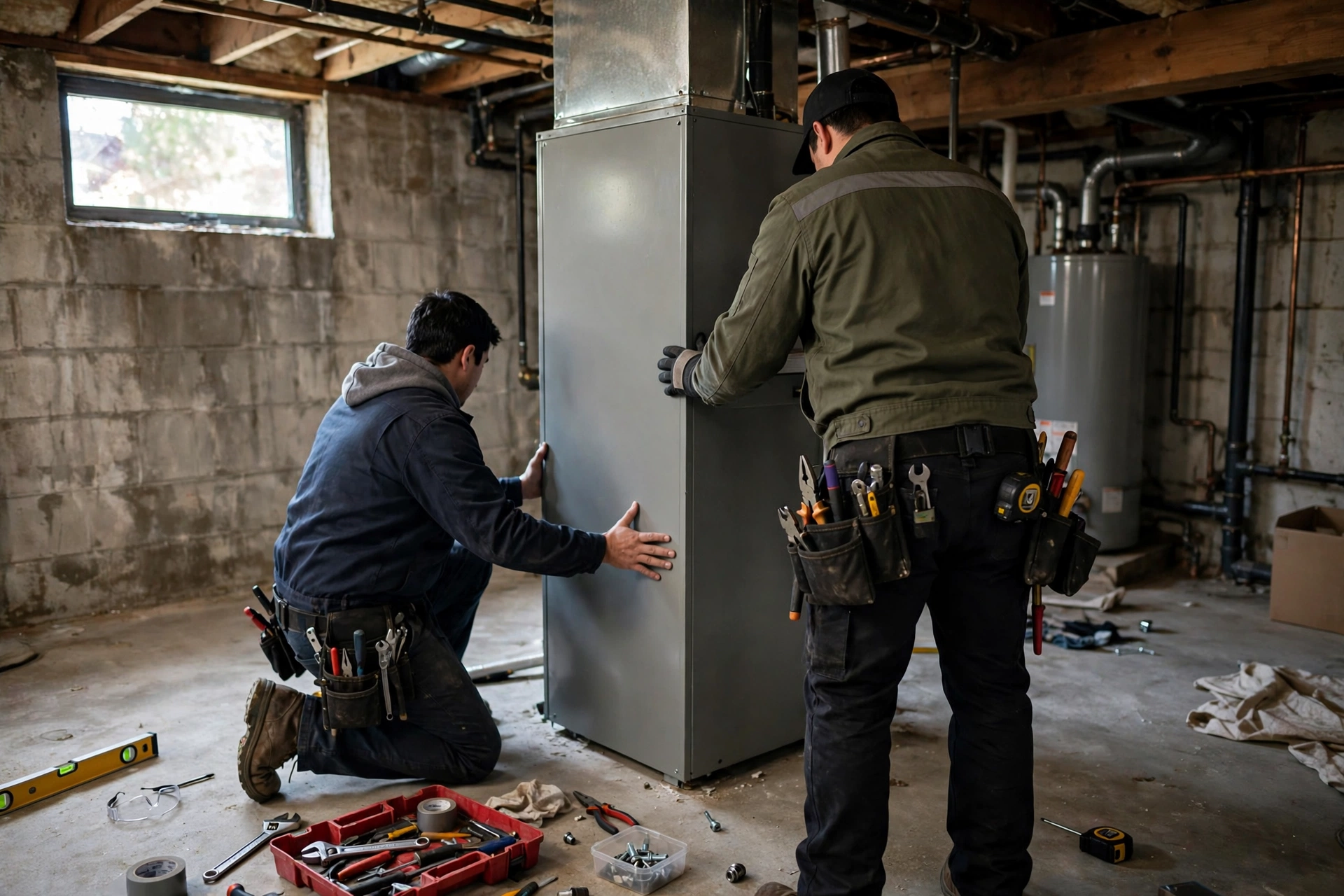
Install day starts with protection, not demolition. We lay down floor covering on the path from the door to the furnace, and we clear a work zone around the old unit before any wrench turns. That habit matters in a finished basement, where a scuffed floor or a dented wall outlasts the install itself. Homeowners often watch the first hour and relax once they see the care taken with the house, not just the furnace.
Once the old unit is out, we inspect the pad and the duct connection with fresh eyes. A pad that settled, a duct collar that rusted, or a vent joint that never sealed properly all show up at this moment, when they are easy to fix. Fixing them now, while the area is open, beats discovering them after the new unit is set and sealed. We point out anything we find and fix it with your agreement, before the new furnace goes in.
The final test is the part families remember least and value most. We run the furnace through several full cycles, check supply air at rooms near and far, and test safety controls and carbon monoxide levels before we call the job done. Then we walk you through the thermostat, the filter location, and the condensate drain, so the first cold night with the new unit feels ordinary, which is exactly how a good install should feel.
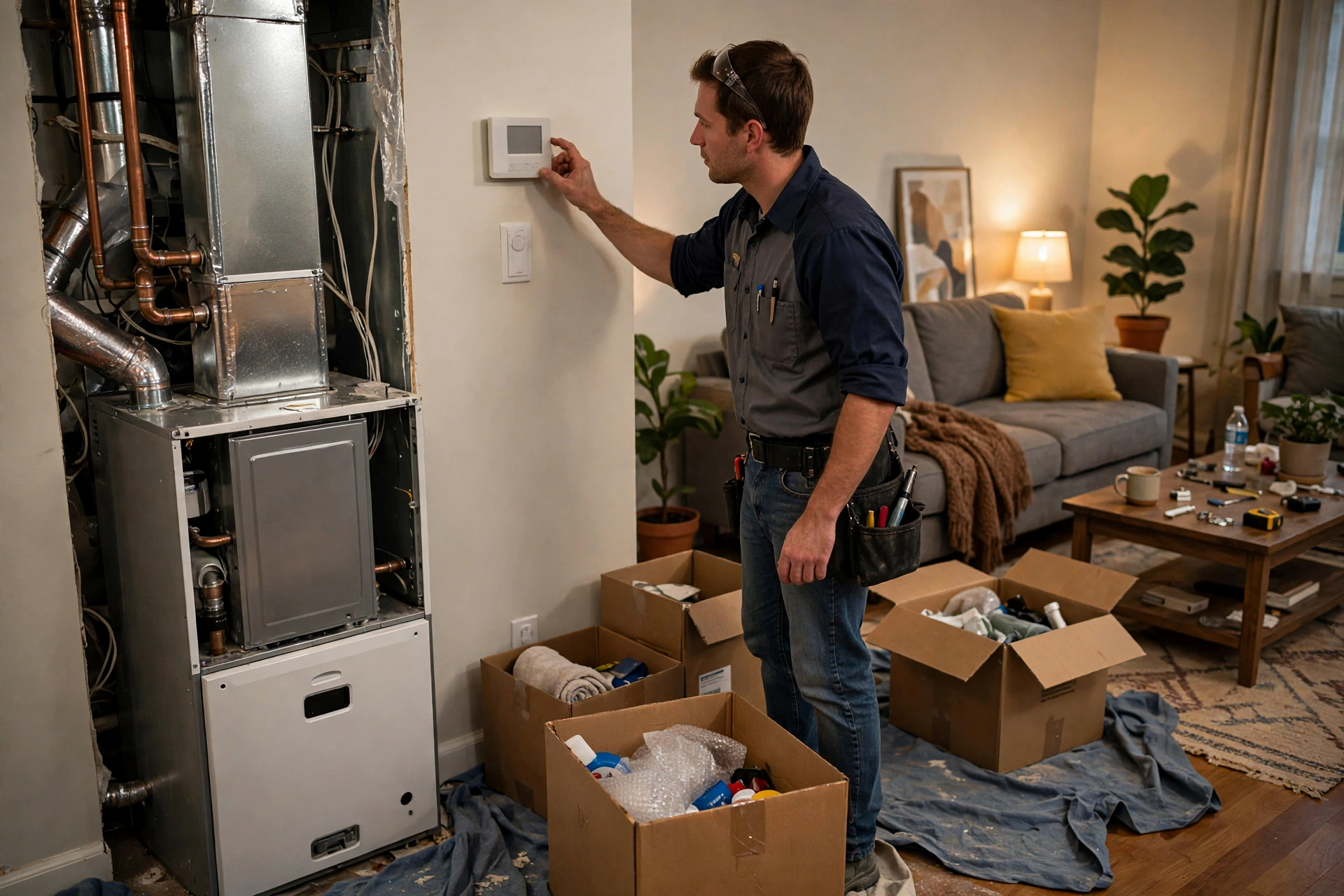
We also check the thermostat location during an install visit, because a new furnace paired with a thermostat in a sunny spot or above a register will still heat unevenly. Moving a thermostat is a small job compared with an install, and doing it at the same time saves a second visit. We mention it when we see it, and we leave the choice with you, with the reason explained plainly.
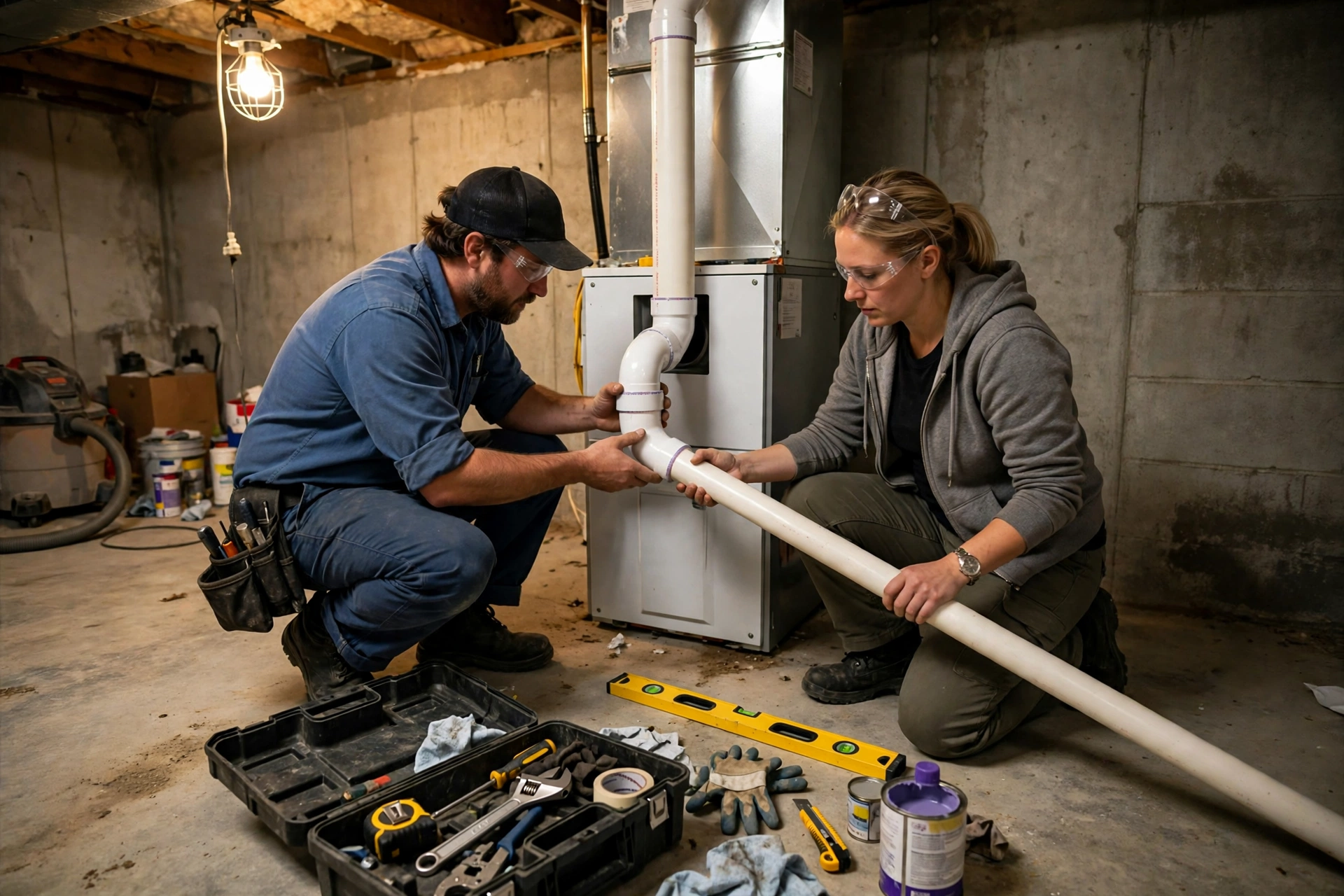
Venting is where a new install succeeds or fails quietly. We fit PVC vent and intake piping with the slope the furnace maker specifies, support long runs so condensate cannot pool, and seal each joint so exhaust leaves the house instead of the basement. A vent that sags or slopes the wrong way trips the pressure switch on cold nights, and that fault looks like a bad furnace when the real fault is a pipe run, which is why venting gets checked on our gas furnace visits as well.
What the first winter with a new furnace feels like
The first change most families notice is steadier heat. Rooms stop swinging between warm and chilly, and the furnace runs in longer, quieter stretches instead of short bursts. That steadiness matters on nights when the wind picks up off the Fox River and the temperature drops fast after sunset.
The second change is sound. A new blower and a sealed cabinet run quieter than a worn unit with loose panels and a tired motor. You hear the heat less and feel it more evenly, which sounds small until you have lived through a winter with a rattling cabinet outside a bedroom wall.
Keep the filter habit from day one. A clean filter protects the blower, keeps airflow strong, and helps the new unit run the way it was sized to run. We show you where the filter sits, what size it takes, and how often to check it in heating season, so the new furnace starts its life with a simple routine behind it.
The first winter with a new furnace should feel uneventful: steady temperatures, no lockouts, and a filter that stays clean between changes. Keep the vent outlet clear of snow, keep return grilles open, and note any new noise early. Those habits follow the maker's instructions, and they protect the blower and controls that thermostat and zone work relies on to call for heat correctly.
Thinking about a new furnace? Call Paper City Heating and talk through size, fuel, and timing with a real person.
Call (920) 523-4330 Contact Us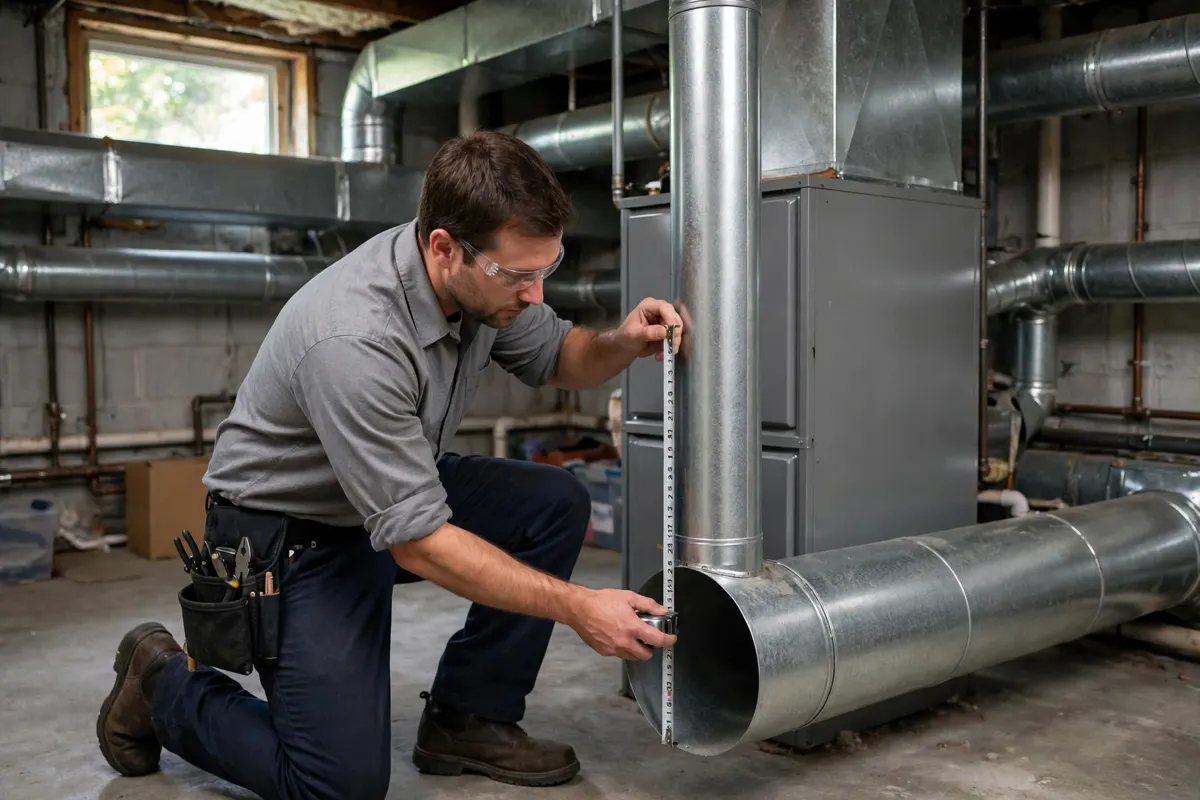
Before install day, we check the whole house
Install work starts with measurement, not with a unit on a truck. We measure rooms, note insulation and windows, and check the duct and vent paths before we recommend a size. That order keeps a new furnace from repeating the old unit's sizing mistake.
Once the size is set, we walk through fuel, stage, and vent options in plain words. You choose with the trade offs in front of you, not from a brochure. The install itself then follows the plan we agreed on, with no surprises at the end of the day.
How we install a furnace
Install day runs smoother when you know the order of work. Our crew protects floors on the way in, keeps the work area tidy, and leaves the old unit ready for haul away. Most installs finish in a day, though vent changes or duct repairs can stretch the job. We tell you that up front, not at the end of the day.
Look and measure
We inspect the old furnace, the ducts, the vent path, and the thermostat, then measure the rooms and note insulation and window quality.
Size and select
We size the unit from heat loss, not from the old nameplate, and we walk through fuel, stage, and vent options with you.
Remove and set
We disconnect the old unit, set the new furnace level, connect gas or electric supply, venting, and condensate, and seal duct joints.
Test and walk through
We fire the unit, check airflow at registers, test safety controls and carbon monoxide levels, and show you the thermostat settings.
The U.S. Department of Energy explains how furnace efficiency and sizing affect comfort in its furnace guide, and we follow that same sizing logic on every install: furnaces and boilers guidance from the Department of Energy.
The last step of an install is a full test, not a handover. We run the furnace through several heating cycles, check temperature rise across the heat exchanger against the rating plate, and confirm the thermostat, blower, and limit controls agree. Sheet-metal plenums, flexible gas connectors, and condensate traps are fitted to the maker's instructions, and a combustion analyzer reading at the flue confirms the burner is set right before we leave.
When a new furnace makes sense
A repair makes sense when one part has failed and the rest of the unit is sound. Replacement makes sense when repairs keep coming back, parts are hard to find, or the furnace can no longer hold a steady temperature. Age alone does not decide it. We look at the heat exchanger, the blower, the controls, and the venting together, because a furnace is a system and one weak part can hide another.
Short cycling is a common turning point. The furnace fires, shuts down fast, fires again, and never settles into a steady run. That pattern wears parts, leaves cold spots, and often points to a sizing or airflow problem rather than a single broken switch. A new unit sized to the house, with ductwork checked at the same time, usually ends that cycle. If the ducts are leaking or blocked, though, a new furnace alone will not fix cold rooms, so we check that before we recommend anything.
Fuel matters too. A home on natural gas, a home on propane, and a home wired for electric heat each need a different unit, a different vent path, and a different set of safety checks. We do not push one fuel over another. We match the unit to what the house already has, what the family needs from it, and what Wisconsin winters demand from it.
A new furnace makes sense when the old unit's heat exchanger is cracked, when major parts fail winter after winter, or when the house has changed enough that the old size no longer fits. In Kimberly and Appleton, we measure the house, the ductwork, and the existing venting before recommending a size, because a furnace chosen from the old nameplate alone repeats the old unit's mistakes.
Choosing size and fuel type
Furnace size is about heat loss, not square footage alone. Two houses with the same floor plan can need different furnaces if one has newer windows, tighter walls, and a finished basement while the other has drafty rooms and an uninsulated crawl space. We measure rooms, note insulation and window quality, and account for ceiling height before we size a unit. An oversized furnace heats fast, shuts off fast, and leaves humidity and cold spots behind. An undersized one runs all day and still falls behind in deep cold.
Single stage, two stage, and modulating burners change how heat arrives in the rooms. A single stage unit runs at full output or not at all. A two stage unit can run low on mild days and step up when the cold deepens. A modulating unit adjusts in smaller steps and holds a steadier temperature. None of these is right for every house. A small, tight home may do well with a simpler unit, while a larger home with rooms that heat unevenly often benefits from longer, gentler runs.
Venting and condensate handling decide part of the choice as well. High efficiency condensing furnaces use plastic vent pipe and produce condensate that needs a drain path that will not ice up. Standard efficiency units use metal venting and a chimney path. The house, the basement layout, and the local code path all shape that call, and we explain the trade off in plain terms before you choose.
Choosing size and fuel type is a load question first and a brand question second. A Manual J style room-by-room load check, the duct sizes, and the available fuel all shape the answer, and the installation must follow the maker's instructions and local code for gas piping, venting, and clearances. Our ductwork and airflow page explains why new equipment on old ducts can disappoint, and a yearly tune-up is what keeps the new unit at its rated performance.
Questions homeowners ask about furnace installation & replacement
How long does a furnace installation take in Appleton?
Most standard furnace installations finish in one working day, from old unit removal to final testing. Vent changes, duct repairs, or an electric service change can add time, and we flag those items during the sizing visit so install day holds no surprises for you.
Should I replace my furnace or repair it again?
Replace it when repairs keep repeating, key parts are scarce, or the unit cannot hold a steady temperature through cold weather. Repair it when one part has failed and the rest of the furnace, including the heat exchanger, tests sound. A full inspection gives you that answer with facts, not a guess.
What size furnace does my Appleton home need?
Size comes from heat loss, which counts room sizes, insulation, windows, ceiling height, and air leakage. Square footage alone gives a rough guess that often oversizes the unit. A proper load calculation matches the furnace to the house so it runs steadily instead of short cycling.
New furnace vs keeping the old one
The choice below is not about new versus old in general. It is about your furnace, its condition, and what the inspection found.
| Choice | When it fits | Watch out for |
|---|---|---|
| New furnace | Repairs repeat, parts are scarce, or the unit cannot hold temperature | Duct leaks or blocked returns still need fixing too |
| Major repair | One part failed and the rest of the unit tests sound | A second major part may follow soon after |
| Keep and maintain | Unit runs steady, holds temperature, and passes safety checks | Skipped maintenance shortens the life of any unit |
Common questions about furnace installation & replacement
How do I know if my furnace is too big or too small?
An oversized furnace heats fast, shuts off fast, and leaves cold spots and temperature swings. An undersized furnace runs almost constantly in deep cold and still falls behind. We check run times, register temperatures, and room comfort together, because one symptom alone does not prove a sizing problem.
Do you remove the old furnace?
Yes. We disconnect the old unit, take it out of the house, and leave the work area clean. We also check the pad, the duct connection, and the vent path where the old unit sat, so the new furnace starts on a sound base.
Will a new furnace work with my existing ducts?
In most homes, yes, if the ducts are sound and sized sensibly. We inspect supply and return runs, look for leaks and crushed sections, and test airflow. Duct repairs, when needed, happen alongside the install so the new unit is not fighting a restricted airway.
What is a condensing furnace?
A condensing furnace captures extra heat from exhaust gases, so it runs at higher efficiency than a standard unit. It vents through plastic pipe and produces condensate that needs a drain. The drain path must be protected from cold, and we plan that route during the install visit.
Can I switch fuel types during replacement?
Sometimes, but it depends on what reaches the house. Natural gas needs a gas line and meter capacity. Propane needs a tank and line. Electric needs service capacity. We check what is available and what each change would involve before you decide.
How often should a new furnace be serviced?
Once a year, before heating season, is the rhythm that keeps most furnaces in good shape. A yearly visit covers cleaning, safety controls, airflow, and vent checks, and it catches small wear before it becomes a cold night problem.
Related services
Talk to Paper City Heating
Call us at (920) 523-4330 or email info@furnacerepairappletonwi.com about a furnace change. Tell us the age and layout of your home, and we will walk through sizing, venting, and ductwork before any install date is set.
Call (920) 523-4330 Contact UsLast updated: October 31, 2026