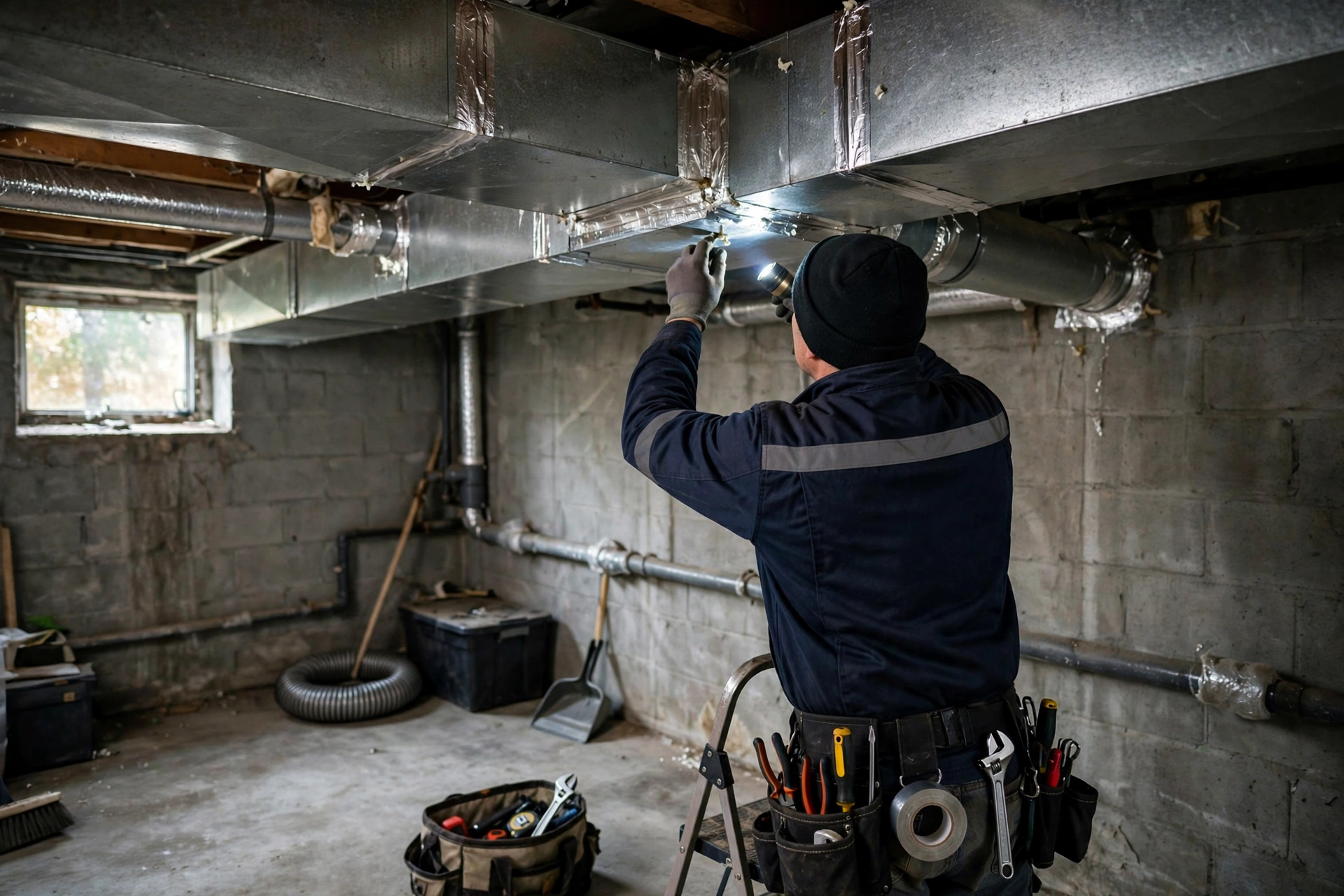
We focus on furnace airflow only: the ducts, registers, returns, and dampers that move heated air. Call us when some rooms lag behind, one floor feels different from another, or the furnace runs long without warming the house evenly.
Why some rooms stay cold
Heat takes the easiest path. A short, straight duct to a nearby room delivers plenty of air, while a long run with several turns to a far bedroom delivers less. That imbalance is built into many duct systems, and it grows worse when a run leaks, a damper sits half closed, or a register gets blocked by furniture. The furnace is not at fault. The air simply never arrives.
Returns matter as much as supplies. A bedroom with a supply register but no return path, or a return blocked by a closed door, pressurizes the room and chokes supply flow. Air needs a way back to the furnace, through a return grille, a transfer grille, or a gap under the door. When that path closes, the room feels stuffy and cool at the same time, because fresh warm air cannot get in while old air cannot get out.
Two story homes add stack effect. Warm air rises, so upper rooms can overheat while lower rooms stay cool, or the reverse happens when a lower return pulls too hard. A basement that stays cold while the main floor feels fine often means a supply run was never balanced, or a basement register was closed years ago and forgotten. We map the whole system before we change any damper.
Cold rooms usually have a cause you can find: a long duct run with too many bends, a register blocked by furniture, or a return that pulls from only one end of the house. In Menasha bungalows and newer Appleton builds alike, we map the runs before changing anything, because a fix in the wrong duct moves the cold room rather than removing it.
What an airflow visit feels like
An airflow visit feels like a walk through the house with a purpose. We visit every room, note every register and return, and check which doors stay closed and which dampers sit where. That walk takes time, and it is the most valuable part of the visit, because a duct map drawn from memory is always wrong in one room that matters.
Measuring comes second, register by register, with a thermometer and an airflow reading. Numbers beat impressions here. A room that feels cold may measure fine, which points to a draft or a window problem rather than a duct problem. A room that feels fine may measure weak, which points to a run that will fail on the coldest night. Either way, the readings decide, not the feeling alone.
Balancing is the patient part. We adjust a damper, remeasure, and adjust again, until rooms even out without starving any one room. That iteration takes longer than a single adjustment, and it is the difference between a house that feels balanced and a house that feels balanced in one room and cold in another. We remeasure at the end, so the result is recorded, not guessed.
We also check the furnace filter and blower on every airflow visit, because ducts cannot deliver air a blower cannot move. A weak blower or a clogged filter mimics a duct fault, and balancing ducts around a weak blower only hides the real problem. We test the source first, then the delivery.
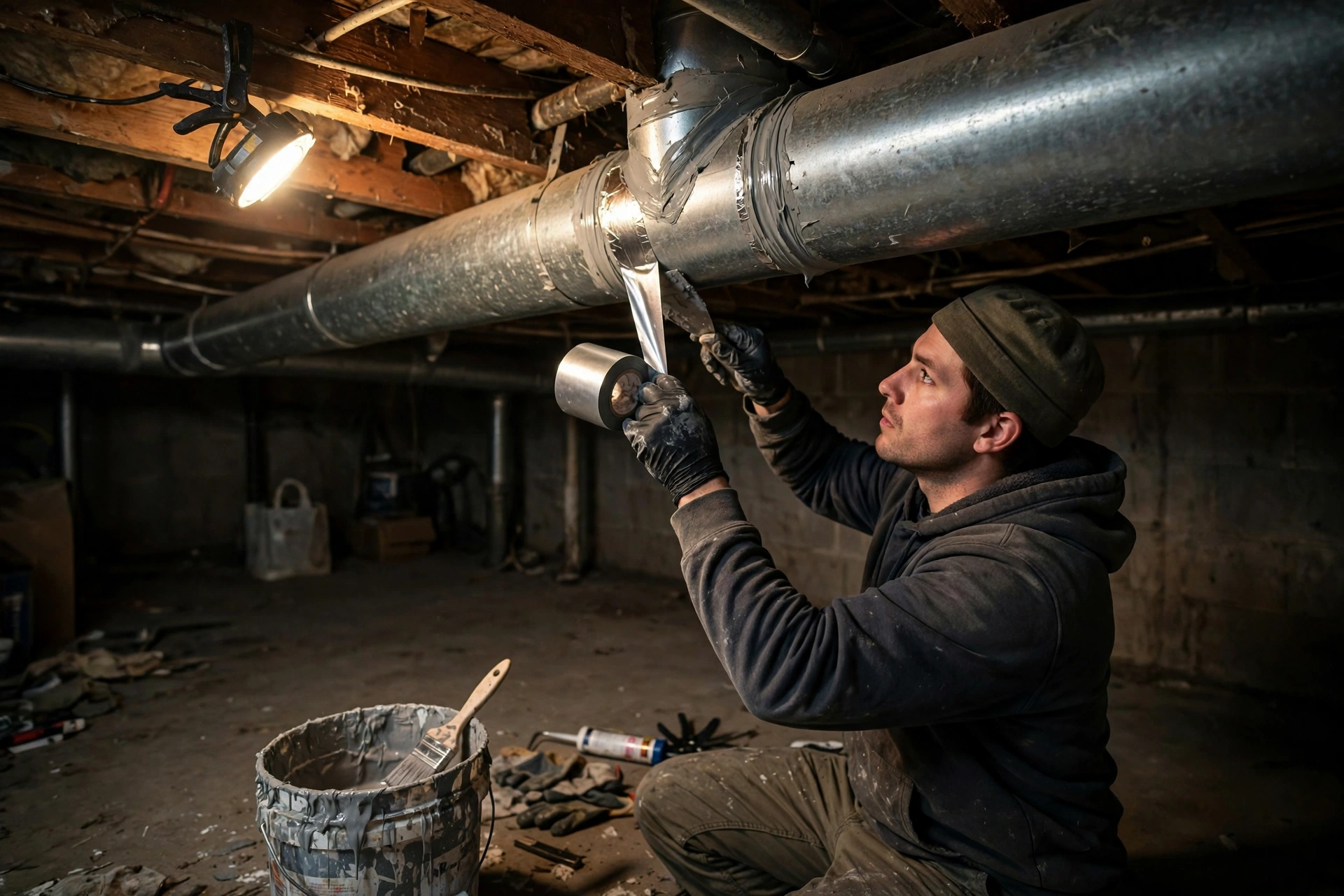
Leaky joints waste the heat a furnace just made. We seal galvanized joints with mastic and foil tape, never cloth duct tape that dries out, and we check each joint with a smoke pencil or a pressure reading. A disconnected trunk line in a basement can starve every room downstream, and sealing it often does more for comfort than any thermostat change, which is why airflow work pairs with blower motor repair when the fan cannot overcome the leaks.
The Department of Energy covers duct sealing and airflow as part of home heating efficiency, with plain advice on leaks and insulation: duct guidance from the Department of Energy.
Some rooms cold while others feel fine? Call Paper City Heating and we will map your airflow.
Call (920) 523-4330 Contact UsHow we test airflow room by room
Airflow work starts with a map, not a damper wrench. Without a map, an adjustment in one room can starve another, and the house ends up uneven in a new pattern.
Walk and map
We walk the house, note every supply and return, check damper positions, and look for blocked registers.
Measure room by room
We measure air temperature and flow at registers, compare rooms, and note which runs lag behind.
Inspect accessible ducts
We check joints, runs, and insulation in basements and accessible spaces for leaks, crush damage, and separation. Repairs follow accepted duct construction standards, and sealed joints are finished to the local building code for air leakage.
Seal, repair, balance
We seal leaks, repair damaged runs, adjust dampers, and remeasure until rooms even out.
What we do not do with ducts
We do not sell standalone duct cleaning as a service. Cleaning a duct that is leaking, crushed, or unbalanced does not fix the airflow problem, and it can stir dust without changing room temperatures. When a duct needs cleaning as part of a repair, for example after a run is opened and debris is found inside, we handle that as part of the repair work.
We also do not promise that duct work alone will fix a furnace problem. A failing blower, a cracked exchanger, or a dead burner needs its own repair, and duct sealing will not cover for it. Airflow work and furnace work go together, and we tell you which one your house actually needs before we start either.
Between visits, keep registers open and uncovered, change the filter on schedule, and keep basement duct joints in view rather than buried behind stored boxes. Those habits follow the furnace maker's installation instructions for airflow, and they protect the blower wheel and heat exchanger that heat exchanger service checks for soot and stress.
Room-by-room balance at a glance
Room patterns point to different causes. The table below matches the pattern you feel to the likely cause and the first fix to try.
| Room pattern | Likely cause | First fix |
|---|---|---|
| One cold room | Its run is crushed, leaking, or damped down | Inspect that run and damper |
| Cold floor, warm floor above | Trunk imbalance or missing return | Balance dampers, check returns |
| Whole house weak | Clogged filter or weak blower | Filter, blower, and trunk check |
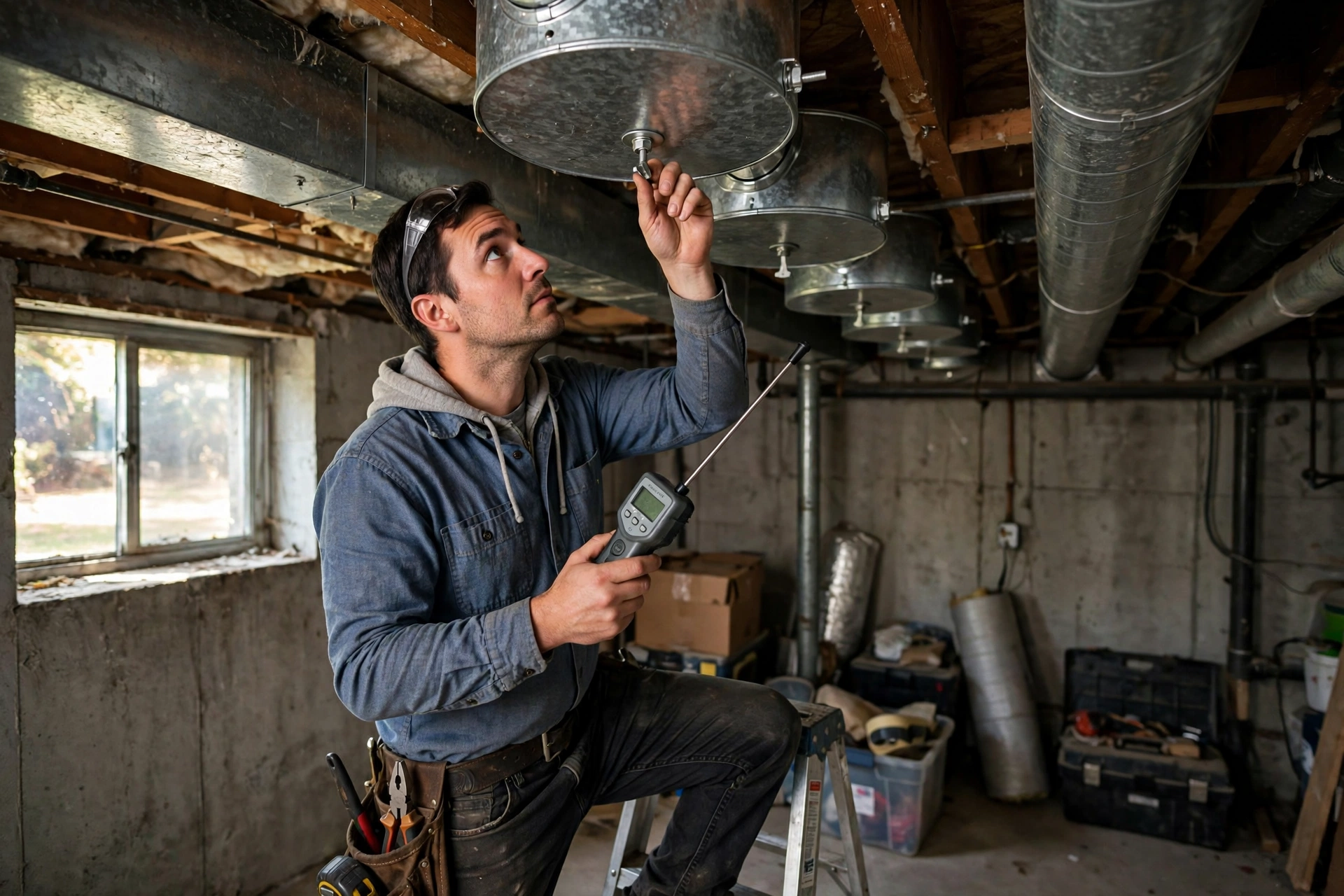
Balancing is measurement, not guesswork. An anemometer at each register and a manometer across the filter tell us which rooms are short of air and by how much. Sheet-metal trunks, flexible branches, and manual dampers each respond differently: a damper closed too far whistles, and a crushed flex run barely passes air at all. We adjust to the furnace maker's airflow range, and the result should feel even from the nearest room to the farthest, as our thermostat and zone heating work does for homes with separate zones.
Duct fixes that help furnaces
Sealing comes first when leaks are found. We seal accessible joints, reconnect separated runs, and insulate ducts in cold spaces so heat does not bleed out before it reaches a room. Sealing is quiet work, and its effect shows up as steadier room temperatures rather than a louder furnace or a higher thermostat setting.
Balancing comes second. Dampers on supply runs let us send more air to far rooms and less to near rooms, until temperatures even out. Balancing is iterative: we adjust, measure at registers, live with the result for a cycle, and adjust again. A damper set once and never measured is a guess, and guesses are why many homes have one hot room and one cold room.
Register and return changes come last, and only where they help. Adding a return path to a closed off bedroom, moving a register away from a draft, or opening a long closed basement run can change a room completely. We do not recommend a full duct replacement lightly. Most airflow problems yield to sealing, repair, and balancing, and a full redo is reserved for systems that are undersized, badly routed, or falling apart.
Duct fixes help furnaces because a furnace that cannot move air overheats and trips its limit switch, which looks like a furnace fault but starts in the ducts. Sealing, insulating runs through cold spaces, and correcting damper settings are the usual remedies, and a yearly tune-up keeps the filter and blower clean so the repaired ducts stay clear. Our guide to older Fox Cities homes explains why their duct layouts behave differently.
An airflow visit starts with a map
Airflow work starts with a walk through the house. Every register, return, and damper gets noted before any adjustment, because a map drawn from memory is always wrong in one room that matters.
Measuring follows, register by register. Numbers beat impressions: a room that feels cold may measure fine, and a room that feels fine may measure weak. The readings decide where the fix goes.
Questions homeowners ask about ductwork & airflow services
Why are some rooms colder than others in winter?
Rooms stay colder when their duct runs are longer, leakier, or damped down, or when returns cannot carry air back to the furnace. A room by room airflow map shows which runs lag, and sealing, repair, and damper balancing usually even out the temperatures.
Does sealing ducts really help heating?
Yes, when leaks are real. Heated air spilling into a basement or attic never reaches a bedroom, so the furnace runs longer for the same comfort. Sealing accessible joints and insulating runs in cold spaces returns that heat to the rooms.
Should I close vents in unused rooms?
Closing vents rarely helps and often hurts. It raises pressure in the duct system, starves the blower, and can trip furnace limits. Balancing dampers at the trunk, rather than closing room registers, is the sound way to shift air between rooms.
Airflow problems we find most often
Leaky joints top the list. Duct joints that were never sealed, tape that dried out, or a disconnected run in a crawl space can spill heated air into a basement or attic instead of a bedroom. That lost air still costs heat, because the furnace ran to warm it. Sealing those joints with mastic or proper tape, and insulating runs in unheated spaces, returns that heat to the rooms.
Crushed and kinked flex duct runs are next. A run squashed by storage, a joist, or a careless step loses most of its airflow, and the room at its end goes cold. Rigid metal ducts dent less easily, but they can still separate at a joint or rust where moisture sits. We walk accessible runs and look for these faults before we touch any damper, because balancing a crushed run only hides the real problem.
Closed or painted over dampers, blocked registers, and dirty filters round out the usual suspects. A damper handle that was turned during a summer project and never turned back, a register under a rug, or a filter clogged for months each cut airflow in a specific pattern. The pattern tells us where to look: one cold room points to its run, a cold floor points to a trunk problem, and a whole house problem points to the filter or the blower.
Common questions about ductwork & airflow services
How do you measure airflow?
We measure air temperature and flow at registers, compare rooms against each other, and check the furnace temperature rise. Those readings together show whether a room is starved, a run is leaking, or the whole system is weak.
What is static pressure?
Static pressure is the resistance air meets moving through ducts, filters, and coils. High static pressure means the blower is working against restriction, which cuts airflow and wears the motor. Measuring it points to filter, duct, or coil problems.
Can you fix airflow without replacing all my ducts?
Most of the time, yes. Sealing joints, repairing a crushed or separated run, clearing a blocked return, and balancing dampers fix most airflow complaints. Full duct replacement fits only systems that are badly undersized, badly routed, or failing throughout.
Why does my upstairs overheat while downstairs stays cold?
Warm air rises, and a system without balanced dampers or proper returns can overheat upper rooms while lower rooms lag. Damper balancing, return paths, and fan settings together even out a two story home.
How often should ducts be inspected?
A duct look belongs in a yearly furnace visit, covering accessible joints, runs, and insulation. A full room by room balance check fits when rooms feel uneven, after a remodel, or after a furnace replacement changes airflow.
Do you clean ducts?
We do not offer standalone duct cleaning. When duct work is opened for repair and debris is found, we handle cleaning as part of that repair. Airflow problems from leaks, crush damage, or balance need repair and balancing, not cleaning alone.
Related services
Talk to Paper City Heating
Call us at (920) 523-4330 or email info@furnacerepairappletonwi.com about rooms that lag while the furnace runs. We will trace ducts, registers, and returns and explain where the airflow is lost.
Call (920) 523-4330 Contact UsLast updated: October 31, 2026