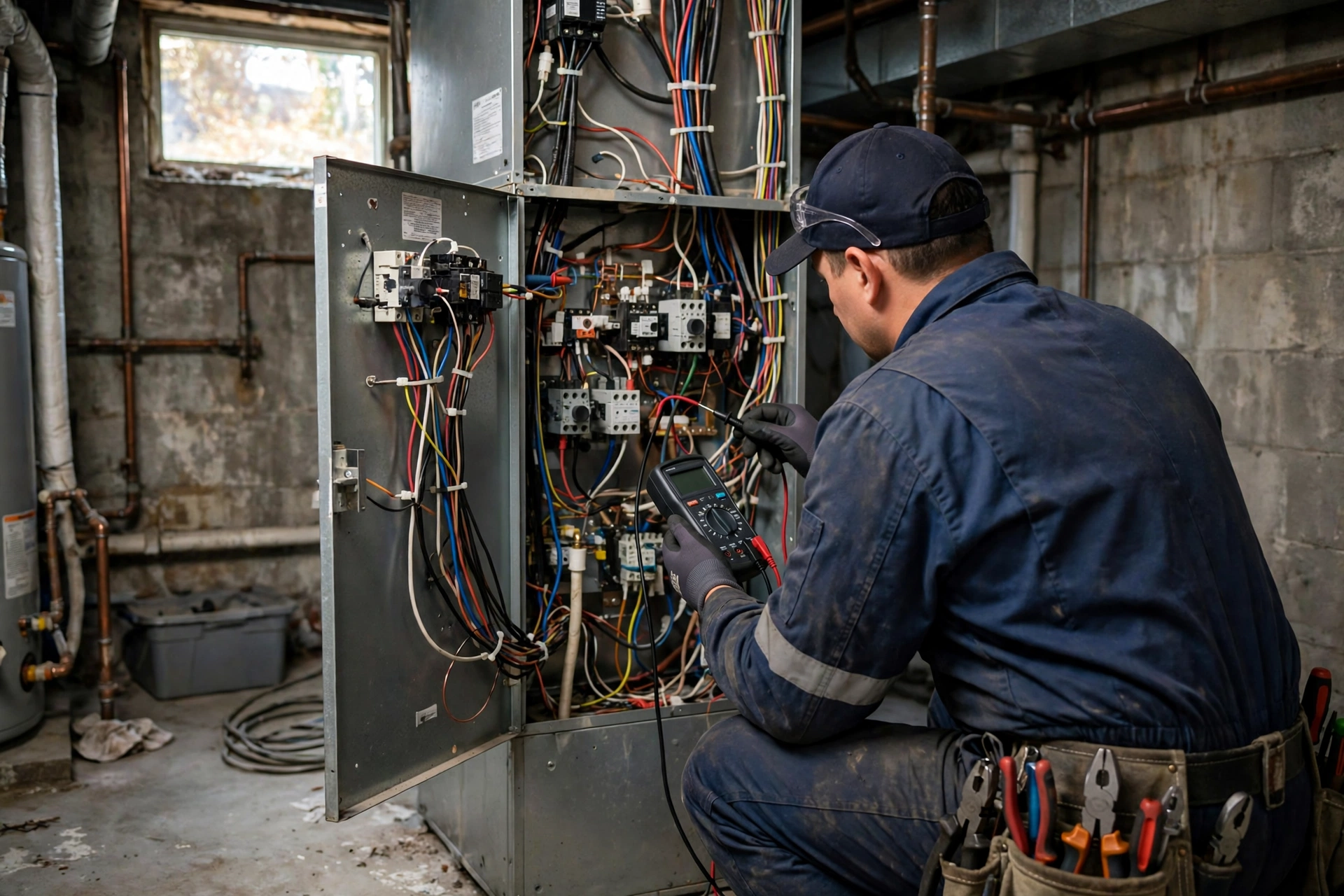
We trace electric faults with a meter, not guesswork. Call us with what you noticed, whether that is cold air, a breaker tripping, or heat that never quite arrives, and we will test elements, sequencers, and controls in order. The meter case on an electric call usually holds a multimeter for voltage and resistance, a clamp meter for element current draw, and a manometer when airflow or pressure readings settle an argument.
Where an electric furnace fits best
An electric furnace fits homes that have no gas line and no propane tank, and it fits smaller homes, additions, and upper levels where a compact unit makes sense. It needs no vent pipe and no combustion air, which simplifies where it can sit. A closet, a utility corner, or a small mechanical room can hold one, as long as airflow and service access are kept clear.
Electric heat also suits homes where the heating load is modest. A tight, well insulated home may need only a modest element bank to stay warm, and staging those elements lets the furnace match mild days and cold days without running everything at once. In a large, drafty home, though, electric heat can struggle to keep up and can draw a lot of power doing it. We say that plainly during a visit, because the right answer for one house is not the right answer for every house.
Service capacity decides a lot. An electric furnace draws heavy current, and the home panel, wiring, and breaker sizes must match the unit. A panel that is already full or a circuit that was added years ago without a proper load check can limit what an electric furnace can do. We check the panel and the furnace circuit together, so an element problem is never confused with a supply problem.
An electric furnace fits homes without a gas line, and it fits them best when the electrical service has room for it. In Kaukauna and Appleton, we start by confirming breaker size and conductor size against the unit's rating plate, because an undersized circuit will trip on the coldest nights, when every element is staging on at once.
Electric heat and Wisconsin winters
Wisconsin winters test electric furnaces in a specific way. A long stretch of deep cold keeps the furnace running for hours, and any weak element or staging fault shows up as a house that slowly loses ground. Mild day performance can hide that weakness for weeks. The first real cold snap of the season is often when a family first notices the heat is not keeping up.
A yearly check before that cold arrives covers the weak points: element condition, sequencer timing, limit controls, wiring tightness, and filter and airflow. It is a short visit, and it answers the question every electric heated home asks in January, which is whether the furnace can carry the house through the coldest week, not just an average one.
Between visits, keep the filter changed, keep the disconnect and panel area clear, and note whether any breaker feels warm or trips more than once. Those habits follow the maker's instructions and the panel maker's guidance, and they protect the sequencer and elements that blower motor service would otherwise find running against a starved return.
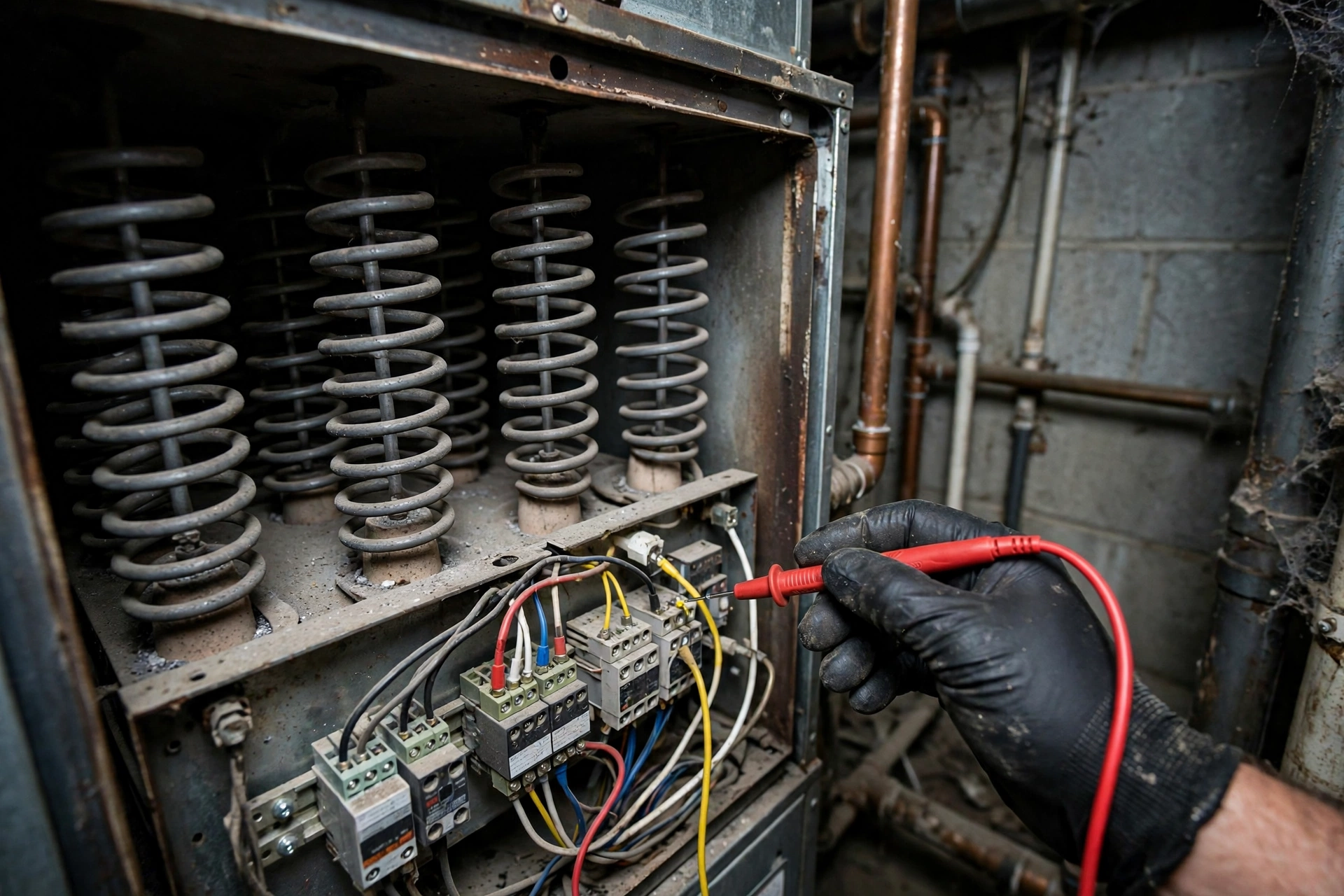
Electric heat has no flame to watch, so the test instruments do the talking. We measure resistance across each heating element coil, check the sequencer that stages the elements on in order, and read amp draw with a clamp meter at the disconnect. A coil with a hot spot or a sequencer contact that sticks will leave one stage dead while the blower runs cold, and the same staged testing guides our thermostat and controls work when the thermostat calls but nothing answers.
Electric vs gas at a glance
Electric and gas heat suit different homes. The comparison below lays out where each one fits and where each one struggles.
| Heat type | Strength | Limit |
|---|---|---|
| Electric | No vent, compact, simple controls | Heavy electric draw, slower recovery in large homes |
| Natural gas | Fast recovery, lower fuel use per unit of heat | Needs gas line, venting, and combustion checks |
| Propane | Works past the gas main | Tank and delivery planning needed |
Electric furnace blowing cold air or tripping a breaker? Call Paper City Heating and we will test it in order.
Call (920) 523-4330 Contact UsKeeping electric heat steady through winter
Staging is the heart of electric comfort. Sequencers bring element banks on in order, with a delay between each bank, so the house warms in steps instead of one sudden surge. When a sequencer sticks or fails, elements may all fire at once, or one bank may never fire. Both patterns show up as temperature swings or a breaker complaint, and both are testable with a meter in minutes.
Filters and airflow matter just as much on electric units as on gas ones. A clogged filter starves the blower, elements run hotter than they should, and a high limit control opens to protect the unit. That open limit looks like a breakdown from the living room, because the heat stops. Keeping the filter clean and the returns open prevents a large share of these calls.
Thermostat wiring deserves a check too. Electric furnaces often use a heat anticipator setting or a staging control that must match the element setup. A thermostat set for gas heat, or wired for a single stage when the furnace stages, can short cycle the elements and leave rooms uneven. We match the control to the furnace during a service visit, and we show you the setting so a later thermostat change does not undo it.
Steady electric heat depends on airflow as much as on elements: a clogged filter or a weak blower makes the limit switch cycle the elements off, which feels like a heating fault but starts with air. A yearly tune-up covers element, sequencer, and airflow checks together, and our cold-snap comparison explains why whole-home electric heat and portable heaters behave so differently.
What an electric visit feels like
An electric visit is mostly meter work, and meter work is quiet work. We open the panel, test each element bank, and note which banks draw current and which do not. That list, bank by bank, is the diagnosis. A furnace with three working banks and one dead bank has a specific fault, and naming it precisely keeps the repair honest and the parts list short.
Sequencer timing gets checked alongside the elements, because a sequencer that brings banks on too fast or too slow changes how the house feels. Too fast, and the breaker complains. Too slow, and the house lags on cold mornings. We time the staging with a watch and a meter, not by feel, and we adjust or replace the sequencer when its timing drifts from what the furnace needs.
Before we leave, we run the furnace through a full staging cycle and check warm air at registers in several rooms. The air should build in steps, not arrive all at once or not at all. That stepped warmth is the signature of a healthy electric furnace, and it is what we confirm before we pack up. If a room still lags, we check its duct run before we blame the elements.
We also check the thermostat staging settings on every electric visit, because a thermostat set for a single stage furnace will not stage an electric unit properly. Matching the control to the element banks keeps heat arriving in steps, which is how an electric furnace is meant to warm a house.
The Department of Energy explains how electric resistance heat works and where it fits best among heating options: electric resistance heating guidance from the Department of Energy.
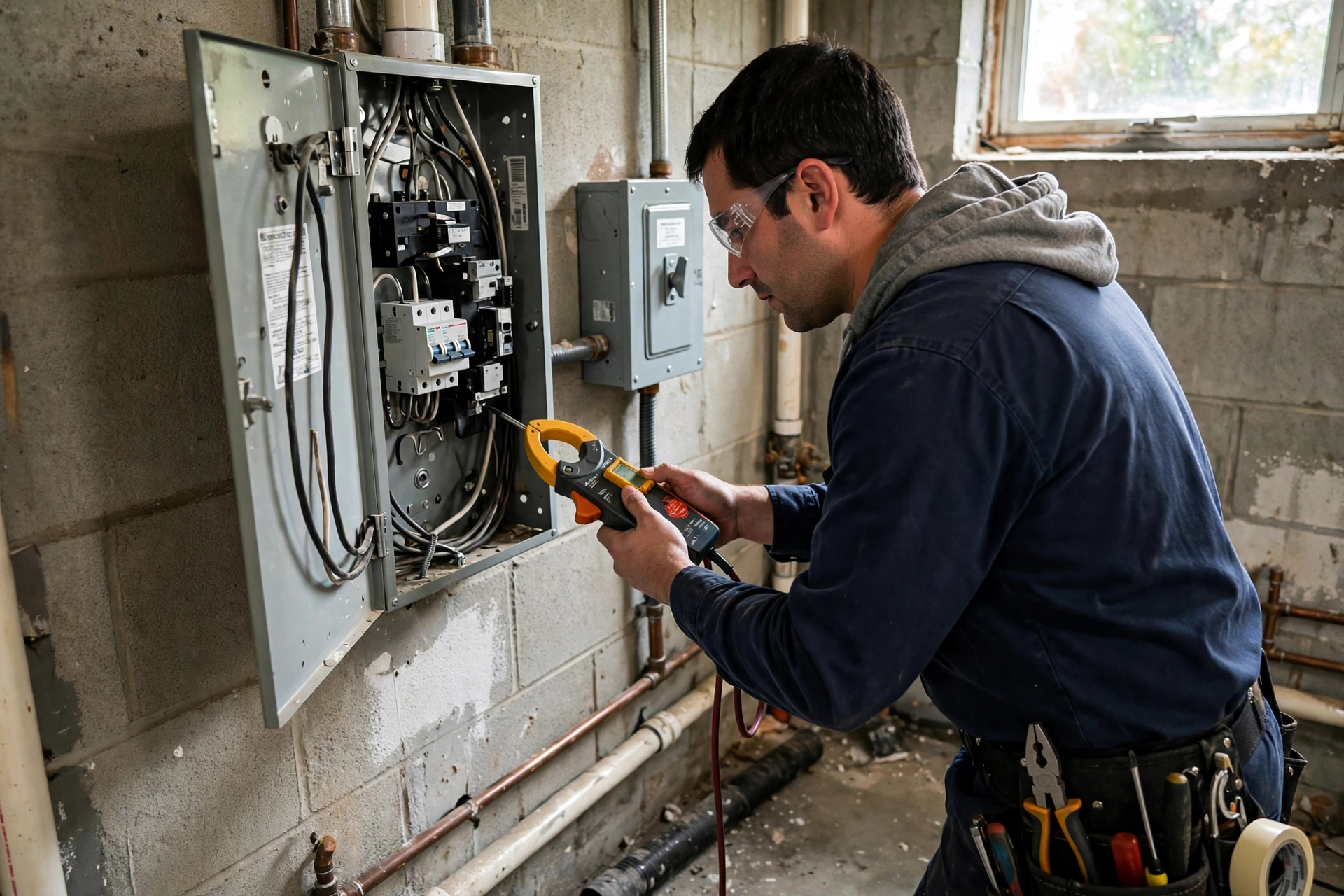
The panel is part of the furnace system on electric heat. Copper conductors, breaker lugs, and the furnace disconnect all carry the full heating load, and a loose lug heats up long before a breaker trips. We check the panel schedule, the disconnect, and the wiring against the National Electrical Code clearances and the furnace maker's wiring diagram, so a repair does not just restore heat but leaves the circuit sound.
How we trace an electric heating fault
Electric diagnosis is methodical work. Each element, sequencer, and limit has a reading it should give, and comparing those readings finds the fault without replacing good parts.
Meter the elements
We test each heating element bank for continuity and draw, so we know exactly which bank is working and which is not.
Test sequencers and limits
We check staging order, limit controls, and safety cutouts, and we look for stuck or burned contacts.
Check supply and wiring
We inspect the panel circuit, breaker size, and connections for heat damage, loose lugs, or undersized wire.
Run and recheck
We run the furnace through full staging, confirm warm air at registers, and recheck current draw before we leave.
Signs your electric furnace needs attention
Cold air from the vents while the blower runs is the classic electric fault. It often means one or more elements are not heating, a sequencer is not staging them on, or a limit control has opened. The blower can sound perfectly normal while the air stays cool, which is why a hand at the register tells you more than an ear at the cabinet.
A breaker that trips when the heat calls, a burning smell that lingers past the first run of the season, or a furnace that heats in bursts and then stops all deserve a look. A shorted element, a loose connection, or a sequencer sticking on can each produce those symptoms, and each one needs a different fix. Repeatedly resetting a tripped breaker without finding the cause risks damage to wiring and controls.
Uneven rooms point to staging or airflow more often than to a dead element. If the furnace heats well on mild days but falls behind in deep cold, some elements may not be coming on at all. We test each element bank separately, because a furnace running on half its elements feels like a sizing problem when it is really a control problem.
Questions homeowners ask about electric furnace services
Why is my electric furnace blowing cold air?
Cold air from an electric furnace usually means one or more heating elements are not working, a sequencer is not staging them on, or a limit control has opened. The blower can run normally while the elements stay off, so testing each element bank with a meter finds the fault.
Why does my electric furnace keep tripping the breaker?
A tripped breaker can mean a shorted element, a loose or overheated connection, or a breaker that no longer holds its rating. Repeatedly resetting it without tracing the cause risks wiring damage. A meter test of elements and connections locates the fault.
Are electric furnaces good for Wisconsin winters?
Electric furnaces suit smaller, well insulated homes and homes without gas service, and they heat steadily when sized and staged correctly. Large or drafty homes may need a larger element bank and a panel check, because deep cold keeps the furnace running for long stretches.

The first test is always the meter
Electric work starts with the meter, not with a guess. Each element bank gets tested, each sequencer timed, and each limit checked, so the fault is named precisely before any part is ordered.
Supply gets checked alongside the furnace, because a panel or breaker fault looks like a furnace fault from the living room. Testing both together keeps a good furnace from being blamed for a supply problem, and vice versa.
Common questions about electric furnace services
How many heating elements does an electric furnace have?
Most homes have several element banks that stage on in order, rather than one large element. The count depends on the furnace size and the home load. We test each bank separately, because one dead bank can leave the house cool while the rest of the furnace looks normal.
What is a sequencer?
A sequencer is a control that brings heating elements on in stages, with a short delay between banks. It keeps the electric draw from surging all at once and lets heat build in steps. A stuck sequencer can leave a bank off, or hold one on too long.
Why does my electric furnace smell when it first runs?
Dust on elements burns off during the first runs of the season and produces a brief smell. A smell that lingers, smells like burning wire, or appears with a tripped breaker is different, and it deserves a visit to check elements and connections.
Can an electric furnace heat a whole house?
Yes, when it is sized to the house and the panel can supply it. Smaller and tighter homes are the easiest fit. Larger homes need a careful load check and a panel review before anyone promises whole house comfort from electric heat alone.
How often should an electric furnace be serviced?
Once a year before heating season covers elements, sequencers, limits, wiring, and airflow. That visit catches a weak bank or a loose connection before deep cold turns it into a no heat call.
Should I replace an electric furnace with gas?
That depends on whether gas reaches the house, what the panel and gas work would involve, and how the home heats today. We can lay out what each change involves, but we do not recommend a fuel switch until the current unit has been tested properly.
Related services
Talk to Paper City Heating
Call us at (920) 523-4330 or email info@furnacerepairappletonwi.com and tell us how your electric furnace is behaving. We will check elements, sequencers, and airflow step by step and explain what we find in plain words.
Call (920) 523-4330 Contact UsLast updated: October 31, 2026