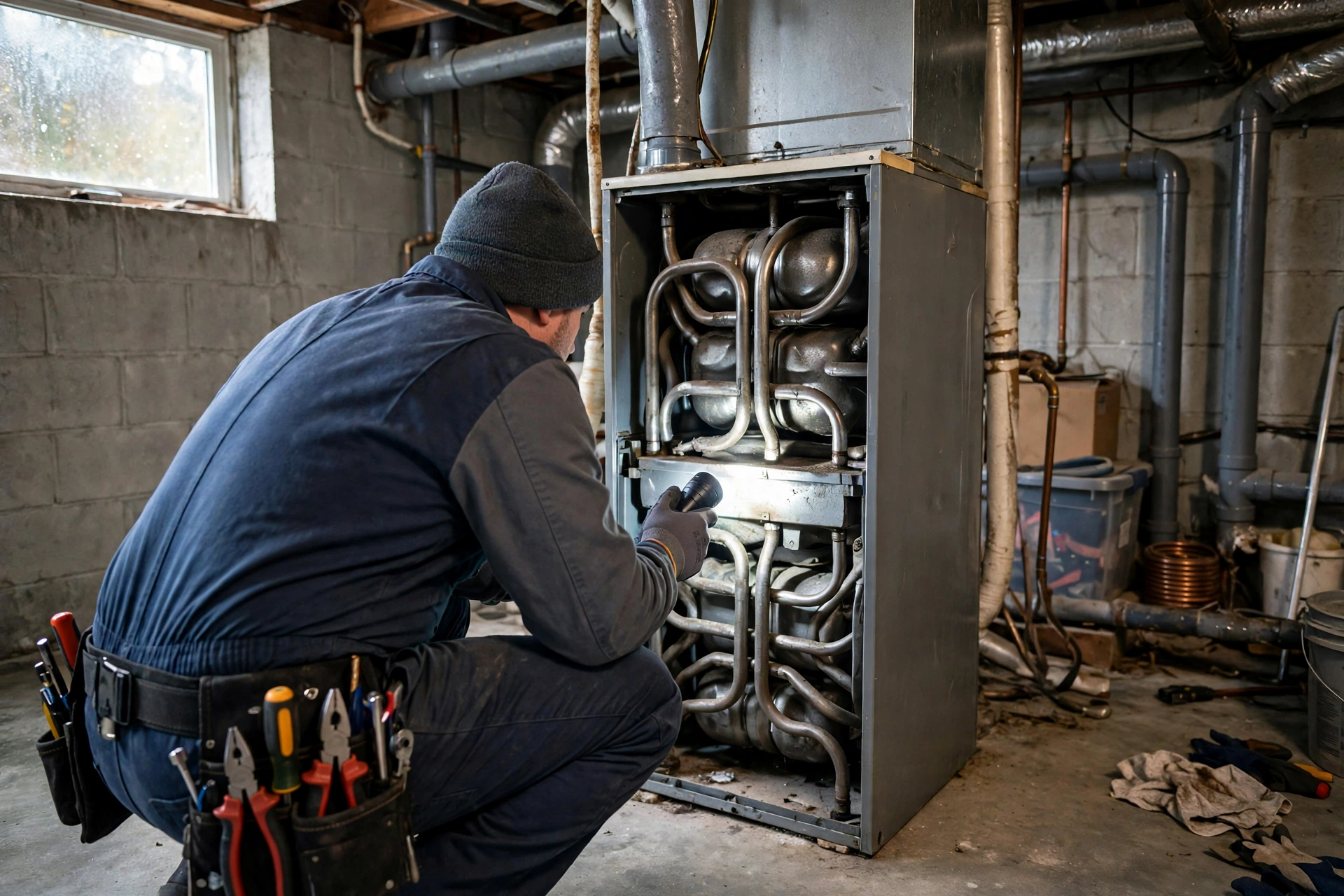
We inspect exchangers with a light, a mirror, and a camera where access allows, and we test for carbon monoxide at the same time. On a suspected crack we also run a combustion analyzer check and a manometer reading on the venting, because numbers confirm what eyes alone cannot. When the exchanger is sound but the furnace still trips, the next step is usually a full maintenance and tune-up visit, which covers the controls and airflow around the exchanger. Call us if you see soot, smell odd odors near the furnace, or an alarm has sounded, and we will check the exchanger first.
Cracked exchanger: repair or replace
A cracked heat exchanger is not a part we patch. Welding or sealing a crack in a stressed, heat cycled part does not restore its strength, and it can hide a crack that keeps growing. When an inspection confirms a crack or a hole, the honest options are exchanger replacement, where the maker offers that part and the rest of the furnace justifies it, or full furnace replacement.
That choice depends on the furnace around the exchanger. A newer furnace with a sound blower, controls, and cabinet may justify an exchanger swap. An older furnace with a worn blower, tired controls, and a rusted cabinet usually does not, because the next major part is already waiting. We show you the inspection findings, explain both paths, and let you decide with the facts in front of you.
If the furnace must stop running, we say so plainly and we do not restart it to get through one more night. Heat from portable heaters, a stay with family, or a warm room plan can bridge a short gap while a replacement is arranged. That conversation is uncomfortable, and it is still the right one, because a cracked exchanger is a safety shutdown, not a comfort inconvenience.
A cracked exchanger is a replacement conversation, not a patch, because no sealant restores a pressure boundary that carries exhaust. If the exchanger is sound, cleaning, airflow correction, and a yearly tune-up protect it from the overheating that shortens its life, and our carbon monoxide safety guide explains what alarms can and cannot catch.
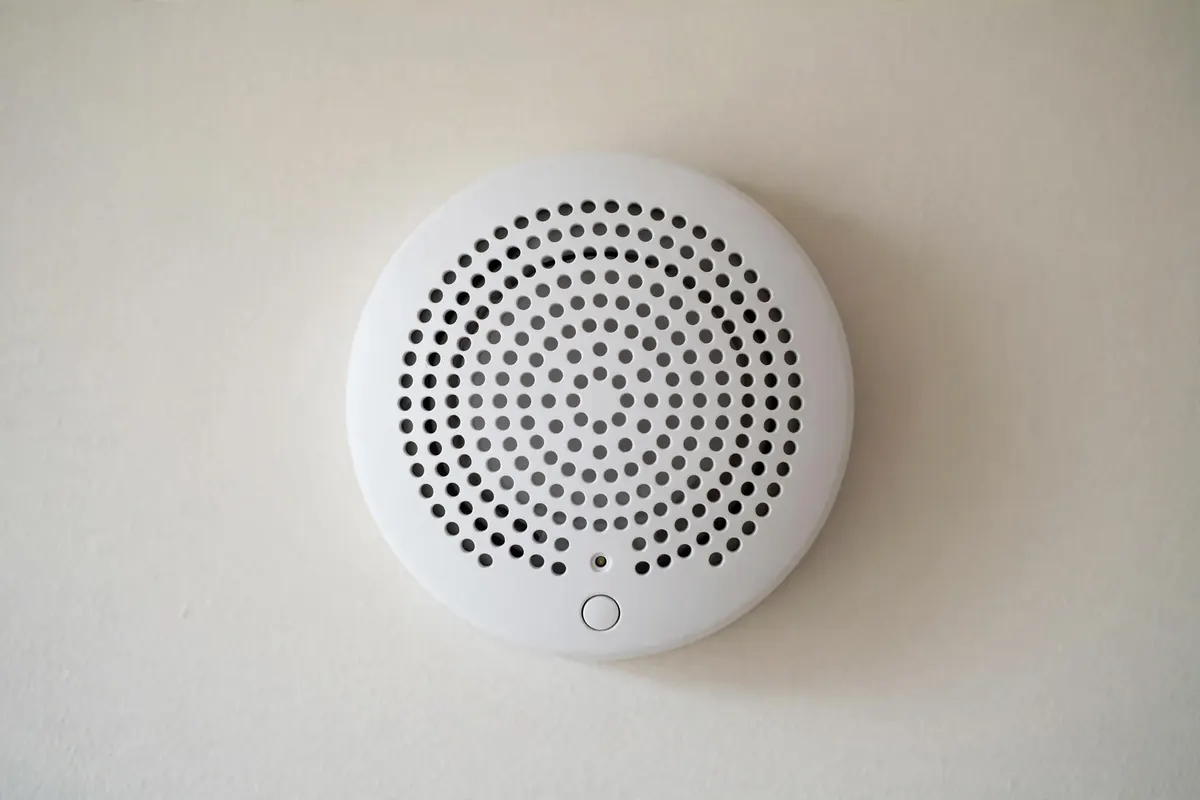
An exchanger check starts with light
Exchanger work starts with light and patience. Seams, bends, and burner areas get inspected one section at a time, because the crack that matters most is often the smallest one.
Flame observation and carbon monoxide readings follow, because eyes alone cannot prove a breach. Flame behavior as the blower starts, plus readings at registers, together confirm what the visual look suggests.
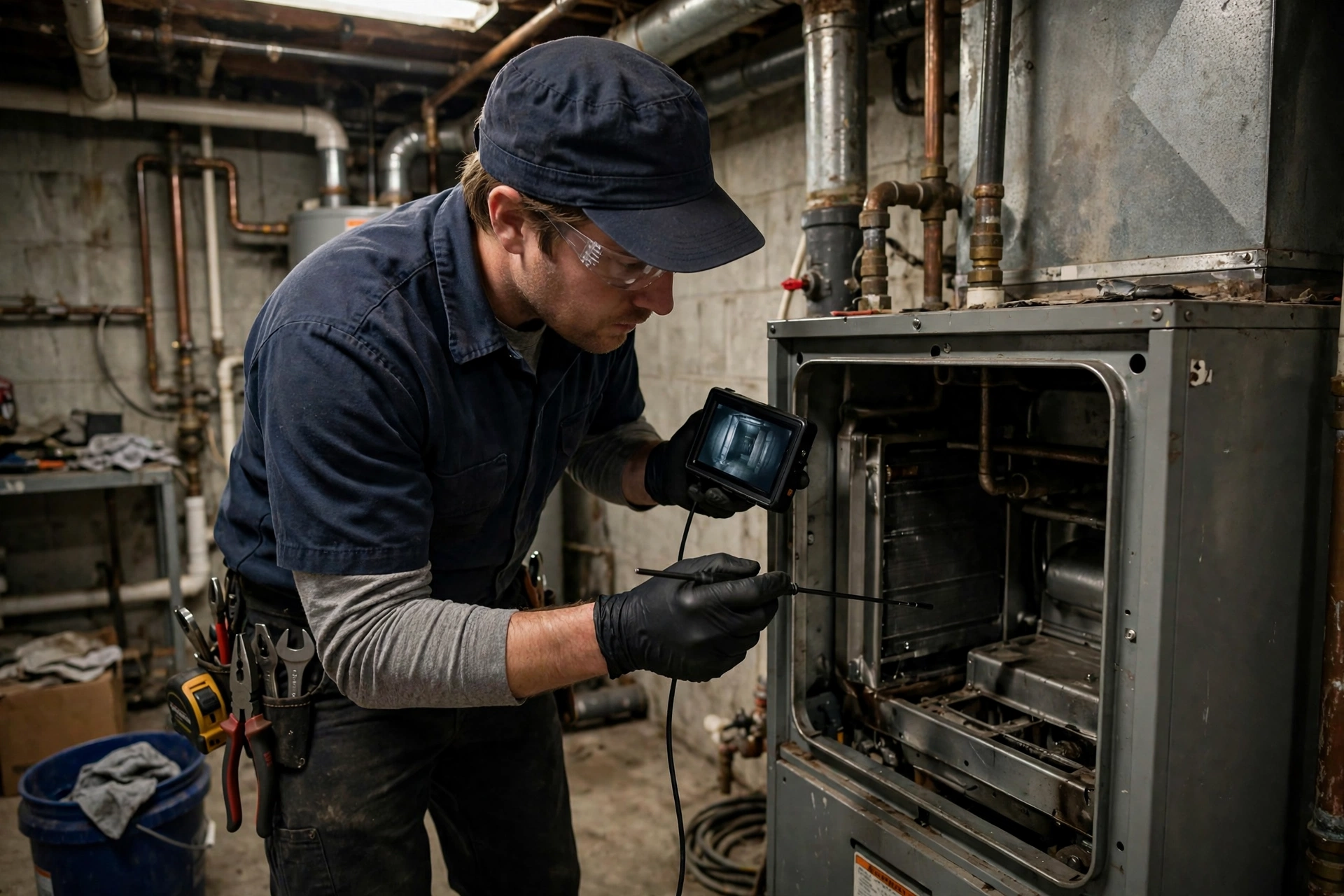
A crack in a heat exchanger is easy to miss and dangerous to ignore, which is why we look with more than a flashlight. An inspection camera reaches the bends and welds where stress concentrates, and a carbon monoxide reading in the supply air confirms whether exhaust is entering the air stream. The exchanger itself may be steel, stainless steel, or aluminized steel, and each material cracks and corrodes differently, so the inspection follows the maker's guidance for that design rather than a single routine.
Why the heat exchanger matters
A heat exchanger transfers heat without mixing gases. Burner flames heat the metal, the blower moves house air across the outside of that metal, and warm air goes to the rooms while exhaust gases leave through the vent. When the metal cracks, rusts through, or separates at a seam, exhaust can slip into the air stream. That is why exchanger condition is a safety question, not just an efficiency question.
Cracks form from repeated heating and cooling, from overheating caused by poor airflow, and from rust where condensate or moisture sits. A furnace that short cycles, runs against a clogged filter, or fires with a blocked vent stresses the exchanger more than a furnace that runs steady with clean air. Age adds cycles, and cycles add metal fatigue, which is why older exchangers get a closer look during every visit.
Different furnaces use different exchanger shapes. Older units often use a clamshell or sectional design. Newer high efficiency units use a primary exchanger plus a secondary condensing exchanger that captures extra heat. Both styles can crack, and both need inspection, but the access points and the test methods differ. We identify the design before we start, so the inspection covers the parts that actually fail on that unit.
The heat exchanger matters because it is the wall between combustion gases and the air your family breathes. In Fox Crossing and Appleton, the exchangers we worry about most are older units that have cycled hot and cold for many winters, where repeated expansion and contraction open hairline cracks at welds and bends.
Soot, a rolling flame, or an alarm sounding? Call Paper City Heating and we will check the exchanger first.
Call (920) 523-4330 Contact UsHeat exchanger materials compared
Exchanger metals differ in where they are used and where they weaken. The comparison below keeps those trade offs plain.
| Material | Where used | Weak point |
|---|---|---|
| Aluminized steel | Standard furnaces | Rust where moisture sits |
| Stainless steel | Condensing secondaries | Seam and weld stress over time |
| Cast iron | Older sectional units | Section joint leaks with age |
How we inspect a heat exchanger
Exchanger inspection combines eyes, flame behavior, and instruments. No single test proves a crack on its own, so we use all three and compare what they say.
Visual and light check
We open the cabinet, inspect the exchanger surface, seams, and burner area with a light and mirror, and note rust, soot, and cracks.
Flame and blower test
We watch the flame as the blower starts, looking for rollout or disturbance that points to a breach.
Carbon monoxide test
We measure carbon monoxide at the furnace, at supply registers, and in nearby rooms while the unit runs.
Findings and options
We show you what we found, explain exchanger swap versus full replacement, and record the readings for your records.
The Environmental Protection Agency explains carbon monoxide sources in the home and why combustion appliances need regular checks: indoor air facts from the Environmental Protection Agency.
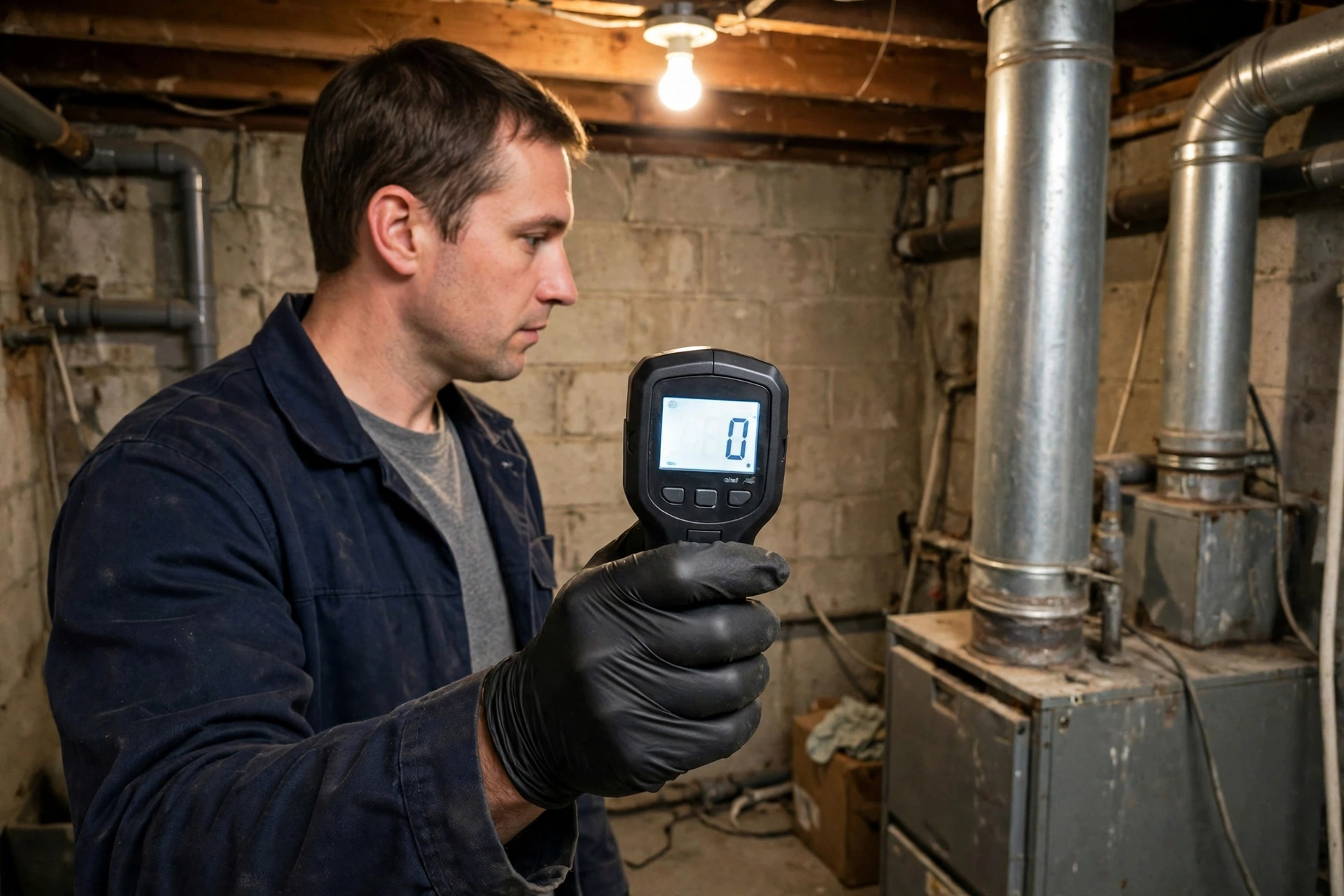
Carbon monoxide testing runs alongside the visual inspection, not after it. We test at the furnace, at the flue, and in the supply air, because a reading that rises when the blower starts points to the exchanger even when no crack is visible yet. That pairing of camera and detector is what separates a real exchanger check from a quick look, and it is the same pairing used on our gas furnace safety checks.
Warning signs you should not ignore
Soot around the burner door or on the exchanger surface, a flame that changes shape when the blower starts, and a carbon monoxide alarm sounding are the signs to act on right away. A flame that rolls or lifts when the blower kicks on can mean a crack is letting blower air into the combustion side, which disturbs the flame. That test, watching the flame as the blower starts, is a standard part of an exchanger check.
Headaches, dizziness, or nausea that ease when you leave the house, a smell of exhaust near the furnace, or condensation and rust streaks on the vent pipe all deserve a prompt visit and a carbon monoxide check. Do not run the furnace to see if the symptoms return. Turn it off if you can do it safely, ventilate, and call for help. An alarm sounding is a call to leave and seek help, not a call to reset the alarm and wait.
Less urgent signs still matter. A furnace that needs frequent burner cleaning, soot that returns soon after cleaning, or a vent that shows new rust can all point to an exchanger or vent problem developing. Catching it at that stage gives you time to plan a replacement, rather than facing a shutdown on a cold night.
What protects an exchanger over time
Clean airflow protects an exchanger more than any additive or coating. A clean filter, open returns, and a blower that moves the right volume of air keep metal temperatures in range. A furnace starved for air overheats its exchanger on every cycle, and that heat cycling is what cracks metal over years.
Yearly service protects it too, because burner condition, vent condition, and flame quality all affect exchanger stress. A burner running dirty, a vent partially blocked, or a flame lifting off the burner each add stress in a different way. A yearly visit checks all three, and it records exchanger condition so a change from one year to the next is visible, not guessed.
What protects an exchanger over time is mostly airflow and steady firing: a clean filter, open returns, a blower that moves the rated air, and a burner that is not overfired. Those habits follow the furnace maker's instructions, and they keep the steel from the repeated overheating that blower motor service also watches for when a fan runs weak.
Questions homeowners ask about heat exchanger services
What is a cracked heat exchanger?
A cracked heat exchanger is a break in the metal wall that separates combustion gases from house air. Exhaust can slip through the crack into the air stream, which may raise carbon monoxide levels in the home. A confirmed crack means the furnace should not keep running.
How can I tell if my heat exchanger is cracked?
Signs include soot around the burner, a flame that rolls or changes when the blower starts, rust on the vent, and a carbon monoxide alarm sounding. Only an inspection with light, flame observation, and carbon monoxide testing can confirm a crack.
Can a cracked heat exchanger be repaired?
A crack is not patched with weld or sealant, because heat cycled metal does not regain strength that way. The sound options are exchanger replacement, where the maker offers the part and the furnace justifies it, or full furnace replacement.
What an exchanger visit feels like
An exchanger visit is slow, deliberate work. We open the cabinet, shine a light across the metal, and look at seams, bends, and burner areas one section at a time. Rushing this look misses the hairline crack that matters most, so we take the time it needs. A flashlight and a mirror, used patiently, find more than a hurried glance ever will.
Flame observation comes next, with the blower starting while we watch. A steady flame that holds its shape as air begins to move is reassuring. A flame that lifts, rolls, or changes color as the blower starts is not, and it points to a breach letting blower air into the combustion side. That test is simple to watch and hard to misread, which is why it sits at the center of the inspection.
Carbon monoxide readings finish the visit, at the furnace, at supply registers, and in nearby rooms. Those numbers, recorded and explained, give you a clear picture of what we found and why it matters. If the exchanger is sound, the readings say so. If it is not, the readings say that too, and we explain the next steps without softening the safety message.
We also check the vent and condensate path on every exchanger visit, because moisture and poor draft stress exchanger metal over time. A vent that slopes wrong or a condensate trap that clogs leaves moisture where it should not sit, and that moisture becomes rust. Fixing the path protects the metal.
Common questions about heat exchanger services
Why does carbon monoxide matter with furnaces?
Carbon monoxide is a colorless, odorless gas produced by incomplete combustion. A sound exchanger and vent keep it out of house air. A cracked exchanger or blocked vent can let it in, which is why alarms and yearly checks matter for every fuel fired furnace.
How often should a heat exchanger be inspected?
Every yearly service visit should include an exchanger look, a flame check, and a carbon monoxide test. Older furnaces and furnaces with a history of soot or rust deserve a closer look at each visit, and any alarm event deserves an immediate inspection.
Does a heat exchanger crack suddenly?
Most cracks grow over time from heat cycling, rust, and stress. A sudden failure can happen, but a yearly record of exchanger condition usually shows rust, soot, or surface changes before a crack opens. That record is why yearly visits matter.
What causes heat exchanger rust?
Moisture from condensation, a leaking condensate path, poor venting, and oversized furnaces that short cycle can all leave moisture on exchanger metal. Rust thins the metal and weakens seams, so vent and condensate condition get checked alongside the exchanger.
Will my furnace be shut off if the exchanger is cracked?
Yes. A confirmed crack means the furnace should not run, because exhaust can enter house air. We shut it down, explain what we found, and discuss exchanger swap or full replacement so you can plan heat for the gap.
Do electric furnaces have heat exchangers?
No. Electric furnaces heat air with elements, so there is no combustion gas to separate. Heat exchanger checks apply to gas, propane, and oil fired furnaces, where combustion gases must stay out of the air stream.
Related services
Talk to Paper City Heating
Call us at (920) 523-4330 or email info@furnacerepairappletonwi.com if you suspect heat exchanger trouble, especially in an older furnace. We will inspect and test it carefully and explain the results in plain words.
Call (920) 523-4330 Contact UsLast updated: October 31, 2026