By Paper City Heating
Last updated: October 31, 2026
Winter sealing is good for comfort and for energy use. Caulk, weatherstripping, and storm windows keep cold air out and warm air in, and a well sealed house feels warmer at the same thermostat setting. Sealing also changes the air balance inside the house, and that matters for any fuel burning equipment, including a gas furnace, a gas water heater, and a fireplace. When a house gets tighter, combustion air, venting, and exhaust flow all need a fresh look. See heat exchanger services.
Carbon monoxide is the risk at the center of this post. It has no color and no smell, and it forms when fuel burns without enough air or when exhaust cannot leave the house properly. A sealed home does not create carbon monoxide by itself, but a blocked vent, a cracked heat exchanger, or a furnace starved of combustion air can, and a tight house gives exhaust fewer escape paths. The fix is not to unseal the house. It is to pair sealing with sound venting, working detectors, and regular furnace checks.
How a tight house changes furnace airflow
A gas furnace needs two air paths: combustion air to burn fuel cleanly, and a vent path to carry exhaust outside. In a drafty old house, those paths often got help from leaks around windows, doors, and basement gaps, which supplied air without anyone planning it. In a sealed house, those accidental paths close, and the furnace must rely on its designed air supply and venting. If the designed supply is blocked, undersized, or shared with other equipment in a way that was never checked, the burner can run with too little air, and exhaust can spill back into the house instead of rising out the vent. See gas furnace services.
Other house systems add to the balance. A powerful kitchen exhaust fan, a dryer, and a bathroom fan all pull air out of the house, and in a tight home that pull can compete with the furnace vent, especially when several fans run at once. This is called depressurization, and it can draw exhaust back down a vent. The answer is not to stop using fans. It is to check venting and combustion air as a system, and to make sure the furnace vent is not fighting the rest of the house for air. A technician can check this balance during a visit, and can advise on air supply where a sealed basement needs it.
Where detectors belong, and how to test them
Place carbon monoxide detectors near bedrooms, so an alarm wakes people at night, and in the area of fuel burning equipment, following the detector instructions for height and distance from the furnace. A detector in a far hallway or in the garage alone will not warn bedrooms fast enough, and a detector placed right against a furnace may alarm from normal startup puffs. Follow the maker instructions for your model, test detectors monthly in winter, and replace any unit past its working life, even if it still beeps on a test button. A test button checks the alarm sound, not the sensor, so age matters.
The U.S. Environmental Protection Agency offers plain indoor air guidance on carbon monoxide sources and protection, and its pages are a good reference for detector placement basics. Keep detectors clear of dust, do not paint over them, and note the install date on each unit. If a detector alarms, treat it as real: leave the house, call for help from outside, and do not re-enter to silence it or to look for the source. Fire crews carry meters that can measure carbon monoxide safely, and their reading settles whether the house is safe to re-enter.
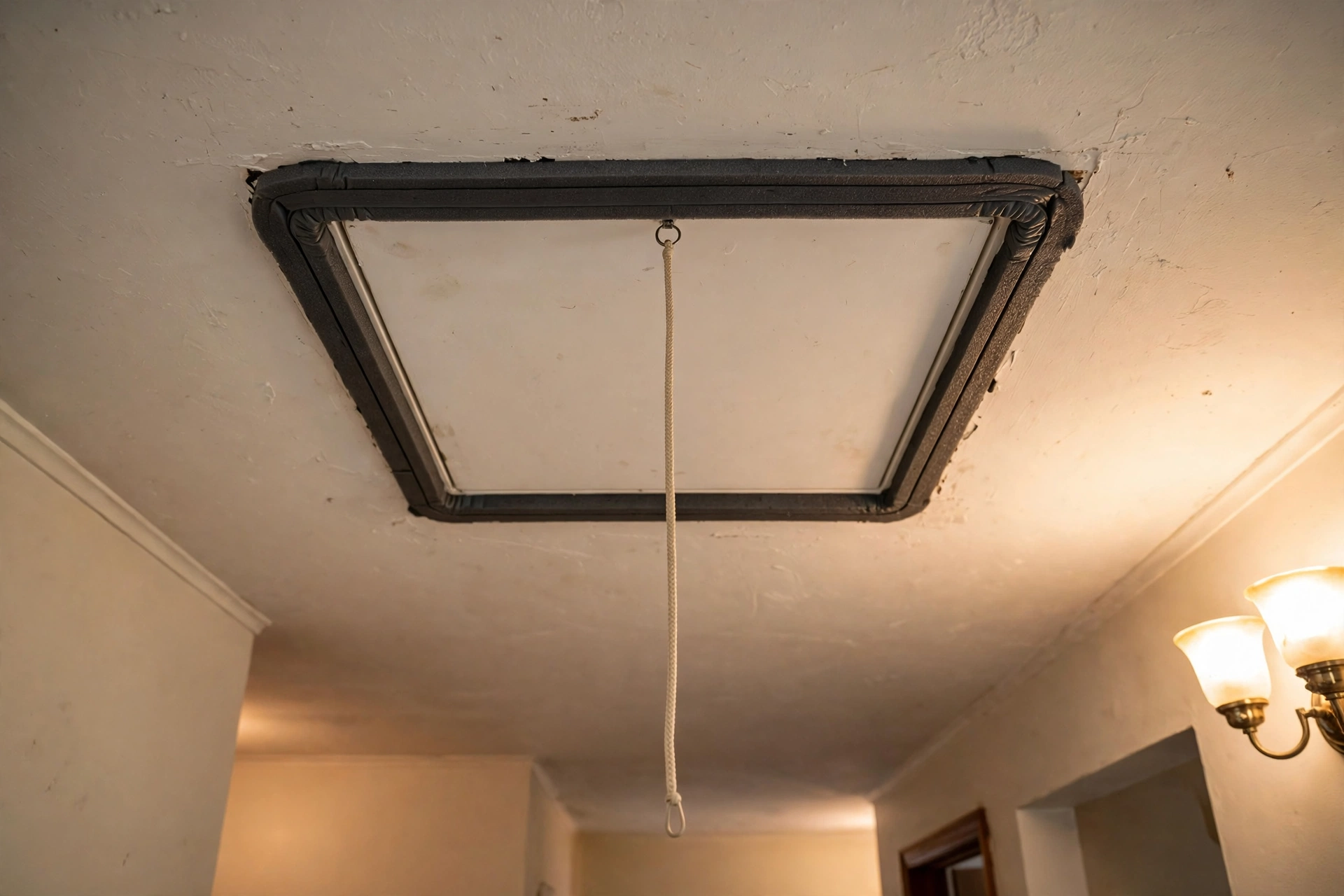
Sealing an attic hatch with foam weatherstripping is the kind of small job that changes furnace airflow. Seal the leaks, but keep the combustion air path the furnace was designed for.
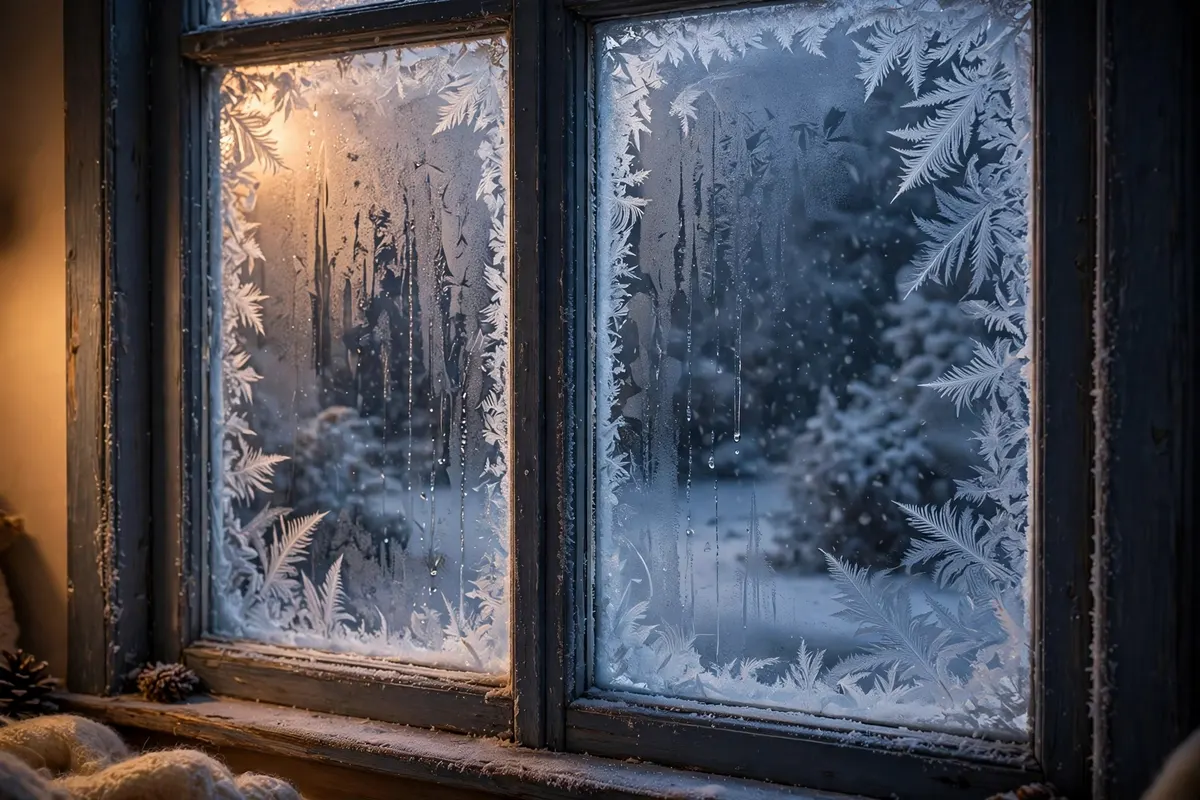
A frosty sealed window shows a tight house holding heat, and it also shows why furnace air paths need checking after sealing work. Warm, moist indoor air meets cold glass, just as exhaust moisture meets cold vent pipes.
Venting faults that sealing can expose
Sealing can expose venting faults that a drafty house hid. A vent with a poor slope, a loose joint, or a termination too low can spill exhaust in a tight house, where a drafty house once diluted it through leaks. A cracked heat exchanger, a blocked intake, or a condensate drain fault can also push a furnace toward incomplete combustion. These faults do not appear because you sealed a window. They appear because sealing removed the accidental ventilation that was masking them, and the furnace system now needs its designed paths to work properly.
Watch for clues: soot around a furnace or vent, a yellow or flickering burner flame instead of a steady blue pattern, condensation on windows that grows worse, or a furnace that locks out repeatedly. Any of these deserves a call, and a gas smell or an alarm deserves immediate exit and outside help. Do not open windows and stay inside to air the house out after an alarm, and do not reset a locked out furnace repeatedly to keep heat going. Safety controls lock a unit out for a reason, and that reason needs a technician, not a reset.
Safe sealing habits for a gas heated home
Seal in stages, and check the furnace at each stage. Start with attic hatches, rim joists, and obvious gaps, then check that the furnace still starts cleanly, vents well, and holds a steady flame. Keep the furnace area clear of storage, keep combustion air openings open, and never block a vent pipe or an air supply grille to stop a draft. A draft near a furnace often points to a duct leak or a vent fault, not to an air supply that should be sealed, so note it for a technician instead of closing it yourself.
Pair sealing with detector care and a fall furnace visit. A visit checks flame, heat exchanger, venting, and safety controls, and it gives you a written record of the furnace condition after sealing work. If you add a fireplace, a wood stove, or a powerful kitchen fan after sealing, mention it on the next visit, since new equipment changes the house air balance. A tight house with a sound furnace, clear vents, and working detectors is a safe and comfortable winter home, and that combination is the goal, not sealing alone.
What to do if an alarm sounds
If a carbon monoxide alarm sounds, leave the house right away, taking pets and family with you, and call for help from outside. Do not stop to open windows, silence the alarm, or check the furnace. Do not re-enter until fire crews or a qualified responder say the house is safe, even if the alarm stops on its own. An alarm that stops may mean the source stopped, or it may mean the sensor reset, and only a meter reading settles it.
After a confirmed alarm, the furnace and any other fuel equipment need a full check before they run again. A technician will look at venting, heat exchanger, flame, and combustion air, and will explain what failed and what must change. Keep the incident record with your furnace papers, and share it on future visits, since a past alarm shapes how later technicians judge the system. A sealed winter home is worth the care it takes, and an alarm is the system working as designed: warning you while you still have time to act.
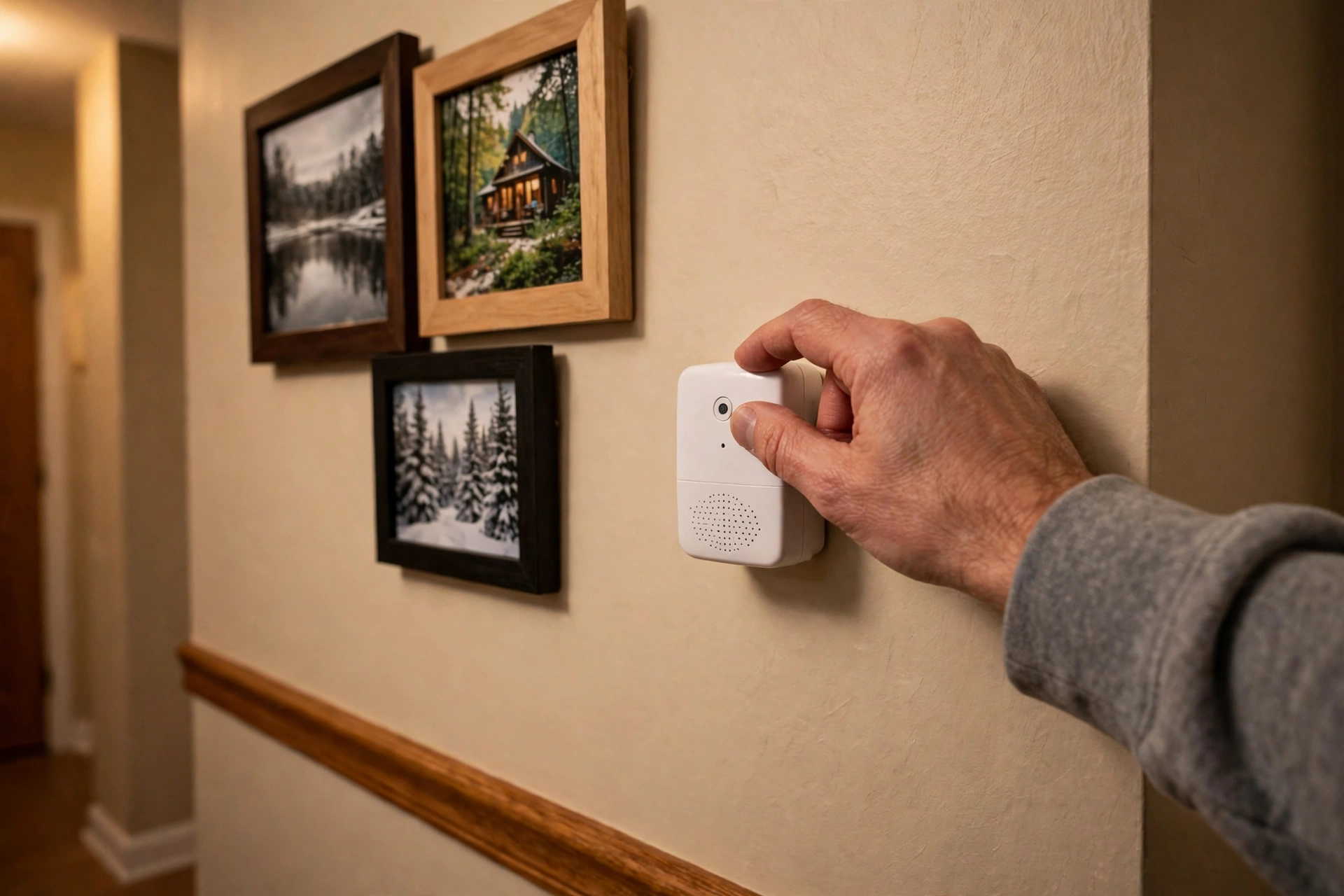
Testing an alarm is a monthly habit, not a yearly one. Press, listen, and replace batteries or the unit itself on the maker's schedule, before the heating season tests it for you.
Attached garages deserve the same attention
A car warming up in an attached garage can push carbon monoxide toward the house through the shared wall, the connecting door, and any gaps around pipes and wires. Never run a vehicle with the garage door closed, even for a minute, and treat a remote starter the same way: start the car only after the door is fully open. Keep the door between garage and house closed and sealed, and check its weatherstripping each fall the way you check a window.
A detector near the garage entry adds a useful layer, since it sits where garage air meets living space. Test it monthly with the test button, change batteries on the schedule printed on the unit, and replace the unit itself when it reaches the age printed on its label. If an alarm sounds, leave the house, call emergency help from outside, and do not go back in to open windows or silence the alarm.
CO safety questions for sealed homes
Does sealing my house increase carbon monoxide risk?
Sealing alone does not create carbon monoxide, but it removes accidental air leaks that once supplied combustion air and diluted exhaust. A blocked vent, a cracked heat exchanger, or a furnace starved of air can then spill exhaust indoors. Pair sealing with sound venting, working detectors, and a fall furnace check, and a tight house stays safe.
Where should carbon monoxide detectors go in a home?
Place detectors near bedrooms so an alarm wakes people at night, and in the area of fuel burning equipment, following the maker instructions for height and distance. Test them monthly in winter and replace units past their working life. A detector in a far hallway alone will not warn bedrooms fast enough.
What should I do if my carbon monoxide alarm sounds?
Leave the house right away with family and pets, and call for help from outside. Do not stop to open windows, silence the alarm, or check the furnace, and do not re-enter until responders say the house is safe. Fire crews carry meters that measure carbon monoxide safely, and only their reading settles it.
Alarms, seals, and the air a furnace needs
A sealed home's safety kit is short: carbon monoxide alarms on every level and outside sleeping areas, foam weatherstripping and caulk for hatches and rim joists, and a clear combustion air path to the furnace. The tool that checks the path is a manometer, which reads whether the furnace room goes negative when dryers and range hoods run, and the part that suffers first is the heat exchanger, starved of air and stressed by rollout. The exchanger itself is steel, the flue is galvanised steel or PVC, and the seals are foam, rubber, or felt, each chosen for the gap it must close. Those checks belong in heat exchanger service and in every safety inspection for a gas furnace. See night outage steps.
Alarm placement and replacement follow the maker's instructions and local code, and Wisconsin homes with attached garages need the same attention at the garage door seal, since a running car fills the house path fast. Weatherstripping made of foam, rubber, or felt each suits a different gap, and the wrong one on a furnace room door can choke the unit it was meant to protect. For the wider sealing picture, the October checklist covers vents and filters before the house is closed up.
Keep the maker's manual with the filter size. The next visit, and the next homeowner, will both need it.
Carbon monoxide safety questions
What is carbon monoxide, and why is it dangerous?
Carbon monoxide is a colorless, odorless gas formed when fuel burns without enough air or when exhaust cannot leave properly. It can cause headache, dizziness, confusion, and, at high levels, loss of consciousness. Because it has no smell, working detectors are the only reliable indoor warning.
Can a gas furnace produce carbon monoxide?
Yes, any fuel burning equipment can produce carbon monoxide when combustion air is short, venting is blocked, or a part such as a heat exchanger fails. A well kept furnace with clear vents and sound parts burns cleanly, which is why fall checks cover flame, heat exchanger, venting, and safety controls together.
How often should I test carbon monoxide detectors?
Test detectors monthly during the heating season, and replace any unit past its working life, even if the test button still sounds. The test button checks the alarm sound, not the sensor. Note the install date on each detector, and keep detectors clear of dust and paint.
Do I need a detector if my furnace is new?
Yes, new equipment still needs detectors, since venting, air supply, and other fuel equipment in the house can all affect safety. Detectors near bedrooms and near fuel equipment give a warning if any source fails. A new furnace lowers risk, but it does not remove the need for detection.
Can kitchen fans affect my furnace venting?
Yes, powerful exhaust fans can pull air out of a tight house and compete with a furnace vent, drawing exhaust back indoors when several fans run at once. This is called depressurization. A technician can check the house air balance and advise on air supply where a sealed home needs it.
Should I open a window for my furnace in a sealed home?
Do not rely on an open window as a furnace air plan, and never block or seal a designed air supply opening. If a furnace needs more combustion air, a technician should design that supply properly. An open window is not a substitute for correct venting and air supply.
Sealed the house this fall?
Tell us what you sealed, and we will check the furnace air and vent paths that sealing can affect.
Call (920) 523-4330 Contact usTight house, gas furnace, and questions about air?
Call us, and we will check flame, venting, and combustion air together, in plain words.
Call (920) 523-4330 Contact usRelated pages
Seal the house, and keep the furnace air paths sound.
Detectors, venting, and a fall check make a tight winter home a safe one.
Call (920) 523-4330