By Paper City Heating
Last updated: October 31, 2026
A modern gas furnace does not use a chimney the way an old boiler did. It pulls fresh air in through one plastic pipe and pushes exhaust out through another, usually through a side wall near the ground. That design is efficient, but it puts the furnace airway where snow drifts, ice, and frost can reach it. When the airway blocks, safety controls shut the furnace down, and the house starts cooling on the coldest night of the year. See fall maintenance and safety inspection.
Understanding the two pipes helps you prevent the problem. The intake pipe brings in combustion air, and the exhaust pipe carries out burned gas and moisture. Exhaust moisture is the key detail: warm, damp exhaust meets bitter outdoor air at the pipe end, and that moisture freezes into a cap of ice. Snow adds a second block, piling against the wall until it covers one or both pipe ends. Either block can stop the furnace, and both are easy to check from the ground.
How ice builds up at the pipe ends
Exhaust gas leaves the furnace warm and wet. As it exits into air near or below freezing, the moisture condenses and freezes on the pipe rim, on the wall, and on any screen or guard at the end. Over hours of steady running in deep cold, that frost thickens into ice, narrowing the opening until the furnace pressure switch senses the block and shuts the burner down. The furnace may try again, fail again, and then lock out, leaving the house cold while the pipe looks fine from a distance. See snow-season furnace strain.
Wind makes the pattern worse. Wind drives exhaust back against the wall, where it freezes on siding and on the pipe itself, and wind also piles snow into drifts on the sheltered side of a house. A vent that stayed clear in calm cold can block during a windy storm, even without new snowfall at the pipe itself. That is why a vent check after a storm matters as much as a vent check during one. Look for white frost, icicles hanging over the pipe ends, and snow packed tight around the wall.
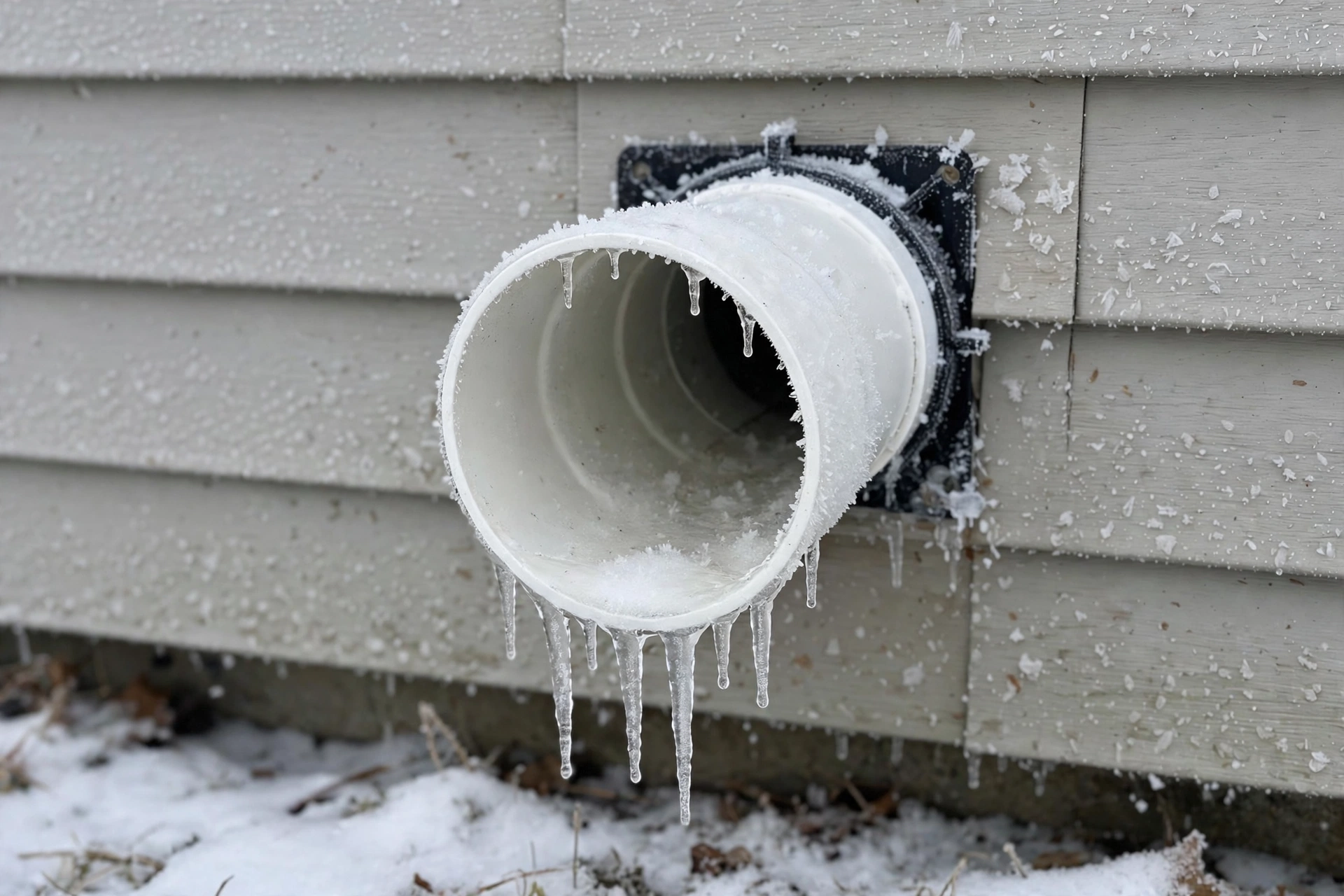
Frost and icicles at the pipe end are the visible half of a freeze-up. Inside, condensate can narrow the pipe until the pressure switch trips and the furnace locks out.
How snow drifts bury a vent without warning
Snow rarely falls evenly around a house. Wind pushes it into drifts against walls, fences, and shrubs, and the drift that matters is the one on the vent wall, not the depth on the driveway. A vent that sits a foot above bare ground in November can sit below the drift line after a January storm, and the furnace will shut down once the intake or exhaust end is covered. Shrubs planted close to the vent wall make the drift deeper by catching snow, and stored items leaning against the wall do the same.
Ground level matters too. A vent installed low on a wall, above a walkway that collects drifting snow, or near a roof drip line where melt water refreezes, blocks more often than a vent on an open, wind swept wall. You cannot move the vent yourself, and you should never cut, extend, or reroute vent pipes without a technician, since vent length and slope affect safe operation. You can keep the area clear, trim shrubs back from the pipe ends, and make a habit of checking that wall after every heavy snow.
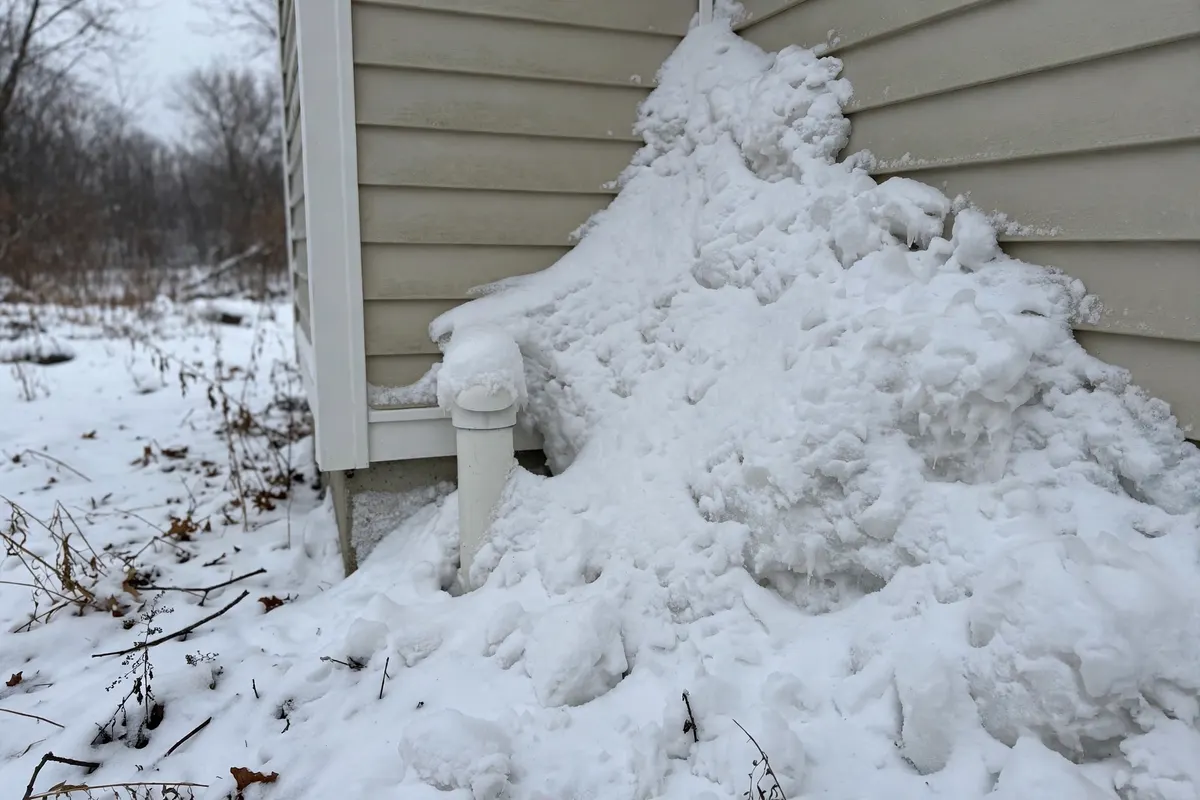
A snow drift against the vent wall can bury a pipe end that sat clear in November. Check that wall after every storm, and pile shoveled snow away from the pipes, not toward them.
Furnace locking out after a storm?
Check the vent wall from the ground first, then call us and tell us what the pipe ends look like.
Call (920) 523-4330 Contact usSigns your furnace vents are blocked
A blocked vent often announces itself before the house gets cold. The furnace may start, run briefly, and stop, then try again in a repeating loop. You may hear the inducer fan working harder, or notice the furnace locking out with an error light pattern on the control board. Some homeowners first notice the problem outside: a thick ice cap on the exhaust pipe, frost coating the wall around the pipes, or snow packed right up to the pipe ends after a storm. See Kaukauna furnace help.
Do not ignore a furnace that keeps locking out. Each failed start is the safety system doing its job, and repeated resets without clearing the block will not fix it. Check the pipe ends from the ground first, clear snow gently with a gloved hand or a soft brush, and never use hot water or a flame to melt ice on a plastic pipe, since heat can warp the pipe and damage the joint. If ice coats the inside of the pipe or the block keeps returning, call a technician to check vent slope, termination, and condensate drainage as well.
| What you see outside | Likely cause | Safe first step |
|---|---|---|
| White frost rim on exhaust end | Normal exhaust moisture freezing in deep cold | Watch it, and clear loose frost from the ground |
| Thick ice cap over the opening | Sustained freezing plus wind driven exhaust | Clear loose ice gently, call us if it returns fast |
| Snow packed to the pipe ends | Wind drift against the vent wall | Clear snow from around the pipes, trim shrubs back |
| Water stains or ice on the wall below | Condensate or exhaust moisture dripping | Note it for a technician, check vent slope and drainage |
Keeping vents clear through a Wisconsin winter
Make the vent wall part of your storm routine. After heavy snow, walk to that wall, clear snow from around both pipe ends, and check for ice caps. Keep a clear zone of a few feet around the pipes, clear of shrubs, stored lumber, and snow piles from shoveling. Shoveling snow against the vent wall to clear a walkway is a common cause of a blocked vent, so pile shoveled snow away from the pipes, not toward them.
Inside, condensate drainage works with venting to keep the furnace running. High efficiency furnaces produce condensate that drains through a line, and a frozen or blocked drain will shut the unit down just like a blocked vent. Keep the furnace area warm where you can, note any water pooling near the unit, and mention drainage on any service visit. A technician can check vent termination height, slope, and drain routing, and can advise whether the vent location needs work. Those checks are best done before winter, but they help at any point in the season.
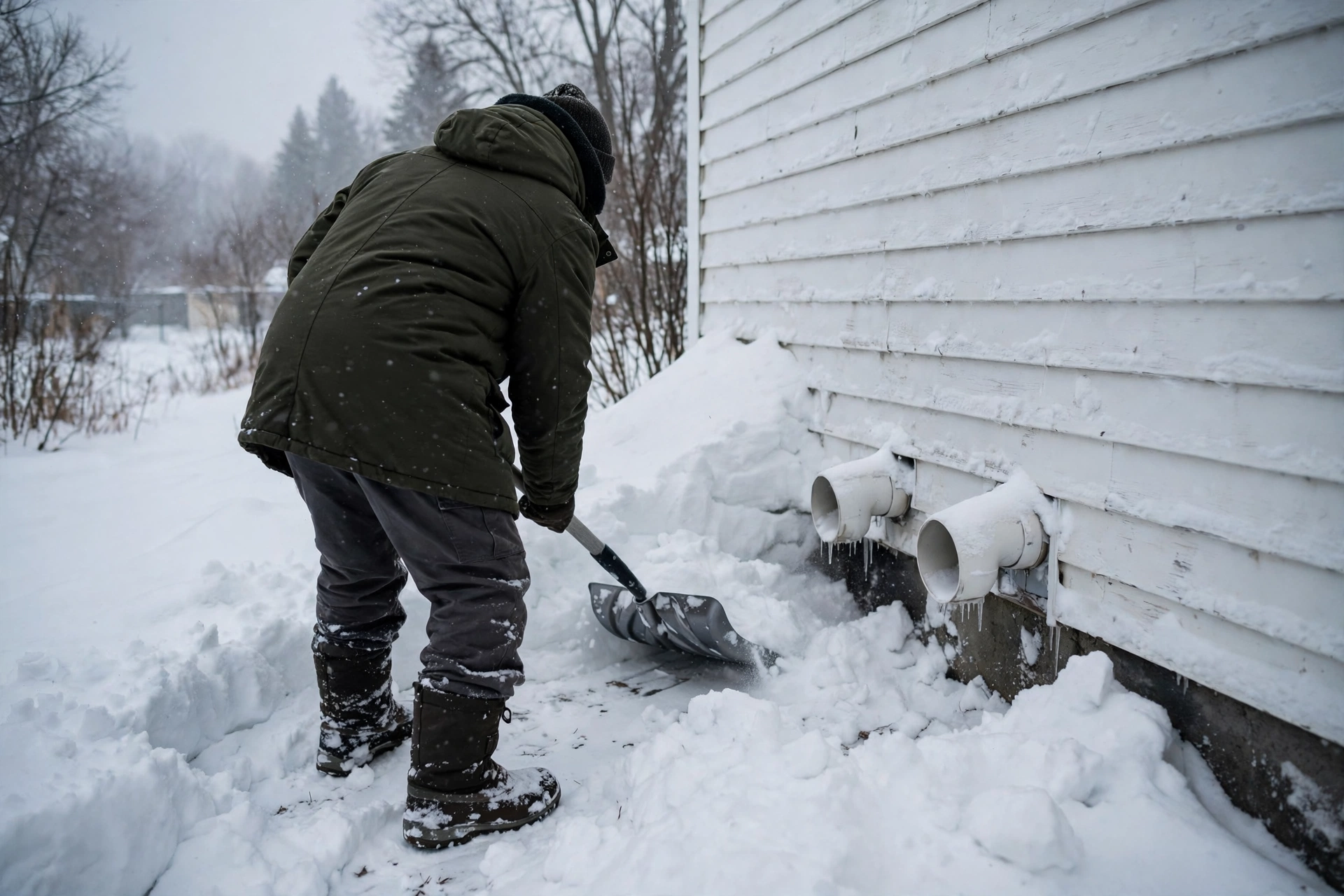
After a storm, the vent wall is a shovelling job, not a guess. Clear a wide space around both pipes, and keep the path clear through the next drift, not just the first one.
When a blocked vent needs a technician
Call a technician when ice returns quickly after clearing, when the furnace locks out repeatedly, when you see water damage around the vent wall, or when the vent pipes look damaged, sagging, or disconnected. A vent that blocks every cold snap may have a slope, length, or termination problem that clearing snow will never fix. A technician can measure, adjust, and, where the installation allows, improve the termination so exhaust clears the wall cleanly instead of freezing back onto it.
Never run a gas furnace with a vent disconnected, and never bypass a pressure switch or safety control to keep heat going. Those controls exist because a blocked vent can push exhaust back into the house, and carbon monoxide has no smell to warn you. Keep detectors working near bedrooms, and leave the house if an alarm sounds. A cold house is a problem, but a bypassed safety control is a danger, and the right order is always safety first, then heat.
Vent pipe questions from cold snap weeks
Why does my gas furnace stop working after a snowstorm?
Snow drifts and ice can block the intake or exhaust pipes, and safety controls shut the furnace down when airflow is blocked. A vent that sat clear in November can sit below the drift line after a January storm. Clear snow from around both pipe ends from the ground, and call a technician if the furnace keeps locking out.
Should I pour hot water on a frozen furnace vent?
No, do not pour hot water or use a flame on a plastic vent pipe, since heat can warp the pipe and damage joints. Clear loose snow and frost gently with a gloved hand or a soft brush. If ice coats the inside of the pipe or returns quickly, a technician should check vent slope, termination, and condensate drainage.
Can I cover my furnace vents in summer?
No, do not cover intake or exhaust pipes, even in summer. Covers block combustion air and exhaust, and a forgotten cover will shut the furnace down at the first cold start. Keep pipe ends open year round, clear of shrubs, storage, and debris, and check them before the heating season starts.
Vent materials, fittings, and the pressure switch
Direct-vent furnaces breathe through PVC pipes, usually schedule 40, joined with solvent cement and held by brackets that keep the run sloped back toward the furnace so condensate drains. The pressure switch, read with a manometer, is the part that notices a blockage first, and the condensate trap, made of PVC and rubber hose, is the part that freezes second. A technician checks both before touching the burner, which is the order gas furnace service follows on a lockout call.
The maker's venting tables set pipe size, length, and termination clearance, and local code adopts those tables, so a vent moved by a homeowner to clear a shrub can quietly break the rules. If the furnace has locked out after a storm, start with the outside wall, then read the October checklist for the vent habits that prevent the next freeze-up. Never cap, cover, or reroute a vent to keep snow out.
Keep the maker's manual with the filter size. The next visit, and the next homeowner, will both need it.
Frozen vent questions, answered
Where are my furnace vent pipes?
On a high efficiency gas furnace, look for two white plastic pipes through a side wall near the ground, often near the furnace itself. One brings in combustion air and the other carries exhaust out. Older furnaces may vent through a chimney instead, so if you see no plastic pipes, your vent path is different.
How often should I check my vent pipes in winter?
Check them after every heavy snow and during long cold snaps, plus once in October before the season starts. Look for snow packed around the ends, ice caps, frost on the wall, and shrubs crowding the pipes. A quick ground level check takes a minute and prevents many cold night shutdowns.
What is the white frost on my exhaust pipe?
White frost is exhaust moisture freezing where warm, damp exhaust meets bitter outdoor air. A thin rim is common in deep cold. A thick ice cap that narrows or closes the opening is a problem, since the pressure switch will shut the furnace down. Clear loose frost gently and watch whether it returns fast.
Why does my furnace try to start several times and then stop?
Repeated start attempts followed by a lockout often point to a blocked vent, a failed ignition, or a safety control tripping. The control board locks the unit out after a few failed tries. Check the vent ends and filter, try one reset only, and call a technician if the lockout repeats.
Can snow from my roof block a furnace vent?
Yes, snow sliding from a roof edge or melt water refreezing near a low vent can block the pipe ends. Vents near a roof drip line need extra watching after storms. Clear snow from around the pipes, and mention the roof line location on a service visit so vent placement can be checked.
Is a blocked vent dangerous, or just inconvenient?
A blocked vent is both, and safety comes first. Safety controls shut the furnace down to prevent exhaust from backing into the house, and carbon monoxide has no smell. Never bypass a safety control, keep detectors working near bedrooms, and leave the house if an alarm sounds.
Vent pipes blocked or furnace locking out?
Tell us what you see at the pipe ends, and we will help you decide whether clearing snow will do it or a visit is needed.
Call (920) 523-4330 Contact usRelated pages
A clear vent wall is a warm house habit.
Check the pipes after every storm, and call us when ice or lockouts keep coming back.
Call (920) 523-4330