By Paper City Heating
Last updated: October 31, 2026
Appleton snowfall runs about 41 to 49 inches in a year, and much of it falls while furnaces are already working their hardest. From November to March, a furnace does not just handle a few cold nights. It handles months of cold days, short daylight, wind, and snow, with only brief warm breaks in between. That long season is what strains a system, more than any single cold snap, because wear builds up week after week. See maintenance and safety inspection.
The strain shows up in run time, in cycles, and in the house itself. A furnace that rests for hours between cycles in October may run for most of the day in January, and the parts that move, ignite, and sense flame all age faster under that load. Filters clog sooner, ducts leak more heat into cold spaces, and small faults that would wait until spring in a mild climate become January breakdowns here. Understanding the season helps you pace care through it, instead of waiting for the coldest week to reveal trouble.
November: the season starts before it feels like winter
November is a deceptive month for furnaces. Days can feel mild, but nights drop fast, and the first snow often arrives while homeowners still think of heating as a fall chore. The furnace starts cycling in earnest, and any fault left from last winter, a weak igniter, a dirty flame sensor, a tired blower, gets its first real test. A November check still has time on its side, since the house stays comfortable during a visit and parts are easier to test before deep cold. See what a fall tune-up checks.
November also brings the first vent and filter lessons of the season. Leaves and early snow collect around vent walls, filters clog with fall dust and pet hair, and rooms that were closed for summer stay closed by accident. Walking the house in November, opening registers, changing the filter, and clearing the vent wall, sets a pattern that carries through March. Homes that start November with a clean filter and clear vents start the marathon in better shape than homes that discover those faults in January.
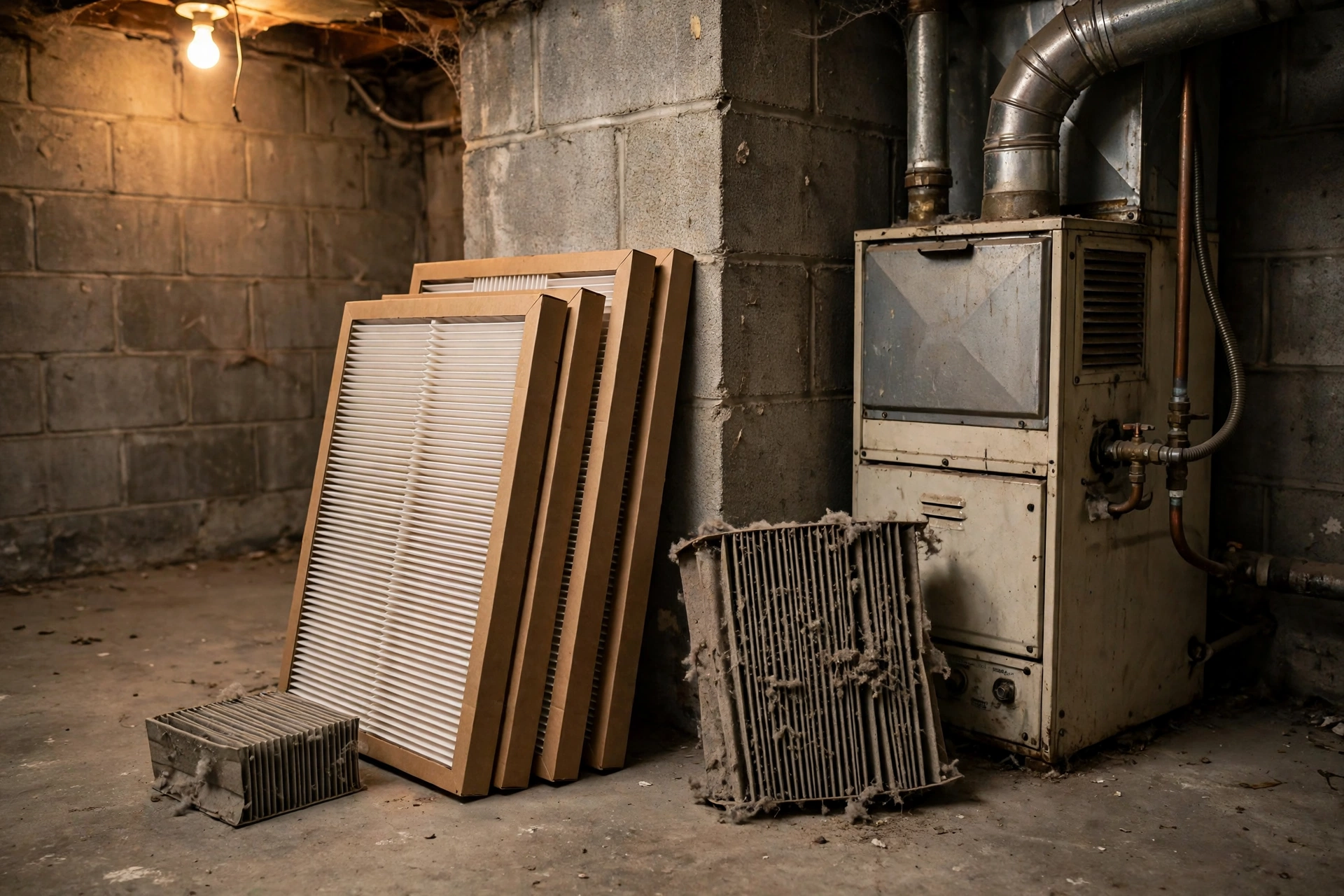
A season-long filter habit looks like this: fresh pleated filters waiting beside the one that did the work. One filter cannot carry a five-month season.
December and January: peak load, peak wear
December and January are the peak of the season. The average January low near 13 degrees Fahrenheit tells part of the story, and the other part is duration: cold air, wind, and short days mean the furnace rarely rests. Heat escapes through walls, windows, and attics hour after hour, and the furnace replaces it hour after hour. Burners ignite more often, blowers run longer, and heat exchangers swing through wider temperature changes. Parts that were marginal in November often fail here, which is why repair calls cluster in these months.
Wind adds a load that temperature alone does not capture. Wind pushes cold air through gaps in old houses, strips heat from exposed walls, and piles snow against vent walls. A calm cold night and a windy cold night can feel very different inside, even at the same thermometer reading, because wind driven heat loss forces longer furnace runs. Sealing the worst drafts before December, keeping interior doors open for circulation, and checking vents after storms all reduce the peak load, and they help the furnace survive the months when it has the least rest.
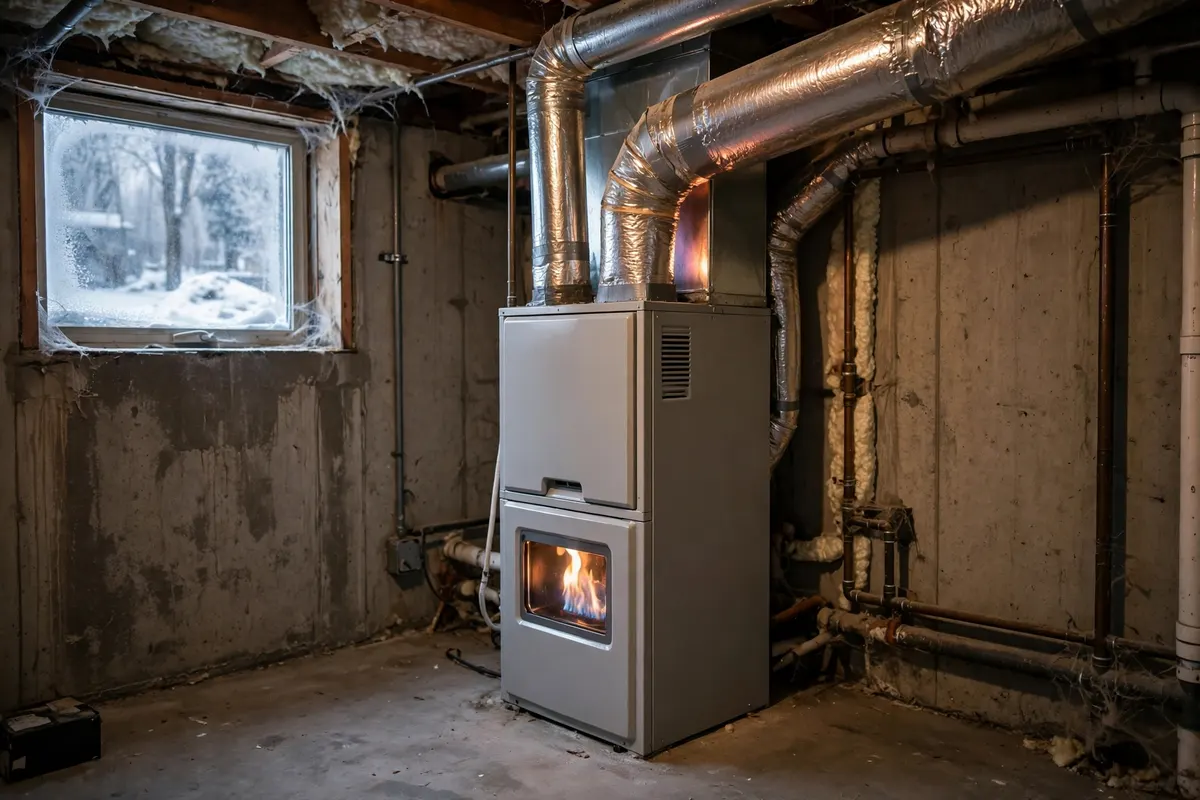
A furnace running through winter does not rest the way it does in fall. Months of long cycles wear ignition, blower, and sensing parts, which is why mid season checks matter.
February: the tired month for furnaces and houses
February is when furnace fatigue shows. The system has run hard for three months, filters have collected a season of dust, and any part that was wearing down is now well into its decline. Homeowners often report new noises in February, a blower that hums louder, a rattle at startup, or rooms that no longer warm as evenly as they did in December. Those signs are not random. They are the sound of a long season catching up with a system that has had little rest.
February is also a good month for a mid season check if the furnace sounded different in January or if rooms grew uneven. A technician can clean flame sensing, check blower condition, test safety controls, and look at airflow while the season still has weeks to run. Waiting until spring means living with the fault through the coldest remaining weeks, and a February visit can still prevent a March breakdown. Keep a spare filter on hand through February, since a clogged filter in this month can tip a tired furnace into short cycling.
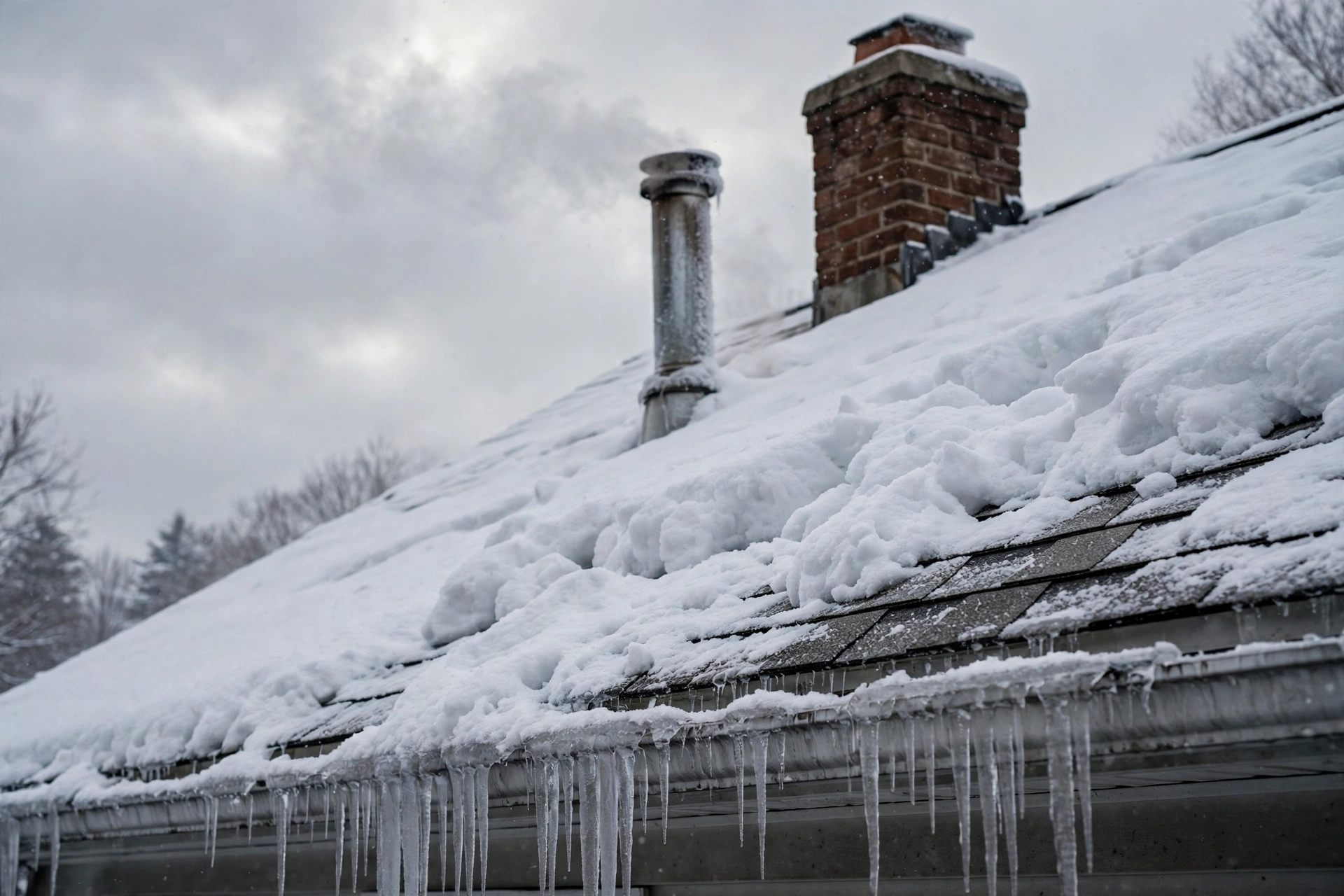
By February the roof tells the season's story: snow, ice dams, and a vent pipe working through it all. A vent that ices over in March is as common as one that ices in January.
March: thaw, refreeze, and the last strain
March brings thaw days that fool homeowners into thinking the season is over, followed by refreezing nights that demand full heat again. That swing strains furnaces in a different way: the system idles on a warm afternoon, then runs hard overnight, then idles again, and the repeated expansion and contraction stresses metal parts. Snowmelt also brings water near vent walls and condensate drains, and refreezing melt can ice a vent or a drain line that stayed clear in steady January cold.
March is also the month to watch for the faults the season hid. A duct leak that wasted heat all winter becomes obvious when rooms warm unevenly in mild weather, and a thermostat that misread in deep cold may show its pattern more clearly in March swings. Note what you observe, and bring that list to a spring visit. A furnace that survived November to March deserves a close look before it rests for summer, since spring is the calmest time to fix what the long season wore down.
Pacing care across the whole season
The best season plan is simple and steady. Change or check the filter monthly, keep registers and returns open, clear the vent wall after storms, and listen for new sounds each month. Call early when a sound, a smell, or an uneven room pattern changes, rather than waiting for a breakdown to force the call. A small repair in November or February is a routine visit, while the same repair in a January storm week competes with every other cold house in town. See Greenville furnace help.
The National Weather Service office in Green Bay posts winter forecasts for our area, and checking its outlook before a storm helps you time vent checks and filter changes. Season care is not about one heroic visit. It is about a few small habits, repeated from November to March, that keep a furnace from carrying the whole season on worn parts. A furnace that gets that steady attention usually finishes March the way it started November: running, even, and ready for the next winter.
Season long furnace questions
Why does my furnace break down in February, not January?
February breakdowns often reflect accumulated wear, not a single cold night. After three months of long runs, a weak igniter, flame sensor, or blower motor reaches its limit. Filters also clog through the season, adding airflow strain. A mid season check in February can catch that fatigue before it becomes a March outage.
How often should I change my filter during the heating season?
Check the filter monthly from November to March and change it when it looks gray and clogged. Long run times, pets, and remodeling dust clog filters faster in winter. A clean filter protects airflow and the heat exchanger, and it stops short cycling that wears parts out during the long season.
Does wind make my furnace work harder than cold alone?
Yes, wind pushes cold air through gaps, strips heat from exposed walls, and piles snow against vent walls, forcing longer furnace runs at the same temperature. Sealing worst drafts, keeping registers open, and checking vents after storms all reduce wind driven load, especially in December and January.
Season tools: filters, gauges, and a notebook
The tools that pace a long season are unglamorous: pleated filters in the right size, a notebook for sounds and cold rooms, and a carbon monoxide alarm checked monthly. A technician adds a manometer for gas pressure and a combustion analyser for flame quality, and the two together show whether the burner is still tuned after months of running. That mid-season check is part of maintenance and safety inspection, and it catches the slow drift that a single October visit cannot see.
Materials wear on a schedule too: fibreglass filter media loads up, rubber condensate hose stiffens, and steel heat exchanger surfaces collect soot. The maker's service manual sets inspection intervals, and local code sets venting rules that snow can quietly break. When a month in the season feels worse than the last, the cold-night failure guide explains which parts give out first and why.
Measure first
Readings before parts: pressure, airflow, and thermostat call.
Fix the airway
Filters, registers, and ducts before burners and boards.
Record it
Write the finding down, so the next visit starts from facts.
Snow-season furnace questions
When is furnace season in Appleton?
Furnace season runs hardest from November to March in Appleton, with peak load in December and January. November starts the marathon, February shows accumulated wear, and March adds thaw and refreeze swings. Care paced across all five months beats a single visit at the start.
How much snow does Appleton get in a year?
Appleton snowfall runs about 41 to 49 inches in a year, with much of it falling during furnace season. Snow matters for heating because drifts block vent pipes, wind drives heat loss, and storm weeks fill repair schedules. Checking vents after storms is part of winter furnace care.
Why do repair calls cluster in January?
January combines the lowest average temperatures, long run times, and months of prior wear. Parts that were marginal in November often fail under peak load, and safety controls shut units down rather than let them run unsafely. Early season checks move many of those failures from January to a calmer month.
Should I get a mid season furnace check?
Yes, a mid season check helps if the furnace sounded different, rooms grew uneven, or a fault appeared in January. A technician can clean flame sensing, check blower condition, and test safety controls while weeks of cold remain. Waiting until spring means living with the fault through the rest of winter.
What can I do in March to help my furnace?
Watch for thaw and refreeze swings, clear melt water and ice from vent walls, and note rooms that warm unevenly in mild weather. March observations help a spring visit find duct leaks and thermostat patterns the deep cold hid. Keep the filter clean until the heating season truly ends.
Does a furnace need rest during winter?
A furnace is built to run through winter, but it needs clean airflow, sound parts, and clear vents to do it well. A clogged filter, a blocked vent, or a worn blower forces harder work and shorter cycles. Steady care, not rest, is what carries a furnace from November to March.
Furnace sounding tired by February?
Tell us what changed since December, and we will check the parts that carry the long season.
Call (920) 523-4330 Contact usLong season wearing your furnace down?
Tell us which month the trouble started, and we will check the parts that carry November to March.
Call (920) 523-4330 Contact usRelated pages
November to March is a marathon, not a sprint.
Pace filter, vent, and listening checks across the season, and call early when something changes.
Call (920) 523-4330