By Paper City Heating
Last updated: October 31, 2026
January in Appleton is the real test for a furnace. The average low sits near 13 degrees Fahrenheit, and long cold stretches keep a system running far longer than it runs in October. A furnace that starts and stops a few times a day in fall may run for hours at a time in January, and every weak part gets a chance to show itself. That is why a breakdown often feels sudden, even when the trouble started weeks earlier. See blower motor repair.
Think of it as a load problem first and a parts problem second. Cold air leaks into a house through walls, windows, and doors, and the furnace has to replace that lost heat minute after minute. A dirty filter, a tired blower motor, or a flame sensor coated in residue can all cope when the demand is light. Under a full January load, the same small faults can stop the whole system. The U.S. Department of Energy explains how furnaces move heat through a home on its Energy Saver pages, and that basic picture helps here: burn, move air, repeat, all night long.
The coldest nights ask the most of a furnace
On a mild fall evening, a furnace warms the house, shuts off, and rests. On a January night near 13 degrees, rest time shrinks. The burner fires more often, the blower runs longer, and the heat exchanger heats and cools through wider swings. Metal expands and contracts, bearings warm up, and any part that was close to its limit gets pushed past it. This is normal wear meeting peak demand, and it explains why so many calls come in during the same cold week. See heat exchanger checks.
Appleton homes add their own twist. Older houses near downtown and the riverfront often have less insulation and older ductwork, so heat escapes faster and the furnace works harder to hold the same temperature. Newer homes hold heat better, but they still depend on the same chain of parts: thermostat, ignition, gas valve, heat exchanger, blower, and vents. When one link breaks, the safety controls shut the system down rather than let it run in an unsafe way. That shutdown protects the house, but it leaves rooms cooling fast.
Parts that give out first when the temperature drops
Ignition parts and flame sensors sit at the top of the January failure list in our work. An igniter that glows a little weaker each season can still light a burner in October, then fail on a night when the furnace cycles constantly. A flame sensor with a thin coating may read the flame one cycle and miss it the next, and the control board will lock the furnace out after a few failed tries. Both faults are small, and both stop heat completely.
Airflow faults run a close second. A clogged filter, a blocked return vent, or a blower motor that struggles to start will trip the high limit switch, which shuts the burner off to keep the heat exchanger from overheating. The furnace may then blow cool air, restart, overheat again, and repeat the loop. Condensate lines on high efficiency gas furnaces can also freeze where they run through a cold space, and a blocked drain will shut the unit down by design. Checking the filter and keeping vents open will not fix a worn motor, but it does remove the most common reason a healthy furnace short cycles in deep cold.
| What you notice | What it often points to | What to do first |
|---|---|---|
| Furnace runs, then stops, then runs again | Restricted airflow or a tripping limit switch | Check the filter and open blocked vents, then call us if it repeats |
| Clicking with no flame | Ignition or flame sensing trouble | Turn the thermostat down, wait, try once, then call us |
| Blower runs but air feels cool | Burner not firing or a safety shutdown | Check the thermostat setting and the furnace switch, then call us |
| Water pooling near the furnace | Condensate drain trouble or a frozen line | Keep clear of the water, do not run the unit, and call us |
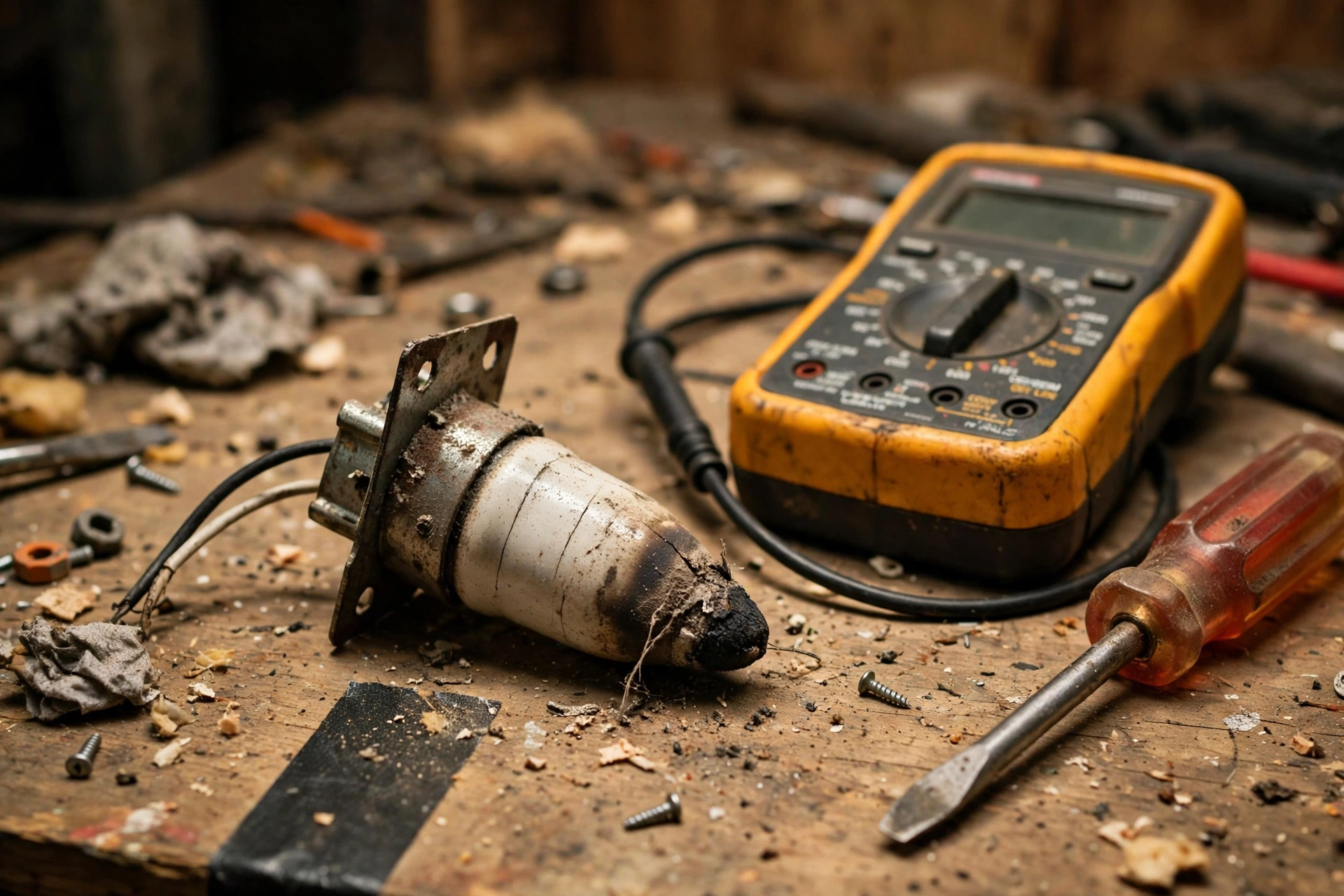
A worn ignitor like this one can still light in October and fail on the coldest January night, when the furnace cycles hardest. The ceramic tip thins a little every season.
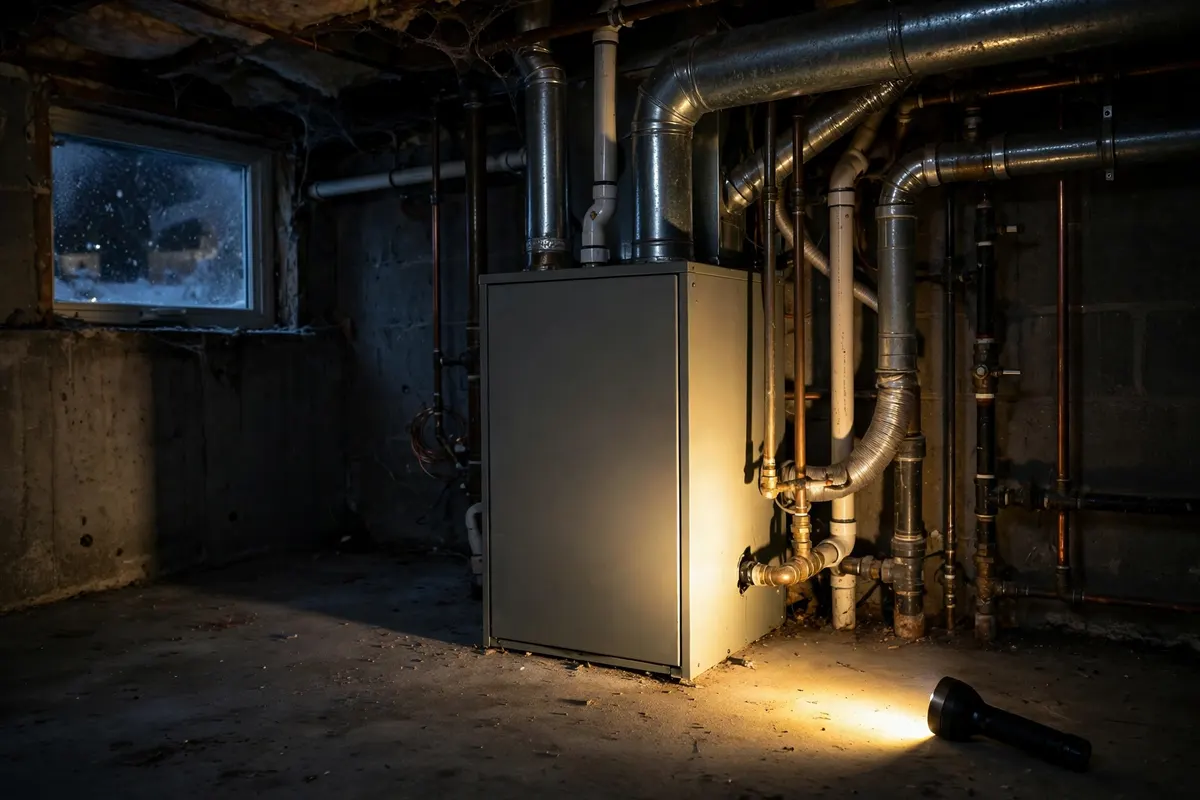
A basement furnace on a cold night works through the same chain every cycle: the thermostat calls, the igniter lights the burner, the heat exchanger warms, and the blower moves that air through the ducts. When one link breaks, safety controls shut the unit down.
Warning signs that show up before a breakdown
Most January failures send a warning in December. Rooms that used to warm evenly start to feel uneven, with one bedroom cool and the living room fine. The furnace starts to cycle more often, or it runs longer to reach the same setting. You may hear a new rattle at startup, a squeal from the blower, or a boom when the burner lights late. None of these signs means the furnace will fail that night, but each one is worth a call before the next cold snap arrives.
Smells and sounds deserve the same attention. A dusty smell on the first cold start of the season is common and usually fades. A smell of gas, a strong metallic smell, or a carbon monoxide alarm sounding is different, and the right move is to leave the house and call for help from outside. We check ignition, flame sensing, venting, and heat exchanger condition on a visit, and we tell you plainly what we find. A small repair in December beats a cold house in January, and it beats a repair visit in the middle of a storm week when every home in town needs help at once.
What to do while you wait for help
If the furnace stops on a cold night, start with the simple checks that are safe to make. Confirm the thermostat is set to heat and a temperature above the room temperature, check that the furnace switch is on, and look at the filter. If the filter is gray and clogged, swap in a clean one. Look at the outdoor vent pipes if you can reach them safely from the ground, and clear snow away from the ends without climbing or reaching over ice. Do not open the furnace cabinet to poke at burners or wiring, and do not reset a tripped safety control over and over. One reset is enough to test, and repeated resets can hide the real fault. See how the long season wears a furnace.
While you wait, close off unused rooms, hang a blanket over a drafty door, and keep interior doors open so warm air can reach pipes on outside walls. Let a faucet on an outside wall drip slowly, and open the cabinet doors under kitchen and bathroom sinks so warm room air can reach the pipes. Keep the house as warm as you can with safe heat only, and never use a gas oven, a grill, or a generator indoors for warmth. If the house keeps cooling and pipes are at risk, call us again and tell us the indoor temperature so we can judge the urgency honestly.
How a fall visit changes the January story
A fall visit is not about selling parts. It is about finding the weak links before January finds them for you. We clean the flame sensor, check ignition, look at the blower and belt or motor condition, test safety controls, and check venting and condensate drainage. We also look at ductwork for crushed runs or disconnected joints, because a furnace can run perfectly and still leave rooms cold when the air never reaches them. When we find a part near the end of its life, we say so, and you decide whether to replace it now or watch it through the season.
Homeowners sometimes ask whether a newer furnace would have avoided a January failure. A newer unit can be more efficient and quieter, but age alone does not decide reliability. A well kept older furnace with a clean flame sensor, good airflow, and sound venting can run through a cold snap, while a neglected newer unit can fail on the same night. The difference is condition and care, not the year on the label. That is why we focus on checks you can see and results you can feel: even heat, steady cycles, and a furnace that starts when the thermostat calls.
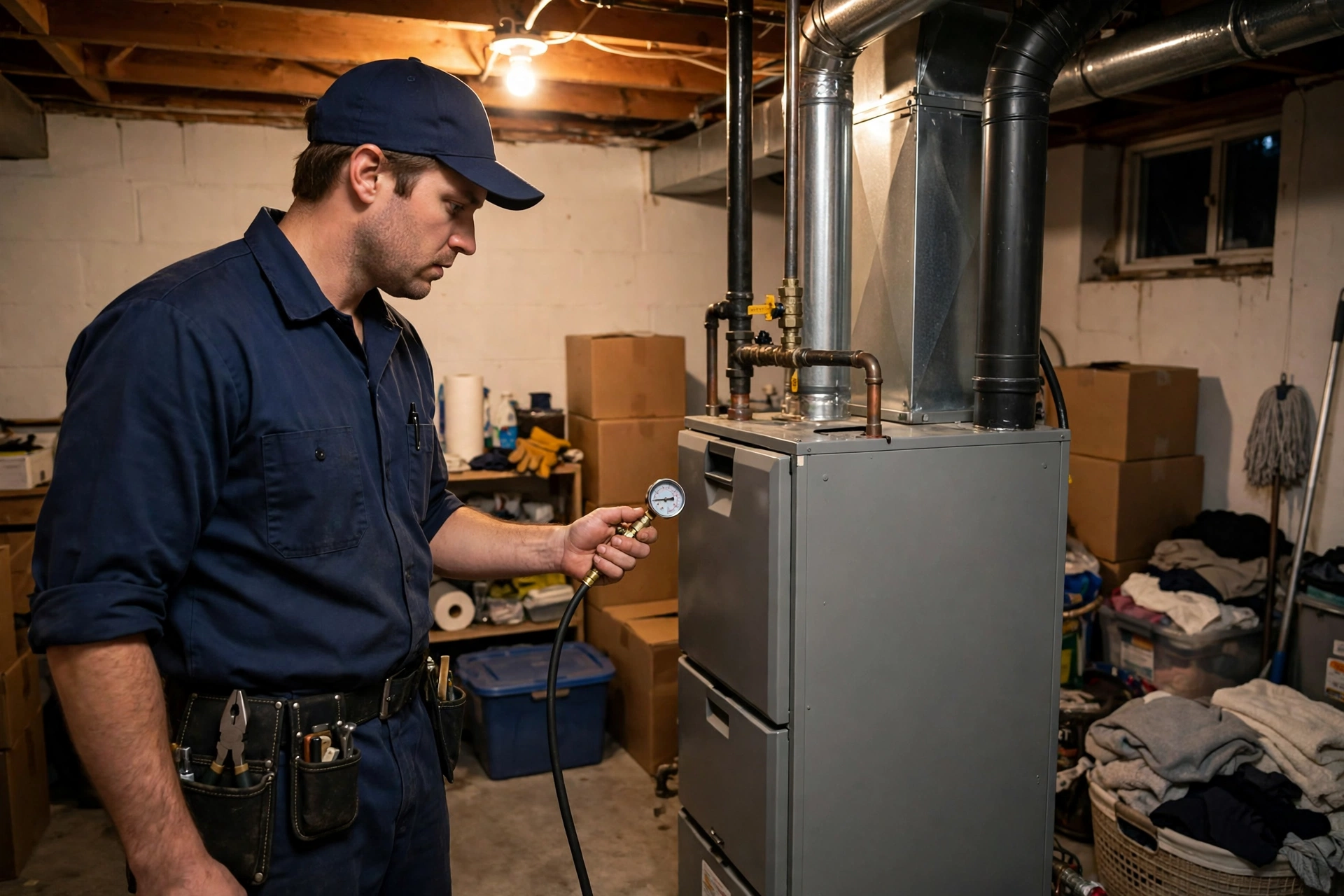
Night checks start with readings, not guesses. A pressure gauge on the gas line tells the technician whether the furnace is starved, over-fired, or sound, before any part is changed.
Questions Appleton homeowners ask in January
Why does my furnace fail only on the coldest nights?
A furnace under light fall demand can hide weak parts, since it starts, warms the house, and rests. In deep cold it runs far longer, cycles more often, and pushes a worn igniter, flame sensor, or blower motor past its limit. Safety controls then shut the unit down, which is why the failure seems to arrive with the coldest night.
Why does my furnace keep turning on and off in winter?
Short cycling often traces to restricted airflow, a clogged filter, a blocked vent, or a limit switch tripping when the heat exchanger gets too hot. The burner shuts off to protect the unit, the air cools, and the cycle repeats. Check the filter and open blocked vents first, then call a technician if the pattern keeps repeating.
Can a clogged filter really stop a furnace?
Yes, a clogged filter can stop heat even when the furnace itself is sound. Restricted airflow overheats the heat exchanger, trips the high limit switch, and shuts the burner down. The blower may keep running and push cool air, which makes the problem look bigger than it is. A clean filter restores airflow and often ends the cycling.
The January failure shelf: ignitor, sensor, and motor
Three parts explain most cold-night failures. The silicon nitride ignitor cracks with age, the steel flame sensor coats over and stops proving flame, and the blower motor capacitor weakens until the motor hums instead of starting. A technician tests them in order with a multimeter and a manometer, and the readings decide the repair, not the age of the unit. That sequence is part of gas furnace service, and it is why a January breakdown often traces back to a part that was already tired in November.
Cold itself is the stressor: long run times, thicker condensate, and intake air near freezing all push a weak part over the edge. The manufacturer's service manual sets the acceptable readings, and local code governs venting and gas connections, so a repair that ignores either is not a repair at all. If your furnace has already locked out once this winter, our night outage guide walks through the safe steps while you wait.
Measure first
Readings before parts: pressure, airflow, and thermostat call.
Fix the airway
Filters, registers, and ducts before burners and boards.
Record it
Write the finding down, so the next visit starts from facts.
January cold-night furnace questions
What should I check first when my furnace stops in January?
Check the thermostat setting, the furnace switch, and the filter. Clear snow from outdoor vent pipe ends if you can reach them safely from the ground. Try one reset only if your unit has a reset control. If heat does not return, call us and describe what the furnace is doing so we can plan the visit.
Is it safe to keep resetting my furnace?
No, repeated resets are not safe and they hide the real fault. A furnace that locks out is telling you something failed, such as ignition, flame sensing, or a safety control. Reset once to test, then leave the unit alone and call a technician. Repeated tries can damage parts and, with gas equipment, create a hazard.
Why is one room cold while the rest of the house is warm?
Uneven rooms often point to ductwork, airflow, or thermostat placement rather than the furnace itself. A crushed duct run, a closed damper, a blocked register, or a thermostat in a warm hallway can all starve one room of air. We check the duct path and airflow room by room, and we explain what we find before any work starts.
Does an old furnace always fail in a cold snap?
No, age alone does not decide it. A well kept older furnace with clean flame sensing, good airflow, and sound venting can run through deep cold. A neglected newer unit can fail on the same night. Condition, airflow, and venting matter more than the year on the label, which is why a fall check focuses on those points.
What does it mean when my furnace blows cool air?
Cool air from the vents usually means the blower is running while the burner is not firing. That can follow a lockout, a failed ignition, or a tripped safety control. Check the thermostat and filter first, then note whether the burner tries to light. That detail helps us narrow the fault when you call.
When should I leave the house instead of waiting for a repair?
Leave right away if you smell gas or if a carbon monoxide alarm sounds, and call for help from outside the house. Do not try to find the source yourself. For a plain loss of heat with no alarm and no gas smell, stay warm with safe methods, protect pipes, and call us for guidance on timing.
Furnace acting up in the cold?
Tell us what you hear and see, and we will help you judge whether it can wait until morning or needs attention now.
Call (920) 523-4330 Contact usCold house in Appleton? Talk to us first
Describe the sounds, the smells, and what the furnace does when it tries to start. We will help you sort the next step.
Call (920) 523-4330 Contact usRelated pages
January cold finds weak furnaces. A fall check finds them first.
If your furnace hesitated last winter, or if it already acts up when the temperature drops, call us before the next cold snap.
Call (920) 523-4330