By Paper City Heating
Last updated: October 31, 2026
Homeowners often book a fall furnace visit without knowing what happens during it, and that uncertainty makes it easy to put off. The visit is actually a straightforward sequence: controls first, then air, then flame, then venting, then safety, then rooms. Each step answers a simple question, and each answer points to either a clean bill, a small fix, or a part worth watching through winter. See gas furnace services.
This post walks that sequence in the order we use it, so you know what to expect and what to ask about. You can handle the first steps yourself in October, and the inside of the furnace belongs to a technician with the right tools. A visit that follows this order finds the weak links before January does, and it leaves you with a plain account of what was checked, not a vague assurance.
First, controls and the start sequence
The visit starts at the thermostat, not at the furnace. We confirm the thermostat is set to heat, calls correctly, and holds a steady setting, then we watch the furnace start from the beginning. A healthy start follows a clear order: inducer fan, ignition, burner light, then blower. A start that clicks repeatedly, lights late with a boom, or stalls before the blower tells us where to look next, and that observation shapes the rest of the visit. See blower motor repair.
We also check the furnace switch, breaker, and control board lights, and we note any error codes the board has stored. Stored codes are a history of past faults, and they often point to a pattern, such as repeated ignition failures on cold mornings, that a single start test would miss. If your thermostat has batteries, we check them too, since a blank thermostat in January looks like a furnace failure but is a simple control fault.
Test the thermostat call
Set heat, raise the setting, and watch for a steady start sequence.
Watch ignition and burner light
Check for clean lighting without repeated clicks or a late boom.
Note control board history
Read stored error codes for past ignition or safety faults.
Check switch and power path
Confirm the furnace switch, breaker, and wiring connections are sound.
Airflow: filter, blower, and ducts
Airflow comes next, because a furnace cannot heat a house it cannot move air through. We check the filter size and condition, look at the blower wheel and motor, and listen for bearing noise or a slow start. A blower that struggles to start or squeals under load may still move air in October, but it will struggle more under January run times. We also check the blower capacitor where the design uses one, since a weak capacitor is a common cause of a blower that hums without starting.
Ducts get a visual trace in accessible spaces. We look for crushed runs, disconnected joints, and dampers set wrong, and we note rooms that lag behind the rest of the house. A duct fault wastes heat every day, and it makes rooms uneven even when the furnace runs perfectly. You can help this step before the visit by opening all registers, clearing returns, and noting the cold rooms, since that list guides the duct trace.
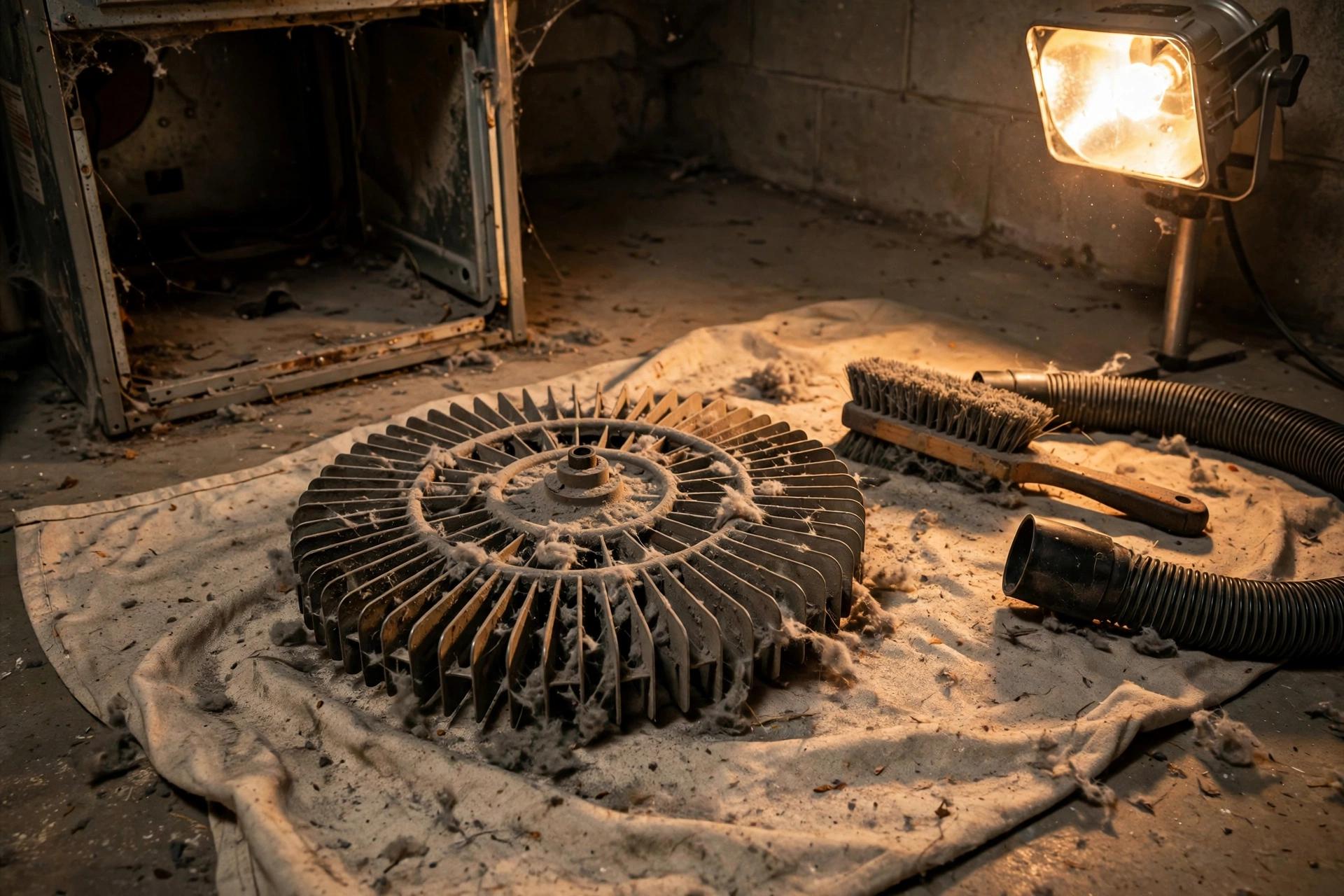
A blower wheel this dusty cannot move air cleanly, however well the burner runs. Brushing and vacuuming it is slow work, and it is why airflow is checked before flame.
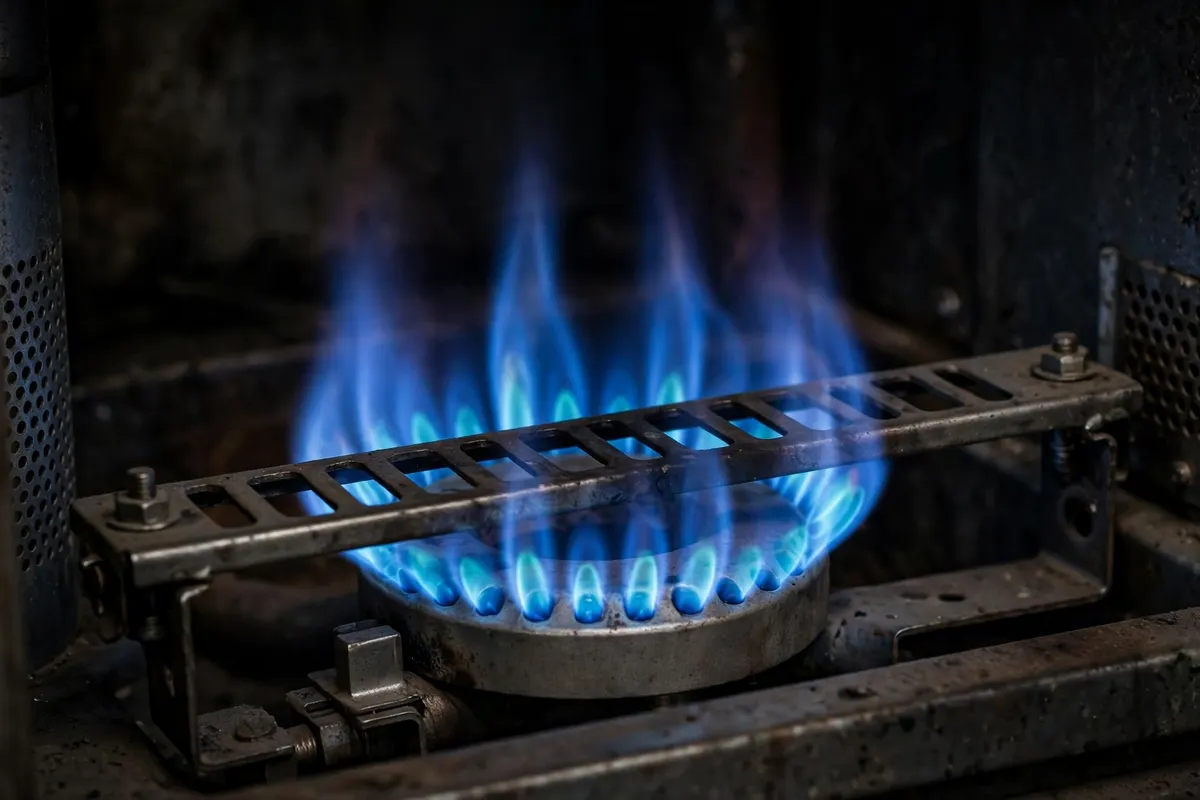
A steady blue burner flame is what a technician looks for during flame inspection. A flame that lifts, flickers unevenly, or lights late points to ignition, gas, or airflow trouble worth sorting before winter.
Booked a fall visit, or still deciding?
Ask us to walk this checklist with you, and we will explain each finding in plain words as we go.
Call (920) 523-4330 Contact usFlame, heat exchanger, and combustion
Flame inspection is the heart of a gas furnace visit. We watch the burner flame for a steady blue pattern, check the flame sensor for coating, and clean it where the design allows. A coated sensor may read the flame one cycle and miss it the next, causing lockouts that look random. We also check the igniter for wear, since an igniter that glows weaker each season can still light in October and fail in January.
The heat exchanger gets a careful visual check for cracks, rust, and soot patterns, and we test safety controls that watch over it, including the high limit switch. A cracked heat exchanger is a serious find, and it means the furnace should not run until the problem is addressed, since exhaust can enter the air stream. We explain what we see in plain words, and we show you the finding where we can, because a heat exchanger decision should never rest on a vague warning alone.
Venting and condensate drainage
Venting checks follow flame work, since the two are linked. We check the vent pipes for slope, joints, and termination, look for frost or ice patterns at the pipe ends, and confirm the pipes are clear of shrubs, storage, and snow paths. A vent that slopes wrong can trap condensate, and a vent that ends too low can block in the first drift. We also check the condensate drain line on high efficiency units for blockage, leaks, and freeze risk where it runs through a cold space.
Carbon monoxide detectors near bedrooms and near the furnace area get a test as part of this step, and we note any detector past its working life. Venting and detection work together: sound venting keeps exhaust outside, and working detectors warn you if that ever changes. If you smell gas during any part of a visit, the visit stops, and the safety steps for a gas smell take over, including leaving the house and calling for help from outside.
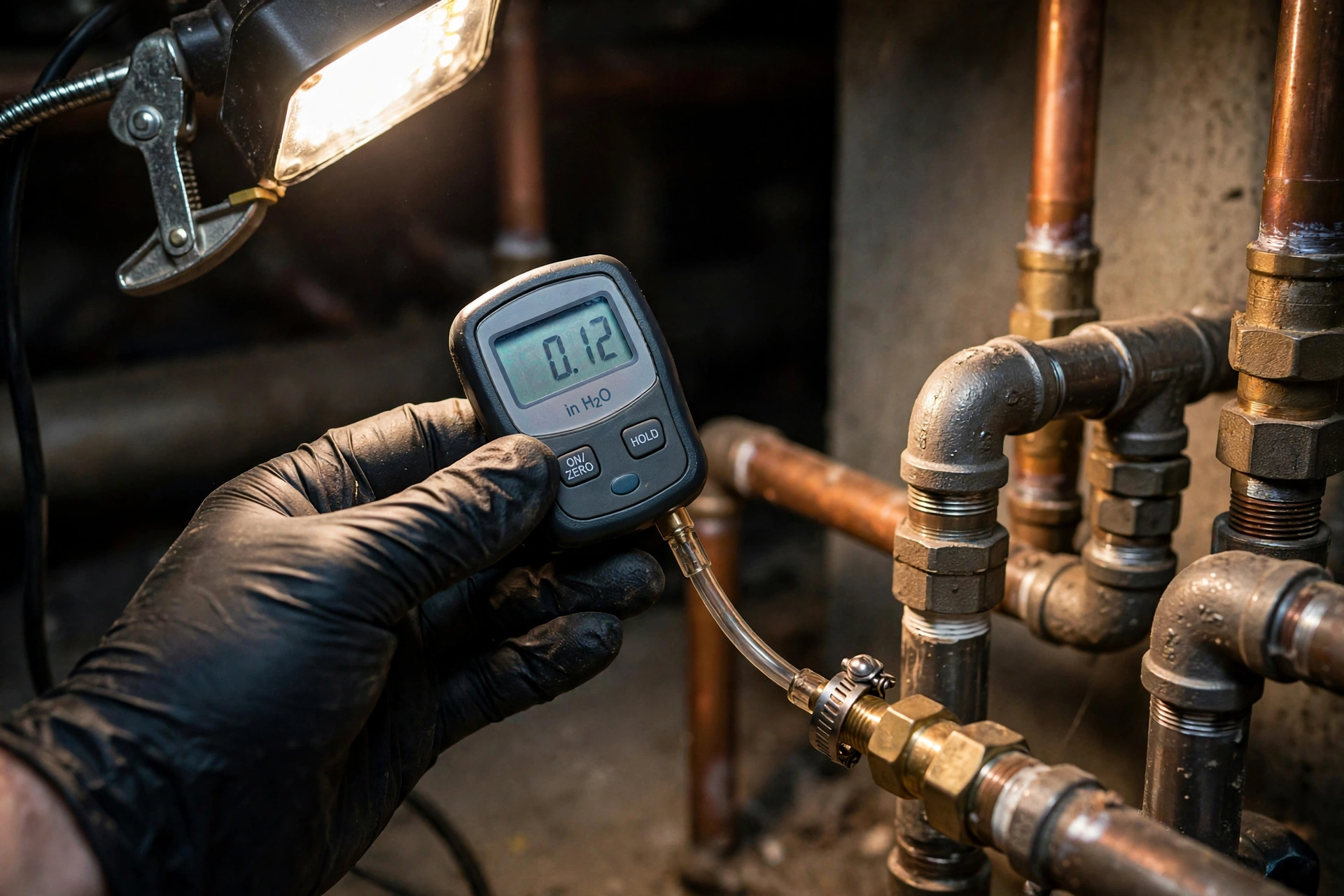
A manometer reading is the quiet part of a tune-up. It turns a guess about gas pressure into a number the technician can compare with the maker's specification.
Rooms, thermostat, and the final report
The visit ends where it started: in the rooms you live in. We walk the house while the furnace runs, feel registers room by room, and compare the cold room list you gave us with what the ducts actually deliver. A thermostat in a warm hallway may need a different setting strategy, and a room at the end of a long duct run may need duct work rather than a furnace change. That room walk turns a furnace visit into a house heating plan, which is more useful than a parts list alone.
Finally, we give you a plain report: what was checked, what was clean, what was fixed, and what to watch. A part near the end of its life gets named as a watch item, with a clear note on whether it can wait or should be replaced before winter. Keep that report with your filter size and your furnace manual, and bring it to the next visit. A furnace with a written history is easier to care for, and each visit builds on the last instead of starting from scratch.
Fall visit questions homeowners ask us
How long does a fall furnace visit take?
A typical fall visit takes long enough to work through controls, airflow, flame, venting, safety, and rooms in order, usually within a single appointment window. A visit that finds a fault takes longer, since the technician explains the finding and the options. Rushed visits that skip steps miss the weak links a fall check exists to find.
Do I need a fall visit every year?
A yearly fall visit is the simplest way to catch wear before January, especially for gas furnaces. A furnace that skipped several years can still be checked, and the first visit after a gap often finds more watch items. Yearly care builds a written history that makes each later visit faster and more accurate.
What can I check myself before the technician arrives?
Check the thermostat start, the filter, open registers and returns, and the outdoor vent wall for shrubs and debris. Note cold rooms, new sounds, and any smells. Those notes guide the visit and save time. Leave burner, heat exchanger, wiring, and gas parts to the technician, who has the tools and training for them.
Tune-up tools and the parts they judge
A tune-up kit fits in a tool bag: a multimeter for ignitor and sensor readings, a manometer for gas and duct pressure, a combustion analyser for flame quality, a stiff brush for the blower wheel, and fine steel wool for a coated flame sensor. The parts they judge are the ignitor, the flame sensor, the blower capacitor, and the heat exchanger, and each one has a maker's specification it must meet. That is the backbone of furnace maintenance, tune-up, and safety inspection, and it is why the visit leaves a written record instead of a vague assurance. See thermostat and controls service.
Materials show up in small ways: a pleated filter of the right size, a new gasket where the old one crumbled, and PVC condensate hose replaced before it cracks. Local code and the maker's instructions set the order of checks, and a visit that skips steps misses the weak links it exists to find. If you want the homeowner half of the list first, the October checklist covers what you can check yourself before the technician arrives.
| Part | Material | Test |
|---|---|---|
| Ignitor | Silicon nitride | Test with a multimeter |
| Flame sensor | Steel rod | Clean where allowed |
| Blower capacitor | Round or oval can | Test before January |
Fall tune-up questions
What does a fall furnace visit check first?
It checks controls and the start sequence first: thermostat call, inducer fan, ignition, burner light, and blower. A steady start in the right order tells the technician the controls are sound. A start that clicks, booms, or stalls points to the next step to investigate.
Is flame sensor cleaning part of a fall visit?
Yes, flame sensor inspection and cleaning where the design allows is a core fall step. A coated sensor can read the flame one cycle and miss it the next, causing lockouts that look random. Cleaning it in fall prevents many January no heat calls.
Should the heat exchanger be checked every fall?
Yes, a visual heat exchanger check belongs in every fall visit for a gas furnace. The technician looks for cracks, rust, and soot patterns, and tests the safety controls that protect it. A cracked heat exchanger means the furnace should not run until the problem is addressed.
Do you check ducts during a furnace visit?
Yes, accessible ducts get a visual trace for crushed runs, disconnected joints, and wrong damper settings. Rooms that lag behind the rest of the house guide that trace. Duct faults waste heat daily, so finding them in fall improves comfort all winter.
What should I have ready for a fall visit?
Have the filter size, the furnace manual if you have it, and a list of cold rooms, new sounds, and any smells. Clear the area around the furnace and open all registers. Those notes help the technician focus on your house, not just the furnace box.
What happens if you find a serious fault in fall?
We explain the finding in plain words, show you where we can, and lay out the options before any work starts. A cracked heat exchanger or a failed safety control means the furnace should not run until addressed. Smaller wear items become watch items with a clear note on timing.
Want the fall checklist run on your furnace?
Call us in October, and we will work through controls, airflow, flame, venting, and rooms in order.
Call (920) 523-4330 Contact usRelated pages
A fall visit is a checklist, and a good one leaves a written record.
Keep the report with your filter size, and bring it to the next visit.
Call (920) 523-4330