By Paper City Heating
Last updated: October 31, 2026
Dry winter air shows up in small, daily ways: static shocks on a doorknob, dry skin and lips, a scratchy throat in the morning, wood floors that gap, and a guitar or wooden furniture that feels different in January than in June. A furnace warms the air, but warming cold outdoor air lowers its relative humidity, so a house that feels warm can still feel dry. A whole home humidifier addresses that dryness at the house level, adding moisture to the air the furnace already moves through the ducts. See ductwork and airflow services.
This post is a guide, not a service page, and it covers how these units work, when they help, when they do not, and how to care for one. A humidifier is a comfort addition to a furnace system, not a furnace repair, and it suits some homes better than others. Read the limits alongside the benefits, and you will know whether one fits your house, or whether simpler steps, such as sealing drafts and using a portable unit in one room, make more sense.
Why Wisconsin winter air feels so dry
Cold outdoor air holds very little moisture, even when it feels damp as snow. When a furnace warms that air to room temperature, the relative humidity drops, because warm air can hold more moisture than cold air, and the same small amount of water now fills a larger capacity. That is why a house can feel dry in January even when snow covers the ground outside. Showers, cooking, and breathing add some moisture back, but in a tight, well heated house, that addition rarely keeps up with the drying effect of constant heating. See maintenance and safety inspection.
House factors shape the result. A leaky old house that pulls in cold outdoor air all day will feel drier than a tight new build, since each air change brings in dry air that the furnace then warms. A furnace that runs long cycles in January dries the house more than a furnace that runs briefly in October. Wood floors, trim, and furniture respond to that dryness by shrinking slightly, which opens gaps and creaks, and skin and nasal passages dry out in the same air. A humidifier cannot change outdoor air, but it can add moisture to the indoor air the furnace circulates.

A wall hygrometer is the humidifier's conscience. It shows whether the house is actually dry, or whether the dry feeling comes from cold air, static, and low humidity together.
How a whole-home unit works with your furnace
A whole home humidifier mounts on or near the furnace ductwork and adds moisture to the air as the furnace blower moves it through the house. The most common types use a water panel or a steam generator: a panel unit lets air pass over a wet pad, picking up moisture, while a steam unit boils water and injects steam into the duct air. Both types connect to a water line and a drain, and both rely on the furnace blower to distribute humidified air room by room, which is why they work best in homes with ducted forced air heat and even airflow.
A humidistat controls the unit, much like a thermostat controls the furnace, turning humidification on and off to hold a target indoor humidity. That target matters, since too little moisture does nothing, and too much moisture condenses on cold windows, feeds mold in wall cavities, and damages wood in the opposite direction. A technician sets the humidistat with the house and the season in mind, and fitting the unit itself is straightforward work with ordinary tools: a drill and level for mounting, a tubing cutter for the water line, and a multimeter to confirm the humidistat wiring before the furnace runs with the new unit attached. and the setting often needs lowering as outdoor temperatures drop, since colder glass and walls condense moisture sooner. Follow the maker instructions for your unit, and treat the humidistat as a seasonal control, not a set and forget dial.

A comfortable winter living room feels warm and settled, not just heated. Even humidity helps skin, wood, and static, but only when the furnace airflow already reaches the room evenly.
Benefits, and the limits to keep in mind
The main benefit is comfort across the whole house, not just one room. Even humidity reduces static, eases dry skin and nasal dryness for many people, and helps wood floors, trim, and furniture hold their shape through winter. Some homeowners also feel warmer at the same thermostat setting when humidity rises, since moist air feels less harsh on skin, though a humidifier is not a heater and will not fix a cold room or a furnace fault. Think of it as a comfort layer on top of sound heating, not as a substitute for it.
The limits matter just as much. A humidifier will not fix a duct fault, a cold room, or a furnace that short cycles, since it depends on the same airflow to distribute moisture. It adds a water line, a drain, and a pad or steam unit that need regular care, and a neglected unit can grow mold, scale, or bacteria in its own parts, which then enters the duct air. Homes with existing moisture problems, such as basement dampness or window condensation that already runs down glass, should solve those problems first, since adding moisture to a damp house makes them worse.
| Humidifier choice | How it fits a home | Care it needs |
|---|---|---|
| Duct mounted panel unit | Most ducted furnace homes, steady comfort | Pad changes and drain checks through winter |
| Steam unit | Larger or tighter homes needing more moisture | Scale care and maker service intervals |
| Portable room unit | One room only, short term test | Daily water and cleaning, room by room |
| No humidifier, shell steps first | Homes with dampness or condensation already | Fix moisture sources before adding humidity |
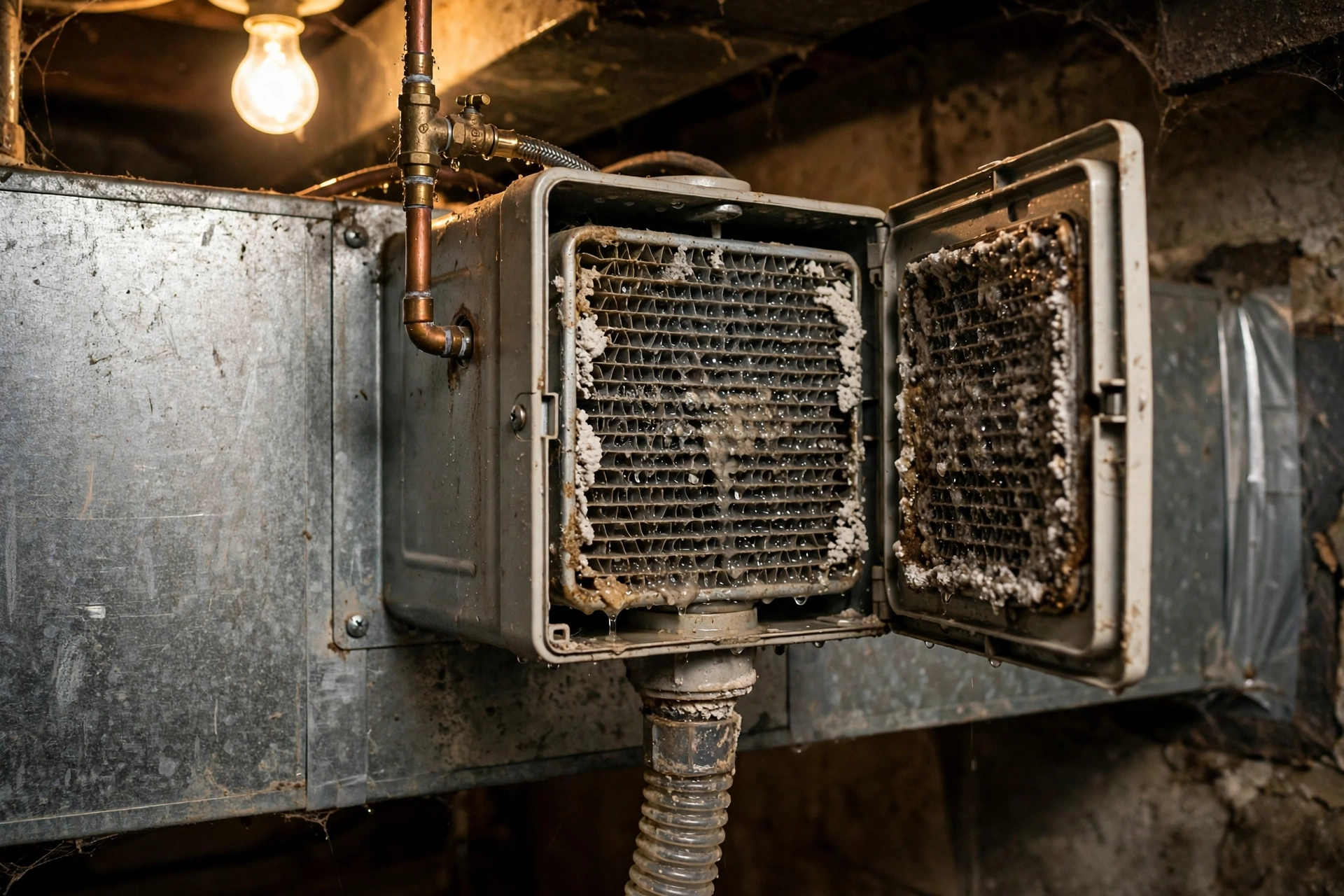
A humidifier pad this scaled cannot pass water cleanly, however well the furnace runs. Hard Wisconsin water leaves mineral behind every season, and the pad is a consumable, not a fixture.
Care through the winter, step by step
Care starts with the water panel or steam unit, following the maker instructions for your model. Panel units need regular pad changes through the heating season, since a scaled or moldy pad humidifies poorly and can smell. Steam units need scale care at maker intervals, and both types need a drain check for blockage and leaks. Check the humidistat setting as outdoor temperatures fall, lowering the target when windows start to fog, since fogging glass is the early warning that indoor humidity is too high for the current cold.
Watch the house, not just the unit. Check windows on cold mornings for condensation that runs or pools, check basement walls for new dampness, and note any musty smell near the furnace or ducts. Those signs mean humidity is too high, the setting needs lowering, or the unit needs service. Keep the furnace filter clean, since humidified air still moves through the same filter and ducts, and a clogged filter will leave far rooms dry even while near rooms feel comfortable. A humidifier that is cared for quietly improves winter comfort, and a neglected one quietly creates the problems it was meant to solve.
Is a whole-home humidifier right for your house?
A whole home unit fits best in a ducted furnace home with even airflow, dry winter symptoms across many rooms, and no existing dampness problem. If only one bedroom feels dry, a portable unit in that room may be a better first test, since it costs less and tells you whether added humidity actually helps your symptoms. If the whole house feels dry, static is constant, and wood gaps appear every January, a duct mounted unit addresses the pattern at the source, through the same ducts that already heat the house. See Sherwood furnace help.
Talk through the choice with a technician who can check duct airflow, furnace condition, and house moisture signs together. Ask about water line and drain routing, humidistat type, and pad or steam care intervals for your model, and ask what setting to use at different outdoor temperatures. A humidifier is a long term comfort addition, and the right decision weighs house dryness, duct evenness, and moisture risk together. Get those three right, and winter air feels noticeably kinder, without the damp windows and musty corners that come from over humidifying.
Dry air all over the house this winter?
Tell us which rooms feel driest, and we will check airflow and moisture signs before any humidifier talk.
Call (920) 523-4330 Contact usHumidifier questions for Wisconsin winters
What humidity level should my home have in winter?
Indoor winter humidity needs a seasonal target, not one fixed number, since colder outdoor air makes windows and walls condense sooner. A humidistat setting that works in November may fog windows in January. Lower the target when glass fogs or condensation pools, and follow your unit instructions for seasonal adjustment.
Can a humidifier cause mold in my home?
Yes, over humidifying or neglecting a unit can feed mold, since excess moisture condenses on cold windows and in wall cavities, and a dirty pad or steam unit can harbor growth itself. Keep humidity moderate, lower the setting when windows fog, change pads on schedule, and fix existing dampness before adding humidity.
Does a whole-home humidifier help with static and dry skin?
For many people, even whole house humidity reduces static shocks and eases dry skin, lips, and nasal dryness through winter, since the furnace distributes moistened air room by room. Results vary by person and by house, and a humidifier will not fix a cold room, a duct fault, or a furnace problem that also needs attention.
Humidifier parts: pad, valve, and drain
A whole-home humidifier is a small system with its own consumables: an evaporator pad of paper or metal mesh, a saddle or solenoid water valve on a copper line, a humidistat that calls for moisture, and a PVC drain line that must stay clear. The tools are a wrench for the valve, a brush for scale, and a hygrometer for the result, and the related work is ductwork and airflow service, since the unit hangs on the duct and lives or dies by the air moving past its pad.
Water quality decides pad life: hard water scales a pad in one season, and the maker's instructions set replacement intervals and drain care. Local plumbing code governs the water connection and the drain, and a humidifier that leaks onto a furnace control board is worse than dry air. For the furnace side of winter comfort, the fall tune-up guide covers the airflow and flame checks that should come first, since humidity is a comfort layer, not a heat fix.
Measure first
Readings before parts: pressure, airflow, and thermostat call.
Fix the airway
Filters, registers, and ducts before burners and boards.
Record it
Write the finding down, so the next visit starts from facts.
Whole-home humidifier questions
How does a whole-home humidifier differ from a portable one?
A whole-home unit mounts on furnace ductwork and humidifies air the blower moves to every room, controlled by a humidistat. A portable unit humidifies one room only, needs daily water and cleaning, and cannot reach far rooms or pipe areas. Whole-home units suit house wide dryness, while portables suit a single room test.
Will a humidifier make my house feel warmer?
It can feel less harsh at the same thermostat setting, since moist air feels kinder on skin than very dry air. A humidifier is not a heater, however, and it will not warm a cold room, fix a duct fault, or replace furnace heat. Treat it as a comfort layer on top of sound heating.
How often does a humidifier pad need changing?
Follow the maker instructions for your model, and change pads regularly through the heating season. A scaled or moldy pad humidifies poorly and can smell, and it can introduce growth into duct air. Steam units need scale care at maker intervals instead of pad changes.
Can I run a humidifier all winter without adjusting it?
No, the humidistat needs seasonal adjustment as outdoor temperatures fall. A setting that works in November may fog windows in January, since colder glass condenses moisture sooner. Lower the target when windows fog, and check the house for dampness through the season.
What if my windows already fog in winter?
Fogging windows signal indoor humidity already high for the current cold, or poor window insulation, and adding a humidifier will make it worse. Lower humidity sources, check ventilation, and solve dampness first. A humidifier fits homes that are dry across many rooms, not homes already damp.
Does a humidifier need a furnace to work?
Yes, a duct mounted whole-home unit relies on the furnace blower to distribute humidified air room by room. It works best in a ducted forced air home with even airflow. Without sound ducts and a working blower, far rooms will stay dry even while near rooms feel comfortable.
Whole house dry air, or just one room?
Describe the dry rooms and any window fogging, and we will help you judge whether a whole-home unit fits.
Call (920) 523-4330 Contact usRelated pages
Humidity is a comfort layer, not a heat fix.
Get airflow and moisture balance right first, and winter air feels kinder all season.
Call (920) 523-4330